
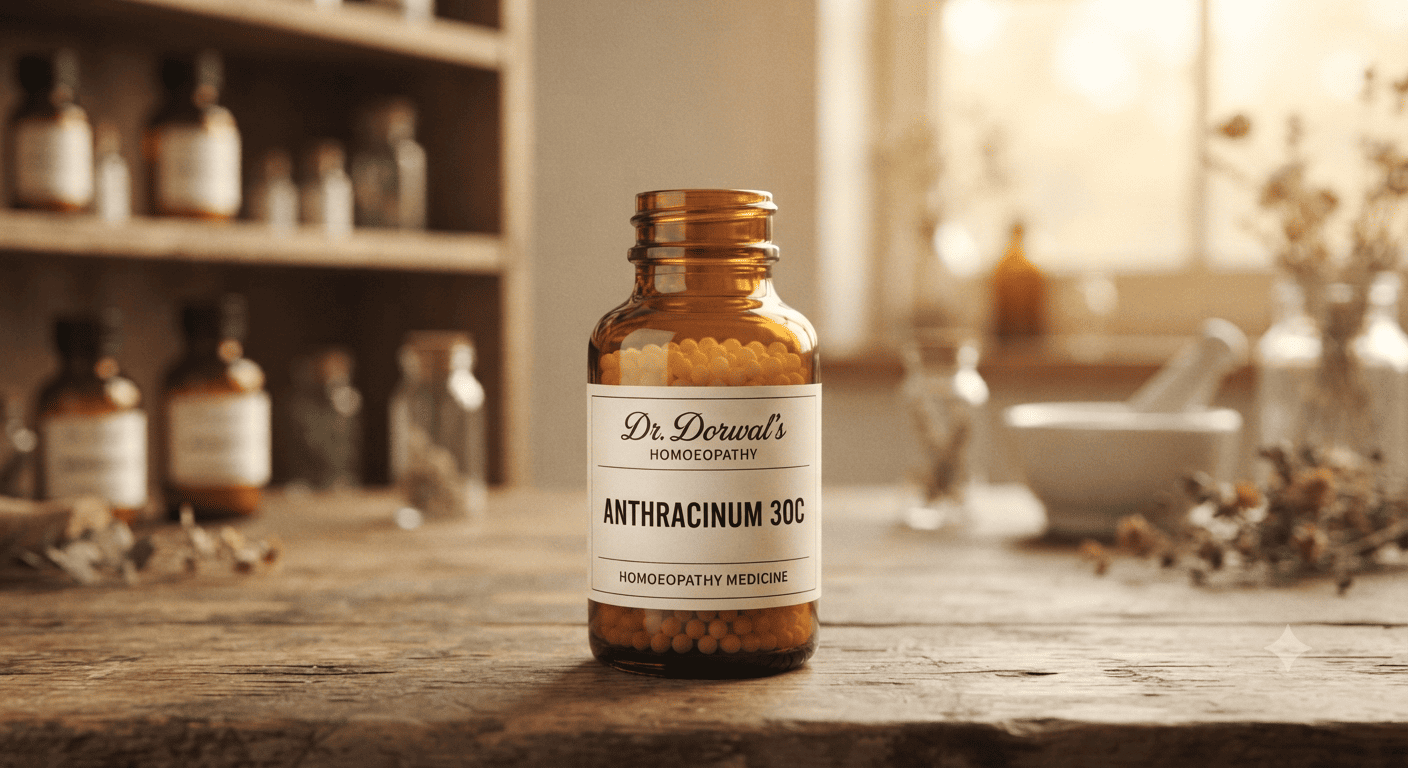
Anthracinum (the Anthrax nosode) is a remedy of immense significance in the management of acute, high-grade septic processes. It stands as a primary intervention for conditions where the pathology is moving toward rapid decomposition, gangrene, and malignant ulceration.
Key Clinical Indications & Uses
Therapeutic profile of Anthracinum is centered on its ability to arrest systemic toxicity and localized tissue necrosis:
- Septic Inflammation and Malignancy: This nosode is indicated for carbuncles, malignant ulcers, and any septic inflammation where there is a purulent focus. It is specifically called for when the tissue exhibits induration (hardening) followed by sloughing and an intolerable, burning sensation.
- Systemic Haemorrhagic States: It addresses haemorrhages that are characterized by blood that is black, thick, and “tar-like,” often accompanied by rapid decomposition and foul-smelling secretions.
- Connective Tissue Pathology: Anthracinum is effective in treating inflammation of the connective tissue, including erysipelas, gangrenous parotitis, and the development of black-and-blue blisters.
- Toxicity and Exposure: It is an essential consideration for the effects of inhaling foul odors and for managing the complications of dissecting wounds, insect stings, and a succession of stubborn, recurring boils.
Administration & Dosage
- Dose: In clinical practice, it is typically utilized in the thirtieth potency (30C) for optimal therapeutic impact in these serious pathological states.
Dr. Dorwal’s Perspective
In my clinical practice, Anthracinum is the remedy I reach for when I see the body losing its battle against infection. When a carbuncle or an abscess begins to take on a malignant character—when the burning pain becomes truly “terrible” and surrounding tissue feels indurated and dark—Anthracinum is the powerhouse needed to turn the tide.
It acts deeply on blood and cellular tissues, stopping the process of necrosis. I have found it to be a necessary follow-up to Arsenicum Album in cases of severe exhaustion and septic risk. It is a remedy of great power, and its application should always be considered when the secretions are foul, tar-like, or indicate the onset of gangrene. It is one of those clinical “anchors” that reminds us that homoeopathy is as effective in the acute, life-threatening crisis as it is in the chronic, constitutional case.
Disclaimer: This content is for informational purposes only. Homoeopathic medicines should be taken under the guidance of a qualified homoeopathic physician. Do not self-medicate for chronic or serious medical conditions, and always seek professional advice for any health concerns.
Frequently Asked Questions (FAQs)
It is indicated for septic inflammations, carbuncles, malignant ulcers, and conditions involving rapid tissue necrosis and gangrene.
An “intolerable” or “terrible” burning pain at the site of infection is the hallmark sensation of the remedy.
Haemorrhages that are black, thick, and tar-like in appearance are covered by this remedy.
