
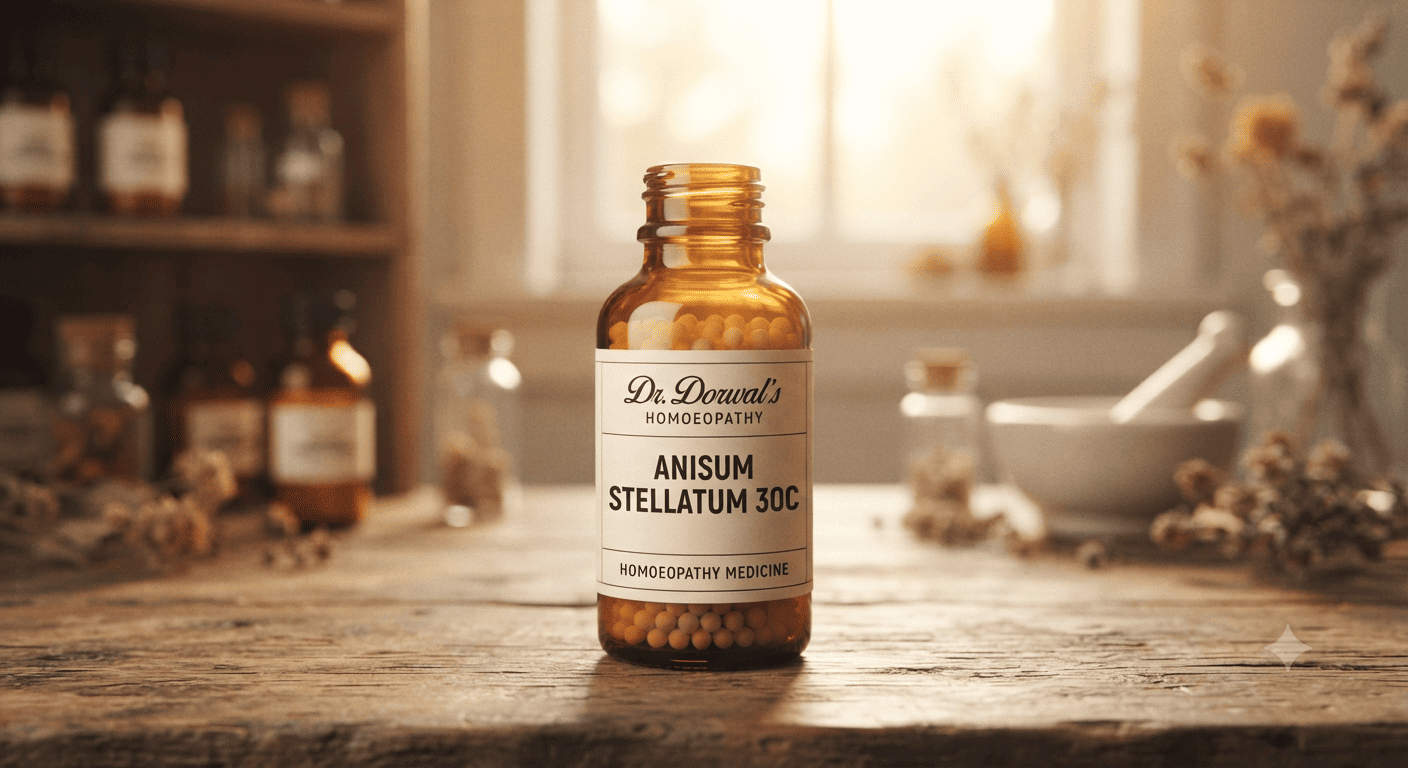
Anisum Stellatum (Illicium) is a remedy of distinct therapeutic utility, particularly noted for its efficacy in managing specific localized pains and chronic catarrhal states. It serves as a focused intervention for the practitioner when respiratory or digestive distress presents with clear, pathognomonic indicators.
Key Clinical Indications & Uses
Therapeutic profile of Anisum Stellatum is centered on three primary areas of clinical focus:
- Diagnostic Thoracic Marker: A landmark symptom for Anisum is pain localized to the region of the third rib, typically one to two inches from the sternum. While more common on the right side, it can occur on the left. This pain is frequently associated with a persistent, frequent cough and can be accompanied by dyspnea (difficulty breathing).
- Gastrointestinal and Flatulent States: It is an invaluable remedy for flatulent conditions, particularly the “three-month colic” in infants when the pain recurs at regular intervals, accompanied by significant abdominal rumbling. It also serves as a digestive aid, helping to mitigate gastric irritation.
- Chronic Catarrh of Aged: Anisum is a profound remedy for the “old drunkard” or the aging patient who suffers from chronic, purulent tracheal and gastric catarrh. It is also indicated for elderly asthmatics who produce pus-like phlegm.
- Neurological and Oral Symptoms: It addresses sharp, stitching pains beneath the lip, accompanied by a sensation of burning and numbness of the inner lower lip. It has also been utilized in epileptiform convulsions where biting of the tongue occurs.
Administration & Dosage
- Dose: In clinical practice, it is typically utilized in 30C potency to address these chronic and acute presentations.
Dr. Dorwal’s Perspective
In clinical practice, Anisum Stellatum is a remedy that proves the value of “keynote” prescribing. When a patient presents with a cough and points directly to that specific spot near the third rib, my mind immediately turns to Anisum. It is a small but highly specific remedy that saves the physician a great deal of time in complex respiratory cases.
Furthermore, its use in the infantile colic that follows a “regular hour” recurrence is a life-saver for both the child and the exhausted parents. It is a gentle yet effective remedy that restores rhythm to digestive tract and clarity to respiratory system. For elderly patient who has suffered for years with chronic catarrh, Anisum offers a way to thin that stubborn, pus-like phlegm and breathe more freely. It is a classic example of how a remedy derived from a simple culinary plant can perform profound work in the clinical setting.
Disclaimer: This content is for informational purposes only. Homoeopathic medicines should be taken under the guidance of a qualified homoeopathic physician. Do not self-medicate for chronic or serious medical conditions, and always seek professional advice for any health concerns.
Frequently Asked Questions (FAQs)
Pain in the region of the third rib, 1-2 inches from the sternum, usually on the right side is the “keynote” thoracic pain for Anisum.
It is a specific for flatulent conditions and “three-month colic,” particularly when the pain recurs at regular hours.
It treats chronic, purulent tracheal catarrh, especially in the elderly or those with a history of alcohol-related health issues.
30C potency is generally utilized in practice.
