
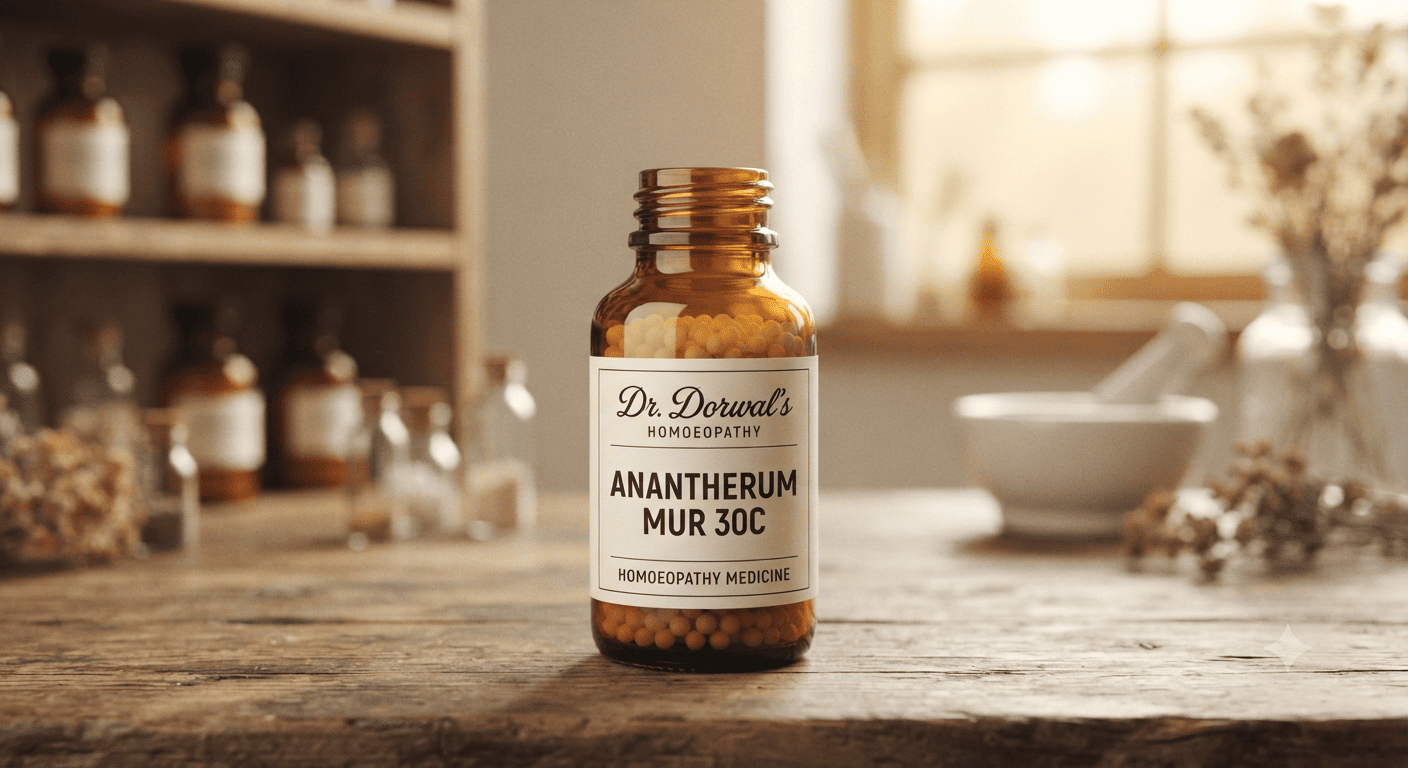
Anantherum Muricatum (Cuscus) is a powerful, deep-acting remedy with a profound affinity for integumentary and glandular systems. It stands as a “skin remedy of the highest order,” particularly effective in cases where inflammatory processes, suppuration, and tissue deformation have become chronic and resistant to standard intervention.
Key Clinical Indications & Uses
Therapeutic profile of Anantherum Muricatum is defined by its ability to address deep-seated pathological processes:
- Glandular and Suppurative Affections: This remedy is indicated when various parts of the body develop painful, inflamed swellings that progress toward suppuration (pus formation). It is a vital consideration for chronic abscesses, boils, and ulcerations that fail to heal properly.
- Dermatological and Appendage Pathology: It addresses a broad spectrum of skin complaints, including erysipelas, pruritus (intense itching), and herpetic eruptions. It is specifically noted for treating diseased or deformed nails and for cases of offensive, persistent foot sweat.
- Urological and Sexual Irritation: Anantherum presents with severe bladder distress, characterized by constant urging, incontinence, and cystitis where the bladder cannot retain even minimal amounts of urine. In the reproductive sphere, it is indicated for indurated (hardened) swellings of breast, excoriated nipples, and scirrhus-like conditions of the cervix.
- Cranial and Oral Symptoms: Patients may experience intense, piercing headaches described as “arrows” through the brain, typically worsening in the afternoon. The tongue often presents as fissured, with deep, cut-like edges and copious salivation.
Administration & Dosage
- Dose: In clinical practice, it is typically utilized in 30C potency for optimal results.
Dr. Dorwal’s Perspective
In clinical practice, Anantherum Muricatum is a remedy of depth and resolution. When I encounter a case of chronic suppuration—where the body seems caught in a cycle of abscess formation and tissue breakdown—I look to Anantherum. It is a remedy that possesses a “cleansing” quality, helping to arrest the suppurative process and stimulate healthy tissue repair.
The clinical presentation of the fissured, “cut” tongue is a particularly reliable diagnostic marker. If a patient presents with this oral sign alongside a history of recurrent boils or glandular swelling, Anantherum is often the exact remedy required to shift the case. It is a robust agent that commands respect, particularly when managing scirrhus-like indurations or chronic cystitis. For the practitioner who treats constitutional skin and glandular weaknesses, this remedy is an essential, if specialized, component of the apothecary.
Disclaimer: This content is for informational purposes only. Homoeopathic medicines should be taken under the guidance of a qualified homoeopathic physician. Do not self-medicate for chronic or serious medical conditions, and always seek professional advice for any health concerns.
Frequently Asked Questions (FAQs)
It is a skin and glandular remedy of the highest order, specifically targeting suppuration, abscesses, and chronic inflammation.
The tongue is fissured, appearing as if it has been cut along the edges, accompanied by profuse salivation.
It is indicated for severe cystitis with constant urging and involuntary urination, where bladder cannot hold even the smallest amount.
30C potency is the standard clinical starting point.
