
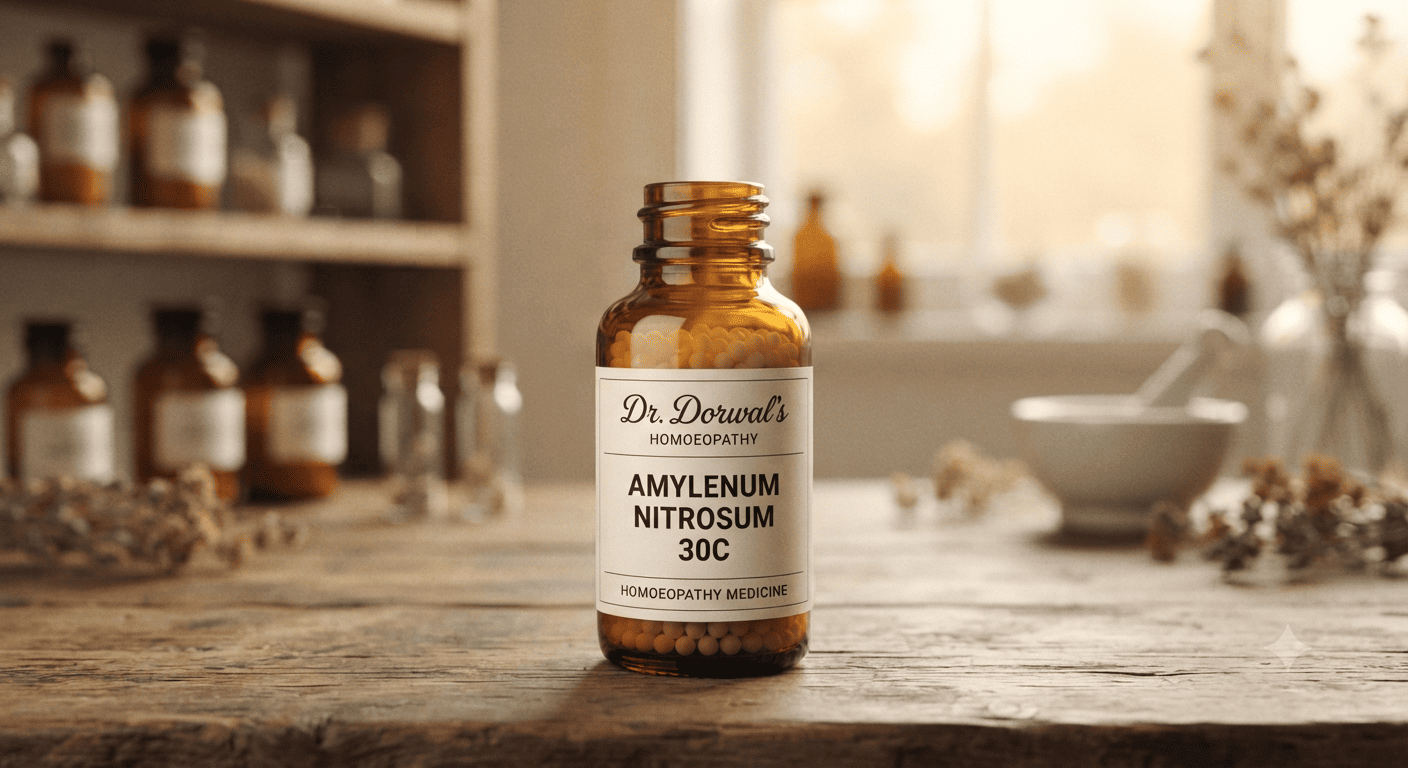
Amylenum Nitrosum (Amyl Nitrite) is a remedy of dynamic, rapid, and profound action, primarily characterized by its ability to violently dilate arterioles and capillaries. It is a pivotal agent for managing conditions characterized by sudden, intense vascular surges, spasmodic constriction, and the autonomic storm known as the “flush.”
Key Clinical Indications & Uses
Therapeutic profile of Amylenum Nitrosum is defined by sudden vascular and cardiac disturbances:
- Vasomotor Flushes & Climacteric Discomforts: This is a premier remedy for hot flushes of menopause. These flushes are intense, sudden, and often accompanied by a surging of blood to head and face, a sensation as if blood would burst through the skin, followed by profuse sweat and often intense anxiety.
- Cardiac & Precordial Distress: It addresses acute cardiac symptoms characterized by tumultuous action of heart (palpitation), a feeling of great oppression and fullness in chest, and a sensation of constriction around the heart. Patient may experience a suffocative cough and a need for fresh air.
- Paroxysmal Spasmodic States: It is invaluable in temporarily relieving epileptic convulsions and has been utilized to manage the paroxysms of asthma and seasickness.
- Sensation of Constriction: A key diagnostic pointer is the feeling of constriction in throat, specifically feeling as though the collar is too tight.
Administration and Modalities
- Dose: In standard homoeopathic practice, 30C potency is generally utilized.
- Non-Homeopathic Palliation: In acute, emergency-style applications—where there is spasmodic contraction of blood vessels, such as in angina pectoris, epileptic seizures, or chloroform asphyxia—direct inhalation of Amyl Nitrite (two to five minims, often from “pearls” crushed on a handkerchief) provides immediate physiological palliation by reversing the spasm.
Dr. Dorwal’s Perspective
In my clinical practice, Amylenum Nitrosum is a potent key for unlocking the acute physiological crisis of the climacteric. When a woman presents with menopausal flushes so severe she feels a wave of heat and anxiety surging from her chest to her face, and she describes that terrifying sensation of her heart “tumulting” in her chest, Amylenum is often the fastest, most decisive remedy.
What I find most fascinating is the duality of this remedy. In homoeopathy, we value it for its capacity to gently resolve the constitutional tendency toward these flushes. Yet, the Materia Medica also clearly documents its role as a physiological, “non-homoeopathic” tool for immediate rescue in angina or epileptic seizures. It is one of the few remedies where clinical pearl—the simple crushing of ampoule for inhalation—remains a valid and life-saving intervention. It is a remedy that requires the physician to understand both the subtle constitutional state and the acute physiological mechanism of the patient’s distress.
Disclaimer: This content is for informational purposes only. Homoeopathic medicines should be taken under the guidance of a qualified homoeopathic physician. Do not self-medicate for chronic or serious medical conditions, and always seek professional advice for any health concerns.
Frequently Asked Questions (FAQs)
It rapidly dilates arterioles and capillaries, causing superficial arterial hyperemia (flushings).
Intense, sudden flushes of heat, surging of blood to the head and face, followed by sweat, palpitation, and anxiety serves as main symptoms.
It causes tumultuous heart action, oppression, and a sensation of constriction around the heart.
Inhalation of the drug (2–5 minims) is used for immediate palliation in acute spasms such as angina pectoris, epileptic seizures, or chloroform asphyxia.
