
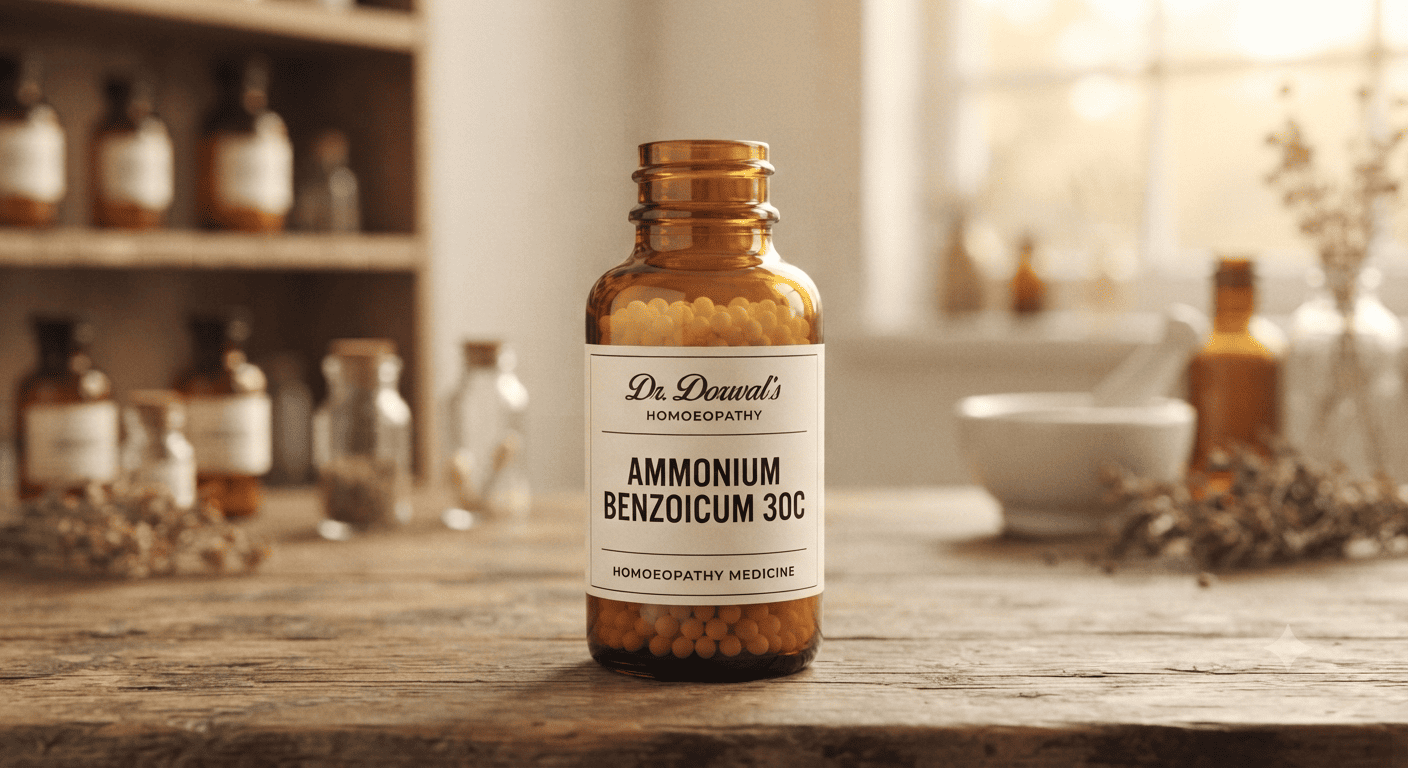
Ammonium Benzoicum (Benzoate of Ammonia) is a specialized remedy with a distinct affinity for renal and articular systems. It is particularly indicated in states of metabolic dysregulation, where body struggles to eliminate nitrogenous waste, often manifesting in conditions like albuminuria and gouty diathesis.
Key Clinical Indications & Uses
Therapeutic profile of Ammonium Benzoicum is sharply defined by its action on kidneys and joints:
- Renal Affections & Albuminuria: It is a vital remedy for cases of albuminuria, particularly when associated with a gouty constitution. Urine is characteristically smoky and scanty, containing thick, albuminous deposits. It is also indicated for urinary incontinence in elderly, where bladder function has become compromised.
- Gouty Diathesis: It excels in managing gout, specifically when there are palpable or symptomatic deposits within the joints. It addresses the systemic nature of gouty constitution, helping to mitigate the discomfort arising from these accumulations.
- Localized Swelling and Congestion: The remedy presents with a characteristic bloated appearance of the face, accompanied by swollen eyelids. Clinically, it is also noted for swelling under the tongue, resembling a ranula.
- Back and Kidney Pain: Patients often report a nagging pain across the sacrum that is accompanied by an urgent desire for stool, along with specific soreness localized in the region of the right kidney.
Administration & Uses
- Dose: In clinical practice, it is typically utilized in 30C potency for optimal results.
Dr. Dorwal’s Perspective
In my clinical practice, Ammonium Benzoicum is an invaluable tool when I manage a “gouty” patient who also shows signs of renal strain. It is a remedy that bridges the gap between joint inflammation and internal metabolic stagnation. When I see a patient with swollen eyelids and “smoky” urine, my attention is immediately drawn to the kidneys’ ability to filter waste, and Ammonium Benzoicum often provides the necessary support to clear those albuminous deposits.
What I find most interesting about this remedy is its role in the aging patient. It isn’t just for acute pain; it is a remedy for the chronic, slow-developing metabolic shifts—like urinary incontinence or stubborn joint deposits—that define the later stages of life. It reminds us that our Materia Medica provides specific keys to maintain renal and articular health well into our senior years.
Disclaimer: This content is for informational purposes only. Homoeopathic medicines should be taken under the guidance of a qualified homoeopathic physician. Do not self-medicate for chronic or serious medical conditions, and always seek professional advice for any health concerns.
Frequently Asked Questions (FAQs)
It is indicated for albuminuria with scanty, smoky urine and thick, albuminous deposits.
It specifically targets the gouty constitution, particularly when there are inflammatory deposits within the joints.
A bloated appearance with swollen eyelids and localized swelling under the tongue (ranula).
30C potency is typically utilized in practice.
