
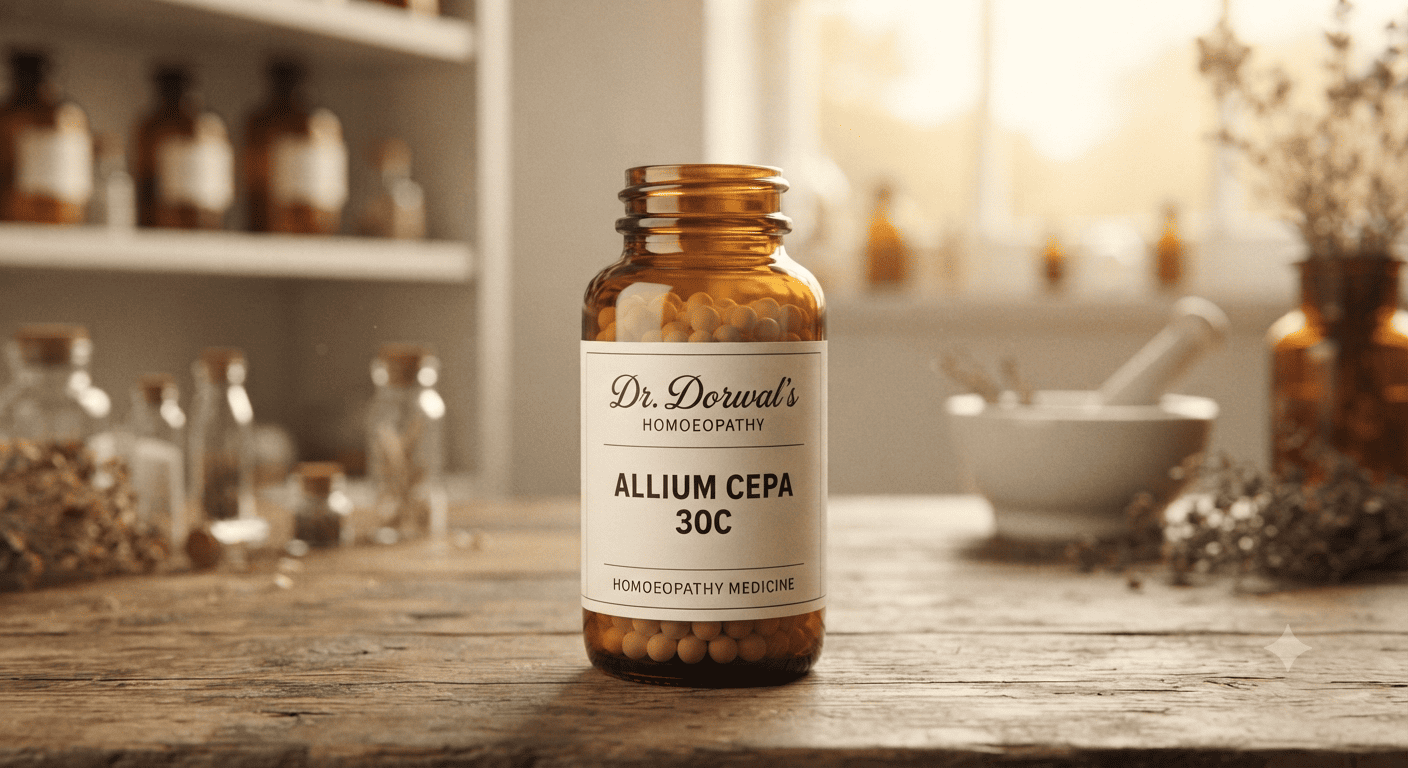
Allium Cepa, prepared from the common red onion, is perhaps the most well-known homoeopathic remedy for acute catarrhal conditions. It is specifically indicated when patient presents with a distinct contrast between nasal and ocular secretions: the nasal discharge is characteristically acrid and burning, while the eye secretions remain bland and non-irritating.
Key Clinical Indications & Uses
Therapeutic profile of Allium Cepa is sharply focused on respiratory and neuralgic symptoms that worsen in warmth and improve in cool, fresh air:
- Acute Coryza and Hay Fever: It is a primary remedy for colds characterized by profuse, watery, and extremely acrid nasal discharge that causes excoriation of the upper lip. This is frequently accompanied by frequent sneezing, especially upon entering a warm room.
- Laryngeal and Respiratory Distress: The remedy is indicated for “singers’ colds,” hoarseness, and a hacking cough that feels as though the larynx is being split or torn. Patients often experience oppression in the chest and tickling in the larynx.
- Neuralgic and Traumatic Pain: Beyond catarrh, it is an excellent remedy for neuralgic pains that feel like a “fine thread,” particularly following amputations or injuries to nerves. It is also indicated for chronic traumatic neuritis.
- Ocular Sensitivity: While the tears are bland, the eyes themselves are red, sensitive to light, and may exhibit a sensation of burning in the eyelids.
Administration, Modalities & Dosage
- Modalities: The symptoms are characteristically worse in a warm room and towards the evening. The patient feels consistently better in open, cool air.
- Dose: In clinical practice, typically it is utilized in 30C potency to manage acute presentations effectively.
Dr. Dorwal’s Perspective
In my clinical practice, Allium Cepa is my first-line defense for the “common cold” that begins with that unmistakable, burning, acrid nasal discharge. When a patient walks into my clinic sneezing incessantly, with a red nose and watery, yet non-burning, eyes, the remedy is almost always clear.
What fascinates me about Allium Cepa is its deeper action beyond the nose. Its ability to soothe the “fine thread” type of neuralgic pain—especially in the aftermath of an injury—reminds us that this remedy is not merely an anti-catarrhal, but a profound nerve-soother. It is a remedy that respect patient’s need for “open air” and serves as a perfect example of how a familiar substance, when used homoeopathically, can bring rapid relief to acute, uncomfortable states.
Disclaimer: This content is for informational purposes only. Homoeopathic medicines should be taken under the guidance of a qualified homoeopathic physician. Do not self-medicate for chronic or serious medical conditions, and always seek professional advice for any health concerns.
Frequently Asked Questions (FAQs)
Presence of acrid, burning nasal discharge paired with bland, non-irritating tears are the guiding symptoms for Allium cepa.
Because it is highly effective for the hoarseness and laryngeal irritation that can be detrimental to vocal performance.
Yes, it is a leading remedy for hay fever, especially when symptoms are aggravated by warm, indoor environments.
It is excellent for neuralgic pains that feel like a “fine thread” or sharp, thin lines, particularly after nerve injuries or amputations.
