
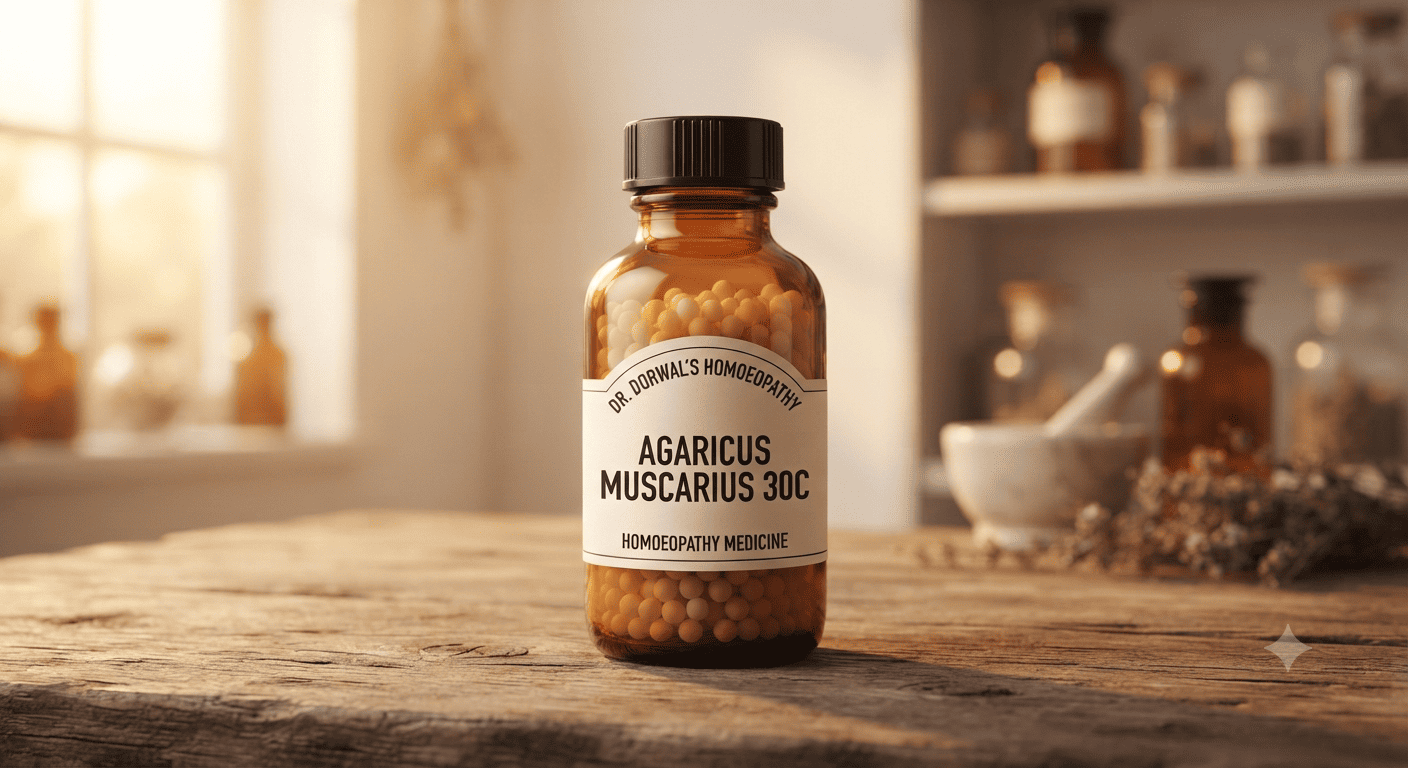
Agaricus Muscarius, derived from the Fly Agaric mushroom, is a profoundly acting homoeopathic remedy with a specific affinity for the nervous system. It is uniquely indicated for conditions characterized by intense nervous excitement, spasmodic twitching, and altered sensory perceptions, often mirroring the states found in conditions like chorea, general paralysis, and delirium tremens.
Key Clinical Indications & Uses
Therapeutic profile of Agaricus is marked by its influence on neurological function and sensory irritation:
- Neurological and Spasmodic States: Hallmark of this remedy is a combination of jerking, twitching, and trembling. It is a vital consideration in chorea (where movements characteristically cease during sleep), neuralgia, and various spasmodic affections. Patients may feel as if they are being pierced by needles of ice, accompanied by significant numbness and tingling.
- Mental and Cerebral Excitement: Unlike the active congestion of some other remedies, Agaricus presents a state of “nervous intoxication.” Symptoms range from loquacity and exalted fancy to states of furious, raging delirium. A unique mental feature is the loss of spatial perception—where small objects may appear immense or vice versa.
- Sensory and Skin Irritation: It is indicated for burning, itching, and redness that mimics the effects of frostbite. It is a premier remedy for chilblains, angioneurotic edema, and rosacea, particularly when the skin is highly sensitive to cold air and pressure.
- Ocular and Respiratory: It is often required for eye strain (asthenopia) where type seems to swim, and for spasmodic sneezing or coughing that may terminate in a sneeze or involuntary laughter.
- Diagnostic Modality: A distinctive guiding symptom is the diagonal appearance of symptoms, such as the right arm and left leg being affected simultaneously.
Administration, Modalities & Dosage
- Modalities: Symptoms are characteristically worse from cold, open air, eating, and coitus. There is a distinct hypersensitivity to pressure on the dorsal spine. Patients generally feel better from moving about slowly.
- Dose: In clinical practice, it is typically employed in 30C to 200C potency. For skin affections and cases of brain exhaustion, lower attenuations are often preferred.
Dr. Dorwal’s Perspective
Agaricus Muscarius is a remedy that truly tests the physician’s powers of observation. In my practice, I find it essential when a patient presents with that classic “fidgety” nervous constitution—where twitching and trembling are constant companions. It is my preferred intervention for the “frostbite” type of skin irritation, particularly those intractable chilblains that plague patients in the winter. What fascinates me most about this remedy is its ability to reach deep into the nervous system to soothe both the hyperactive mind and the spasming limb. When I see a patient whose gait is uncertain, who is overly sensitive to cold, and whose physical symptoms seem to jump diagonally across the body, Agaricus is almost always the first remedy to cross my mind.
Disclaimer: This content is for informational purposes only. Homoeopathic medicines should be taken under the guidance of a qualified homoeopathic physician. Do not self-medicate for chronic or serious medical conditions, and always seek professional advice for any health concerns.
Frequently Asked Questions (FAQs)
Jerking, twitching, trembling, and a sensation of icy cold needles piercing the skin.
It is highly indicated for chilblains, rosacea, and intensely burning, itching eruptions that worsen in cold, damp weather.
They often exhibit a form of “nervous intoxication,” ranging from excessive gaiety and singing to incoherent loquacity.
Symptoms often appear diagonally (e.g., right arm and left leg), and the patient generally feels better from moving about slowly.
