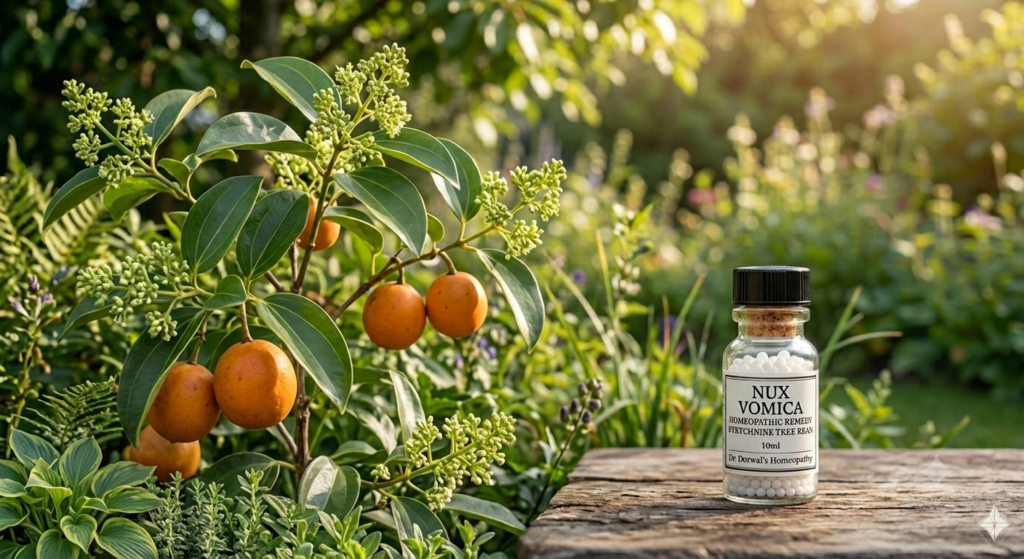
Quick Answer: Commonly used homeopathic remedies for acidity are Nux Vomica, Carbo Veg, Lycopodium, Robinia, Arsenicum Album, Iris Versicolor, Pulsatilla Nigricans, Natrum Phosphoricum etc, selected based on the specific trigger and nature of the acid reflux. These remedies correct the underlying digestive imbalance to reduce the acidity over time with lifestyle modifications.
What is Acidity?
Acidity, or acid reflux, is one of the most common complaints seen in everyday clinical practice. It happens when stomach acid flows back into the food pipe, causing burning sensation in the chest (Heartburn), sour eructations, and discomfort after meals. It occurs when excess gastric acid irritates the lining of the esophagus and stomach. Homeopathy approaches acidity by looking at the pattern of a person’s acidity (what triggers it?, when it’s worse?, what accompanies it?) rather than treating “acidity” as one single condition with one single fix. Remedies are selected on the basis of the individual symptomatology of the patient. It means that two patients with the same complaint of “acidity” may need entirely different remedies. Commonly used remedies for acidity include:
1. Potency (Dilution) Homeopathic Remedies for Acidity
These are prescribed in potencies (such as 6C, 30C, or higher) based on the totality of the patient’s symptoms. homeopathic dilutions for acidity includes:
1. Nux vomica
Nux Vomica is best suited for acidity that is triggered by overeating, spicy food, alcohol, or a stressful lifestyle. Symptoms are typically worse in the morning, with irritability and a tendency towards constipation.
2. Carbo Veg
Carbo veg is indicated when acidity is accompanied by marked bloating and gas, especially in the upper abdomen, with a feeling of fullness even after small meals. This remedy is often called the “corpse reviver” for its use in sluggish digestion.
3. Lycopodium
It is best suited to bloating and acidity that is characteristically worse between 4 p.m. and 8 p.m., often with a craving for sweets and rumbling gas in lower abdomen.
4. Pulsatilla Nigricans
Pulsatilla Nigricans is useful for acidity that follow rich, fatty, or creamy food, in patients whose complaints are changeable and who are generally thirstless despite a dry mouth.
5. Arsenicum Album
Arsenicum Album is considered when there is burning pain relieved by warm drinks and sips of water, restlessness, and anxiety, with symptoms that often worse after midnight.
6. Iris Versicolor
It is indicated for burning acidity with sour, acrid vomiting, frequently linked with a migraine-type headache and increased salivation.
7. Sulphur
Sulphur is used in cases where there is a burning sensation in the stomach, a characteristic sinking or “empty” feeling around 11 o’clock, and aggravation from spicy or fatty food.
8. Kali Bichromicum
It is used in cases of acidity when the pain is felt in one small, well-defined spot, sometimes with a tendency towards gastric erosion, and aggravation from beer or alcohol.
9. Bryonia Alba
It is suited to acidity that is markedly worse from any movement, with a bursting, heavy fullness and a desire for large quantities of water at long intervals.
10. Phosphorus
Indicated for burning in the stomach that is temporarily relieved by cold food or drink, which is then vomited once it turns warm in the stomach; often seen in a thin, sensitive constitution.
2. Mother Tinctures (Q) for Acidity
Mother tinctures are generally used in a few drops with diluted water, and are often preferred where a gentler, more physiological action on the digestive tract is desired.
1. Robinia Pseudacacia Q
Robinia Pseudacacia is a specific remedy where regurgitated fluid is intensely sour, often accompanied by a frontal headache and burning pain that is worse at night, sometimes disturbing sleep.
2. Carica Papaya Q
A gentle digestive remedy used for sluggish digestion (a condition in which food moves too slowly through your stomach and intestines) and general dyspepsia, particularly useful for weak digestive power in children and in convalescing patients (a person who is recovering after a sickness, injury, or surgery).
3. Chelone Glabra Q
Indicated where acidity is accompanied by a bitter taste, loss of appetite, and a sense of liver involvement in the digestive complaint.
4. Chionanthus Virginica Q
Used for bilious, liver-linked acidity, often with a coated tongue and nausea that points towards sluggish liver function.
5. China Officinalis Q
Suited to acidity with marked flatulence and bloating that is not relieved by belching, especially when there is accompanying weakness or exhaustion.
Biochemic (Tissue Salt) Homeopathic Remedies for Acidity
Biochemic remedies are prescribed typically in 3X, 6X, or 12X potency to correct the mineral imbalance at cellular level.
1. Natrum Phosphoricum
Considered as the principal biochemic “antacid” salt, used for a sour taste in the mouth and a creamy, yellow coating on the tongue. It is often linked to excess acid or a generally acidic constitution.
2. Natrum Sulphuricum
Natrum Sulphuricum is indicated for biliousness and a sour taste that is worse in the mornings, particularly where acidity is associated with sluggish liver function and aggravation in damp weather.
3. Kali Phosphoricum
It is used for nervous, stress-related dyspepsia with gnawing hunger and mental or physical exhaustion accompanying the digestive complaint.
Comparison of the Commonly Used Homeopathic Remedies for Acidity
| Remedy | Best For | Key Differentiator |
| Nux Vomica | Overindulgence, stress-linked acidity | Worse in the morning; irritable, chilly |
| Carbo Veg | Bloating with acidity | Better with fanning; sluggish digestion |
| Robinia Pseudacacia Q | Intensely sour regurgitation | Worse at night; disturbs sleep |
| Natrum Phosphoricum | Sour taste, creamy tongue coating | Biochemic antacid; excess acidity/uric acid tendency |
| Arsenicum Album | Burning pain, anxious/restless patient | Better from warm drinks; worse after midnight |
Acidity Homeopathic Remedies: Dosage & Administration
- Acute episodes: For acidity following a specific trigger such as a heavy meal, lower potencies such as 6C or 30C are commonly used, repeated as needed for short-term relief.
- Recurring or chronic acidity: Higher potencies are typically used less frequently, as part of a constitutional treatment plan guided by a physician.
- Mother tinctures: Generally taken as a few drops diluted in water, two to three times a day, and are often continued over a longer period for a gentler, sustained action.
- Biochemic salts: Taken in 3x, 6x, or 12x potencies, frequently in form of tablets, and can usually be used alongside other remedies.
Alongside remedies, the timing of meals and identifying personal trigger foods plays an important supporting role in managing acidity long term.
Clinical Note: This is general educational information, not a personal prescription. Please consult a qualified homeopathic physician before starting any remedy.
Dr. Dorwal’s Clinical Perspective
Over the years, most consultations related to acidity cases are fall into one of two buckets — the stress-and-irregular-meals dietary pattern, and the ones who can point straight to a trigger, usually fried or fermented food. Before I reach for a remedy, I always ask about timing: does it flare up right after eating, a few hours later, or only at night? That one detail tells me more than the word “acidity” itself ever does.
I also ask patients to keep a rough note of what sets it off, because the remedy does its best work when it is backed up by these small, steady changes in diet and daily routine — not as a substitute for them. Mostly, I recommend dietary changes and yogic exercises to boost up the tone of digestive system with homeopathic remedies to ease out the symptoms of acidity.
Disclaimer: This content is for informational purposes only and is not medical advice. Homeopathic medicines should be taken under the guidance of a qualified homeopathic physician. Do not self-medicate for chronic or recurring symptoms — consult a professional for proper diagnosis.
- Retrospective Analytical Case Series Study on the Acid Peptic Disorders treated with Homoeopathic Medications
- Homeopathy as an Emerging Alternative for GERD Management: A Comprehensive Review
- Treatment of Gastrointestinal Symptoms and Mood Disorder With Physical Medicine and Supplementation: A Case Report
- THE STUDY OF HOMEOPATHIC MEDICINES FOR TREATMENT IN GASTROESOPHAGEAL REFLUX DISEASE
- Usefulness Of Homoeopathic Medicines In Case Of Gastro-oesophgeal Reflux, Acid Peptic Disorder, Irritable Bowel Syndrome: A Retrospective Study
- A Review on Homeopathic Management of Gastroesophageal Reflux Disease (GERD): A Holistic and Natural Approach
- Homeopathy as an Emerging Alternative for GERD Management: A Comprehensive Review
Frequently Asked Questions
There is no single “best” medicine because homeopathy matches the remedy to the individual pattern. Nux Vomica, Carbo Veg, and Robinia Pseudacacia Q are among the most frequently indicated, chosen according to the trigger and timing of the complaint.
Homeopathy aims to reduce the frequency and severity of acid reflux by addressing the underlying digestive sensitivity. Whether it resolves permanently varies case to case and depends heavily on sustained dietary and lifestyle changes alongside treatment.
Homeopathy is commonly used for a range of gastric problems, including acidity, bloating, and sluggish digestion, with the remedy selected on the specific symptom pattern rather than a single formula for all gastric complaints.
Yes — remedies such as Arsenicum Album, Kali Bichromicum, and Nux Vomica are commonly considered for gastritis-type complaints, chosen according to the nature, location, and timing of the pain.
For acute, severe acidity, remedies such as Arsenicum Album (burning pain with restlessness) or Robinia Pseudacacia Q (intense sour regurgitation) are often considered, but severe or persistent symptoms should be evaluated by a physician promptly rather than self-treated.
Carbo Veg and Lycopodium are commonly used for bloating and gas accompanying acidity, chosen based on which part of the abdomen is affected and the timing of the discomfort.
Robinia Pseudacacia Q is commonly considered for acidity that worsens at night or on lying down, though the right remedy depends on the full symptom picture. So, symptoms should be evaluated by a physician promptly rather than self-treated.
Natrum Phosphoricum is the biochemic salt most closely associated with acidity, often used for a sour taste and a creamy, yellow coating on the tongue.
Homeopathic remedies are generally considered safe alongside conventional treatment, but you should inform both practitioners about everything you are taking.
Yes, with the potency and remedy selection adjusted for age by a qualified physician; mother tinctures such as Carica Papaya Q are often preferred for children.