
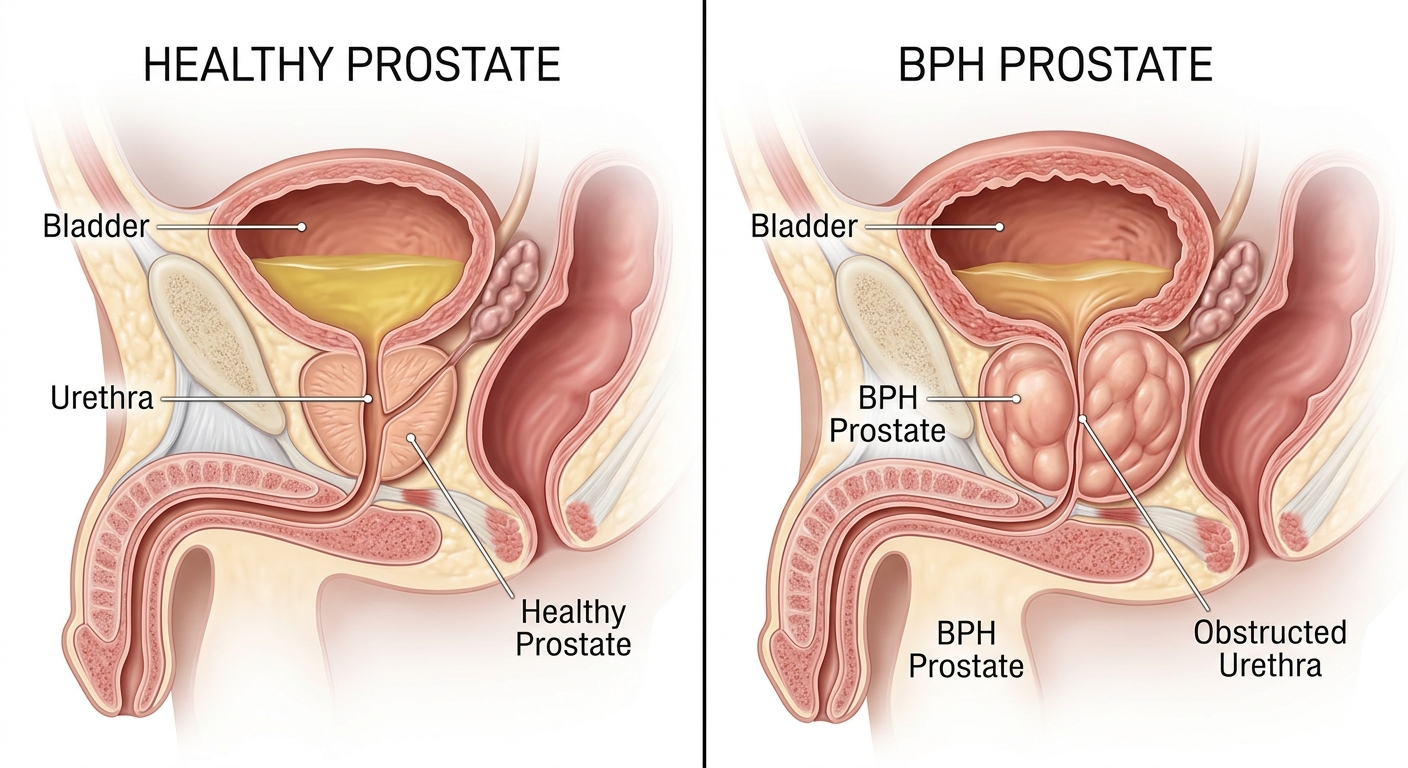
Benign prostatic hyperplasia (BPH), commonly known as prostate enlargement, is a noncancerous enlargement of the prostate gland that is situated between the bladder and the penis in men. BPH is often associated with lower urinary tract symptoms and the proliferation of prostatic tissue. Studies suggest that the prevalence of BPH increases after the age of 40, and approximately 30 million men worldwide suffer from its symptoms. Today, a variety of effective treatment options are available for an enlarged prostate, including allopathic, surgical, and holistic approaches like yoga and homoeopathic medicines. In fact, homoeopathic treatment can help improve the distressing symptoms of an enlarged prostate and enhance quality of life. In this article, we look at the signs and symptoms, causes, risk factors, complications, diagnosis, and various treatment approaches including homoeopathy to manage BPH.
Signs and Symptoms
Common signs and symptoms of benign prostatic hyperplasia include:
- Frequent urge to urinate
- Nocturia (frequent urination at night)
- Retention of urine
- Weak urinary stream
- Incomplete urination
- Painful urination
- Post-micturition dribble (involuntary loss of urine after finishing urination)
- Blood in the urine
- Incomplete emptying of the bladder
In advanced stages, bladder dysfunction, urinary tract infections (UTIs), narrowing of the urethra, and blockage of the urethra due to the enlargement of the prostate gland may develop.
Causes
While the exact cause of benign prostatic hyperplasia is unknown, identified contributing factors include:
- Hormonal changes: Studies suggest that sex hormones are linked to the enlargement of the prostate gland. Men secrete both testosterone and small amounts of estrogen. With advancing age, testosterone levels in the blood decrease, while the concentration of estrogen increases, which may lead to prostate enlargement. In addition, the male hormone dihydrotestosterone (DHT) contributes to the development and growth of the prostate gland. However, more evidence-based studies are required to confirm the roles of testosterone, estrogen, and DHT in the progression of BPH.
- Aging: The size of the prostate gland increases with age. Aging involves changes at the cellular and tissue levels that increase the size of the gland and lead to lower urinary tract symptoms due to the compression of the urethra.
- Inflammation: Several studies suggest that acute and chronic inflammation of the prostate is linked to cellular proliferation of the gland.
- Obesity: Studies have concluded that abdominal obesity in men may cause a number of diseases, including BPH, by influencing sex hormone levels and the thickness of adipose tissues.
In addition, decreased physical activity, metabolic syndrome, diabetes, smoking, dietary deficiencies, and genetics may also contribute to the development of benign prostatic hyperplasia.
Complications
Advanced stages of prostate enlargement may lead to the development of other diseases and complications like:
- Urinary tract infections (UTIs): Obstruction and retention of urine for long periods can cause the growth of various bacteria and other microbes in the urinary pathway, increasing the risk of infection.
- Bladder stones: Untreated BPH may lead to the formation of multiple stones in the bladder, causing abdominal pain and urine retention.
- Bleeding in the urinary tract: Chronic urine retention may damage the urinary tract, leading to internal bleeding, which may sometimes manifest as blood in the urine.
- Infertility: Studies suggest that complex cases of BPH involving inflammation may alter sperm production and reduce semen quality, leading to infertility.
Additionally, acute retention of urine, overflow incontinence, renal insufficiency, and increased voiding pressure may develop in complex cases.
Diagnosis
BPH is primarily diagnosed through a physical examination and a review of the patient’s symptom history. Doctors may also follow specific diagnostic procedures to confirm the diagnosis:
- Total Prostate-Specific Antigen (PSA) test: This is a blood test used to screen for prostate issues, including prostate cancer, enlargement, or inflammation. PSA levels higher than 4 nanograms/mL suggest prostate enlargement. However, additional tests are required due to the limitations of this test in distinguishing between BPH and prostate cancer.
- Ultrasonography: This procedure uses high-frequency sound waves to scan internal organs, allowing the doctor to determine the size of the bladder and prostate gland.
- Post-Void Residual (PVR) urine volume test: This measures the amount of urine remaining in the bladder after urination. Normally, about 50 mL of urine remains; volumes higher than 150–200 mL suggest abnormalities in the urinary tract.
- Digital Rectal Examination (DRE): A DRE is performed to manually assess the size and consistency of the prostate gland.
Doctors may also conduct a urinalysis, urine culture, renal function test, urethrocystoscopy, or uroflowmetry test to diagnose the condition.
Management and Treatment
The management of BPH is tailored to the severity of the symptoms, the size of the prostate, and the patient’s overall health. Treatment strategies inlude:
1. Watchful Waiting
For patients with mild symptoms that do not significantly impact their daily life, doctors often recommend “watchful waiting.” This involves regular monitoring and simple lifestyle adjustments:
- Fluid Management: Limiting fluid intake 2–3 hours before bedtime to reduce night time urination (nocturia).
- Dietary Adjustments: Reducing the intake of caffeine and alcohol, which can irritate the bladder and increase urine production.
- Avoiding Irritants: Limiting the use of over-the-counter decongestants or antihistamines, which can tighten the muscles around the urethra, making urination more difficult.
2. Conventional Medical Management
When symptoms become bothersome, following mainstream medications are prescribed:
- Alpha-blockers: These medicines work quickly to relax the smooth muscles of the bladder neck and prostate, making it easier to urinate.
- 5-Alpha-Reductase Inhibitors: These medicines helps to shrink the prostate by preventing the hormonal changes that cause it to grow. These may take several months to reach full effectiveness.
- Combination Therapy: Doctors may prescribe both an alpha-blocker and a 5-alpha-reductase inhibitor if a single medication is insufficient.
- Phosphodiesterase-5 (PDE5) Inhibitors: These are used to manage urinary symptoms of BPH.
3. Surgical and Minimally Invasive Approaches
If medication fails or complications (such as bladder stones or recurrent infections) arise, surgical intervention may be necessary:
- Transurethral Resection of the Prostate (TURP): Considered the “gold standard,” this procedure involves removing the inner portion of the prostate gland to improve urine flow.
- Minimally Invasive Surgical Therapies (MISTs): Modern options that are often performed as outpatient procedures with faster recovery times, such as:
- Prostatic Urethral Lift (PUL): Uses small implants to pull back the prostate tissue and widen the urethra.
- Water Vapor Thermal Therapy (e.g., Rezūm™): Uses steam energy to destroy excess prostate tissue.
- Laser Therapy (e.g., HoLEP or GreenLight): Uses lasers to vaporize or remove the obstructive tissue with reduced bleeding risk compared to traditional surgery.
4. Holistic and Lifestyle Approach
Complementary practices can significantly support treatment and improve general prostate health. Practices include:
- Yoga: Specific poses (such as Baddha Konasana or Virasana) can help improve pelvic floor flexibility and reduce pelvic tension. Yoga, meditation, and mindfulness also helps to lower stress, which is known to exacerbate urinary symptoms.
- Pelvic Floor (Kegel) Exercises: Strengthening the pelvic floor muscles helps support the bladder and improve sphincter control. Aim for 3 sets of 10–15 repetitions daily to improve urinary control and recovery.
- Physical Activity: Regular aerobic exercise, such as brisk walking, cycling, or swimming, may also helps to manage weight and reduces inflammation, which is directly linked to BPH severity.
- Dietary Support: Adopting a diet rich in “prostate-friendly” foods—such as tomatoes (lycopene), berries, nuts, and healthy fats (omega-3 fatty acids found in fish)—can help reduce systemic inflammation.
5. Homoeopathy Approach
In cases of Benign prostatic hyperplasia, homoeopathic medicines are employed to improve distressing symptoms. Physician selects the most similar medicine (“simillimum”) after evaluating the totality of the patient’s symptoms at the physical, mental, and emotional levels. Primary goal of the physician is to stimulate the body’s self-regulatory mechanisms. Widely indicated homoeopathic medicines for BPH include:
1. Mother Tinctures (Q)
Mother tinctures are the crude liquid extracts of medicinal substances (usually plants). They contain a high concentration of the active ingredient and are often used to provide rapid symptomatic relief in cases where the patient’s symptoms are well-defined and organ-specific.
- Sabal serrulata: Often considered the “prostate-specific” remedy in homoeopathy, it is frequently used in mother tincture form to support prostate health and ease urinary difficulty.
- Chimaphila umbellata: Used when there is a sense of fullness in the pelvic floor, frequent urging, and difficulty initiating urination.
- Solidago virgaurea: Sometimes used to support kidney and bladder function, potentially helping with the urinary complications of an enlarged prostate.
- Triticum repens: Indicated for severe irritation of the bladder and painful, frequent urination.
- Chimaphila umbellata: Indicated for a sensation of a “ball” or physical weight in the perineum (pelvic floor) when sitting. It is highly valued for cases involving significant urine retention and frequent, distressing urges.
- Solidago virgaurea: Often used when prostate symptoms are accompanied by back pain, and when the urine is dark or contains sediment. It helps support overall urinary tract drainage.
- Pareira brava: Indicated when the pain is so severe that the patient must strain intensely or get on their hands and knees to pass even a small amount of urine. It is often useful in cases of extreme bladder irritability.
2. Dilutions
Dilutions are selected based on the “totality of symptoms,” including a patient’s mental and physical state.
- Lycopodium clavatum: Often indicated for long-standing prostate enlargement with weak flow, gas, and digestive issues.
- Pulsatilla nigricans: Indicated for interrupted urine flow, pain radiating to the testicles, and symptoms that worsen at night or when lying on the back.
- Conium maculatum: Often used for elderly patients experiencing a “stop-and-start” flow and significant dribbling.
- Thuja occidentalis: Indicated for burning sensations, a forked urine stream, and frequent urging.
- Clematis erecta: Used when the urinary passage feels tightened or narrow, causing slow, dribbling urination.
- Staphysagria: Often prescribed for burning pain in the urethra and urinary retention, especially in individuals with a sensitive or “sentimental” emotional profile.
- Other medicines: In addition, Apis mellifica, Causticum, Clematis erecta, Hydrangea arborescens and many more are also used by the physicians to manage symptoms of benign prostatic hyperplasia.
3. Bio-chemic Salts (Tissue Salts)
Bio-chemic salts are intended to address cellular-level mineral deficiencies and are often used as complementary therapy alongside a constitutional remedy.
- Calcarea fluorica (Calc Fluor): This is the most frequently cited tissue salt for BPH. It is believed to restore tissue elasticity and is specifically used to address glandular affections and swelling (hypertrophy) of the prostate.
- Ferrum phosphoricum: Often used for its anti-inflammatory properties, particularly in the early stages of congestion or if there is any irritation/burning in the urinary tract.
- Kali muriaticum: Sometimes indicated if there is significant swelling of the tissues (glandular enlargement) or suspected chronic inflammation of the urinary pathway.
Dr. Dorwal’s Perspective
I view BPH as a systemic imbalance rather than an isolated gland issue. My approach bridges the gap between modern diagnostics and holistic recovery by integrating homoeopathy—which addresses the root cause to restore internal equilibrium—with targeted yoga and pelvic floor rehabilitation to relieve chronic tension. By combining personalized homoeopathic treatment with proactive lifestyle modifications, I aim to minimize reliance on invasive procedures, resolve distressing symptoms, and restore the patient’s long-term quality of life.
Conclusion
Benign prostatic hyperplasia (BPH) is a common, manageable condition. While modern medical and surgical interventions provide standard relief, where as holistic approaches—including homoeopathy and lifestyle modifications—offer valuable support for symptom management and quality of life. Early medical consultation is essential for accurate diagnosis and the development of an effective, personalized treatment plan. (1,2,3,4)
Disclaimer: This article is for informational purposes only and does not constitute medical advice. Always consult with a qualified healthcare professional regarding any medical condition.
Frequently Asked Questions (FAQs)
There is no single “best” medicine. In conventional medicine, the “best” treatment depends on your PSA levels, prostate volume, and severity of symptoms; doctors typically prescribe alpha-blockers for immediate relief or 5-alpha-reductase inhibitors to address size. In homoeopathy, the “best” medicine is the one that matches your totality of symptoms—the unique way the disease expresses itself in your body, mind, and emotions. For one man, Sabal serrulata might be the key.
Success is defined by symptom relief and preventing complications. Transurethral Resection of the Prostate (TURP) remains the clinical gold standard for severe cases or when medication fails. However, many patients achieve optimal results through an integrated approach, combining conventional medications for immediate relief with homeopathic support and lifestyle modifications—such as diet, yoga, and pelvic floor exercises—to manage long-term prostate health.
“Normal” is subjective as some growth is natural with age; the goal is a functional prostate that does not disrupt your quality of life. Achieve this by combining regular clinical monitoring—such as PSA and ultrasound tests—with a healthy, active lifestyle and anti-inflammatory diet. Supplement this with pelvic floor exercises and yoga to reduce local tension, while maintaining professional oversight from both a urologist for medical status and a qualified homoeopathy doctor for constitutional treatment to address underlying imbalances.
