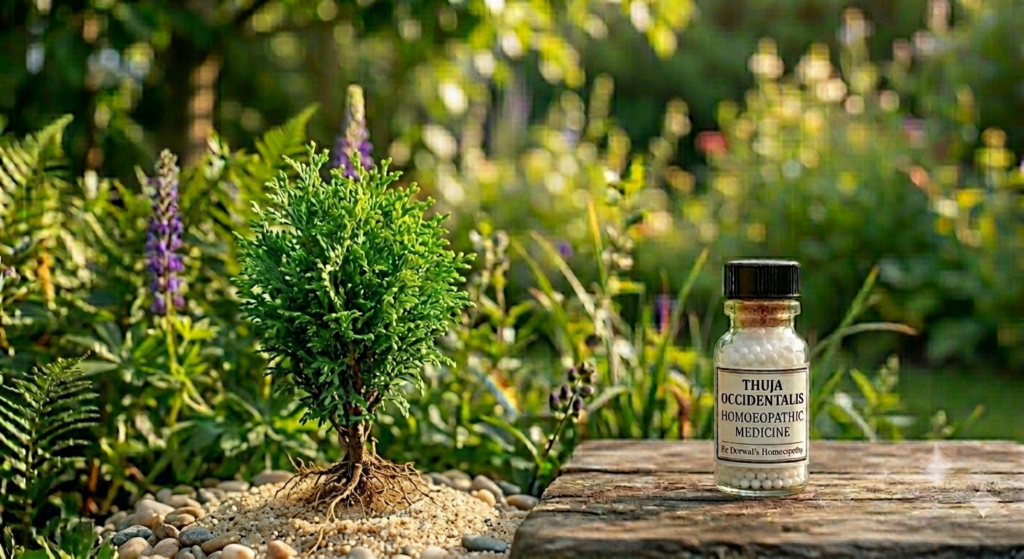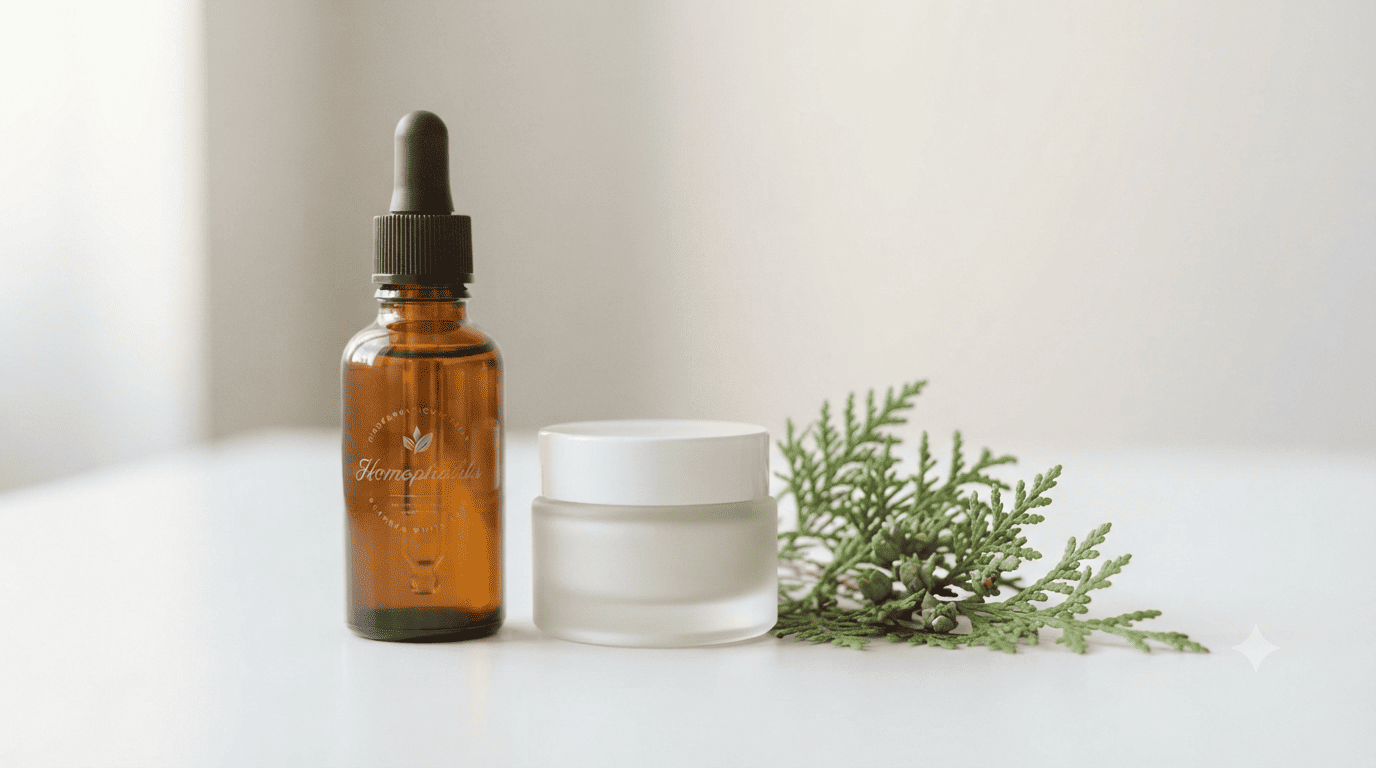
Quick Overview: Thuja Occidentalis cream is a widely used homeopathic medicine to manage common warts and extra skin growths. It works upon warts by softening the thick skin so it can be removed naturally. Studies indicate that regular use clears skin without any pain or harsh treatments. However, outcomes may vary from person to person because treatment depend upon the underlying health factors and constitution of the patient.
Warts are the most common skin concerns encountered in clinical practice. These are the non cancerous skin growths caused by the different variants of the HPV (human papillomavirus) virus. These small, rough, grainy growths can appear anywhere on the body — from the fingers and hands to the soles of the feet. Medically, warts are contagious (can spread from one person to another through direct skin-to-skin contact or contaminated surfaces) and if left untreated it becomes a serious cosmetic issue among individuals that affects mental and physical sphere of a person. In this article, we will take a closer look at Homeopathic Thuja Occidentalis cream to understand whether it genuinely works for treating warts, how it interacts with the skin, and what you can realistically expect from using it.
What Is Thuja Occidentalis?
Thuja Occidentalis is commonly known as the Northern White Cedar or Arbor Vitae. In Homeopathy, Thuja is considered as the principal medicine for a constitutional state associated with abnormal tissue overgrowths such as warts, condylomata (wart-like growths or lesions that appear on the skin or mucous membranes, most commonly in the genital and anal regions), and polyps.
When formulated into a topical cream or ointment, Thuja delivers concentrated botanical extracts directly to the site of the lesion and works with the body’s natural healing mechanisms.
How Thuja Cream Works on Skin Warts
In my clinical experience, topical Thuja acts through several targeted pathways:
- Cellular Regulation: Warts represent rapid, uncontrolled proliferation of keratinocytes (main cells of the outer layer of your skin) driven by the virus. Thuja helps to normalize the local cellular pathology, encouraging the excess tissue to regress.
- Antiviral Support: The active constituents possess mild local antiviral properties that help suppress viral activity within the superficial skin layers.
- Gentle Desquamation: Over time, the cream softens the hardened keratin cap of the wart, allowing infected cells to shed naturally without causing deep tissue trauma or scarring.
Clinical Benefits of Thuja Cream
Advantages of Thuja Cream are clear:
- Absolute Painless Application: Unlike cryotherapy or surgical removal, which can cause stinging, blistering, and significant discomfort, Thuja application is completely painless—making it ideal for children and sensitive patients.
- Preservation of Healthy Skin: Over-the-counter chemical removers can easily spill onto healthy surrounding tissue, causing burns or irritation. Thuja cream is remarkably gentle on normal skin.
- Minimal Risk of Scarring: Because it promotes gradual, natural shedding, the risk of permanent scarring or post-inflammatory hyperpigmentation is drastically reduced.
- Convenience: It allows for easy, self-administered daily care in the comfort of your home.
Dr. Dorwal’s Step-by-Step Guide to Correct Application
Most of the time when a patient tells me that the cream “didn’t work,” the issue isn’t the cream itself — it’s how it was applied. Here is the protocol for the correct application of the cream.
- Step 1: Wash the area with water, then dry it completely. Any leftover oil or dirt on the skin just gets in the way of the cream actually reaching the wart.
- Step 2: Dab a small amount onto the wart itself using a cotton bud or a clean fingertip. It is best to kept cream away from healthy surrounding skin.
- Step 3: Give it 5 to 10 minutes to absorb. If the spot is somewhere that rubs against a shoe or clothing, a light breathable bandage over it helps to keep the area protected through the day.
- Step 4: Apply it twice a day, morning and evening, without gaps — homeopathy simply doesn’t work well with an on-and-off routine.
What to Expect with the Application of Thuja Cream?
Using a natural topical treatment like Thuja Occidentalis cream is a gradual process rather than an overnight fix. Because the cream works gently with your skin’s natural turnover cycle instead of aggressively burning or freezing the tissue off, the healing process unfolds in distinct stages:
- Weeks 1 to 2 (The Softening Phase): The wart begins to soften up, loses some of its hard, rough texture, and any tenderness or friction-based discomfort around it starts easing off.
- Weeks 3 to 4 (The Shrinking and Darkening Phase): The wart begins to dry out and darken, and you will likely notice it sitting flatter against the skin than before. Tiny black dots—which are small, clotted capillaries—may sometimes show up more clearly here before they begin to fade.
- Weeks 5 to 8 and Beyond (The Shedding and Recovery Phase): The top layers gradually flake and peel away until the healthy skin underneath emerges and looks normal again. Keep in mind that older, larger, or deeper warts can sometimes take 2 to 3 months of consistent application before the process is fully complete.
Important Clinical Precautions
Thuja cream is gentle, but a few practical points are worth keeping in mind:
- Keep it away from broken skin — Avoid applying it over any open, bleeding, or infected area.
- Keep away from sensitive zones — Keep cream away from the eyes, inner eyelids, and mucous membranes. If it accidentally gets on one of these, rinse well with clean water right away.
- Patch test first if your skin is reactive — Apply a small spot on the inner forearm, left for 24 hours, before using it anywhere on the face.
- Know when to stop and get it checked — If a growth changes color quickly, starts bleeding on its own, or simply isn’t budging after 8 to 10 weeks of consistent use, that’s a sign to see a physician or dermatologist rather than continue at home.
Dr. Dorwal’s Perspective
In my clinical practice, I get a lot of questions from patients about Thuja cream. Studies show that this cream really helps with warts, and I have also prescribed it often and seen great results myself. In homeopathy, using it alongside internal medicine works even better.
In fact, my own journey in homeopathy actually started with this exact medicine—I had a wart on my hand when I was younger, and it completely disappeared just by taking internal homeopathic medicine!
The way homeopathy works is that we first take a detailed case history of the patient and then choose the right medicine based on their individual body. The treatment definitely works, but it is important to use both internal and external care under proper guidance. Also, please keep in mind that it might not work at the exact same speed for everyone, because every body responds differently.
Medical Disclaimer: This article is for educational purposes only and is not a substitute for professional medical advice. Homeopathy is highly individualized, and treatments like Thuja Occidentalis do not guarantee identical results for everyone. This content makes no absolute claims or promises of a cure. Outcomes vary based on individual health, constitution, and condition severity. Always consult a qualified, registered homeopathic practitioner before starting any treatment.
- Successful treatment of verruca vulgaris with Thuja occidentalis in a renal allograft recipient
- Thuja
- Warts
- Role of thuja in the management of laryngeal papilloma
- A Clinical Study of Thuja Occidentalis in the Management of Warts
- Homeopathic Thuja occidentalis vs placebo in common warts
- War of warts: How Thuja saved the day!
- Effects of Thuja Occidentalis as an alternative remedy in the treatment of Papillomatosis in Cattle
- Topical treatments for cutaneous warts
Frequently Asked Questions (FAQs)
Yes, Thuja cream is widely used in homeopathy for warts because it works gently on the excess tissue growth without causing pain or scarring. Results depend on the type and age of the wart, and it works best when used consistently over several weeks.
Thuja Occidentalis cream is mainly used for skin growths like warts, condylomata, and similar overgrowths linked to the sycotic pattern in homeopathy. It’s applied topically to soften the lesion and support natural shedding of the affected tissue.
Yes, Thuja cream is generally considered safe for regular topical use, including for children and sensitive skin. It should still be kept away from broken skin, eyes, and mucous membranes, and a patch test is recommended for very sensitive skin.
Clean the area, pat it dry, and apply a small amount of cream directly onto the wart using a cotton bud or fingertip, avoiding the surrounding healthy skin. This is usually done twice a day, consistently, for the best results.
Most people start noticing the wart softening and shrinking within 3 to 4 weeks of regular use. Deeper or long-standing warts can take up to 2 to 3 months of consistent application to clear fully.
Thuja cream is generally well-tolerated, though mild redness, irritation, or a tingling sensation can occasionally occur on sensitive skin. It’s not meant for open wounds or broken skin, and contact with eyes or mucous membranes should be avoided.
Yes, Thuja is one of the most commonly used homeopathic remedies for removing warts, working by gradually softening and shedding the excess tissue. For recurrent or multiple warts, it’s often combined with an internal remedy for longer-lasting results
Thuja is primarily known for its antiviral and tissue-regulating properties rather than as a dedicated antifungal remedy. It’s mainly indicated for viral skin growths like warts rather than fungal skin infections.
Many patients do see visible improvement with Thuja cream, particularly with consistent application and the right technique. Since homeopathy works gradually and individual response varies, results can differ from person to person and case to case.
Thuja is sometimes used for skin tags as well, since they fall into a similar category of benign tissue overgrowth. However, response can vary more with skin tags than with warts, so a homeopath’s assessment is useful before starting treatment.
Thuja cream isn’t specifically formulated or commonly used for pigmentation — its primary role is addressing tissue overgrowths like warts. For pigmentation concerns, a different, targeted approach is generally more appropriate.
Side effects are uncommon and usually mild, such as slight irritation or redness in sensitive individuals. It’s best avoided on broken or infected skin, and a patch test is advisable before applying it to sensitive areas like the face.