
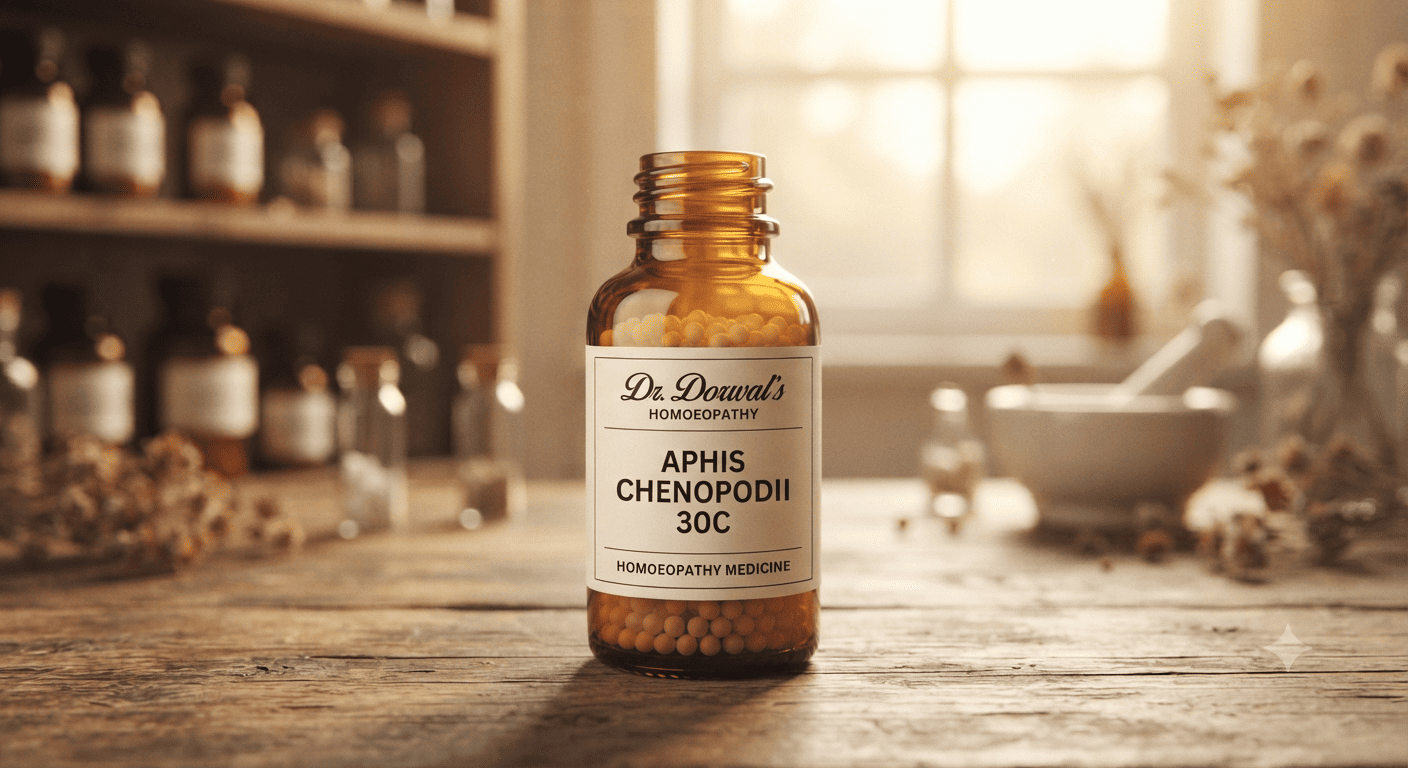
Aphis Chenopodii Glauci (the plant louse from Chenopodium) is a specialized remedy that reflects the unique properties of the plant upon which the insect lives. It is a remedy of focused, intense action, particularly indicated when pathologies of the head, oral cavity, and digestive tract present with sharp, neuralgic, or catarrhal qualities.
Key Clinical Indications & Uses
Therapeutic profile of Aphis Chenopodii Glauci is defined by its affinity for neuralgic pain and reactive mucous membranes:
- Neuralgic and Cranial Affections: A hallmark of this remedy is a sensation that the brain is being “swashed hither and thither” during motion. It is specifically indicated for orbital neuralgia—particularly on the right side—accompanied by profuse lachrymation (tearing). Patients may report a peculiar, intense noise in the ears, often described as sounding “like a cannon.”
- Dental and Facial Distress: It serves as a potent intervention for toothache that radiates to the temple, ear, and cheekbone. This pain is often notably relieved by a general warm sweat.
- Digestive and Rectal Sensitivity: It addresses a lack of appetite, specifically for meat and bread, accompanied by an overproduction of mucus. Stools are typically hard and knotty, though they may alternate with morning diarrhoea characterized by painful, ineffectual urging and a persistent burning sensation in the anus.
- Respiratory and Thoracic Symptoms: It is indicated for severe, stabbing pains located at the lower inner angle of the left shoulder-blade, which radiate inward toward the chest.
- Urinary Profile: It produces a distinct, voluptuous feeling in the glans, accompanied by burning in the urethra and frequent, copious, frothy urination.
Administration & Dosage
- Dose: In clinical practice, it is typically utilized in 30C potency to best address the multifaceted nature of these symptoms.
Dr. Dorwal’s Perspective
In clinical practice, Aphis Chenopodii Glauci is a remedy that demonstrates the fascinating depth of our Materia Medica. It is a niche remedy, but one that is indispensable when its specific “keynote” symptoms appear. For instance, when a patient describes a toothache that isn’t just local, but shoots clearly into the temple and ear, this remedy provides relief where more general remedies might fail.
What I find most instructive is its ability to calm the neuralgic state through the induction of a warm, general sweat. It bridges the gap between physical discomfort of an acute neuralgia and the constitutional need for a thermoregulatory shift. It is a remedy for the patient who feels “swashed” and heavy, whose digestive tract is plagued by rumbling, and who needs a remedy to re-align their internal sensory perceptions. For the practitioner managing complex, migratory neuralgias or stubborn, mucus-heavy digestive states, Aphis Chenopodii Glauci is a valuable addition to your diagnostic repertoire.
Disclaimer: This content is for informational purposes only. Homoeopathic medicines should be taken under the guidance of a qualified homoeopathic physician. Do not self-medicate for chronic or serious medical conditions, and always seek professional advice for any health concerns.
Frequently Asked Questions (FAQs)
A feeling that the brain is being “swashed hither and thither” upon moving is a hallmark cranial sensation.
It radiates to the ear, temple, and cheekbone, and is characteristically relieved by a general warm sweat.
A lack of appetite for meat and bread, colic with significant abdominal rumbling, and hard, knotty stools alternating with morning diarrhoea.
It causes severe, stabbing pains in the lower inner angle of the left shoulder-blade that run into the chest.
