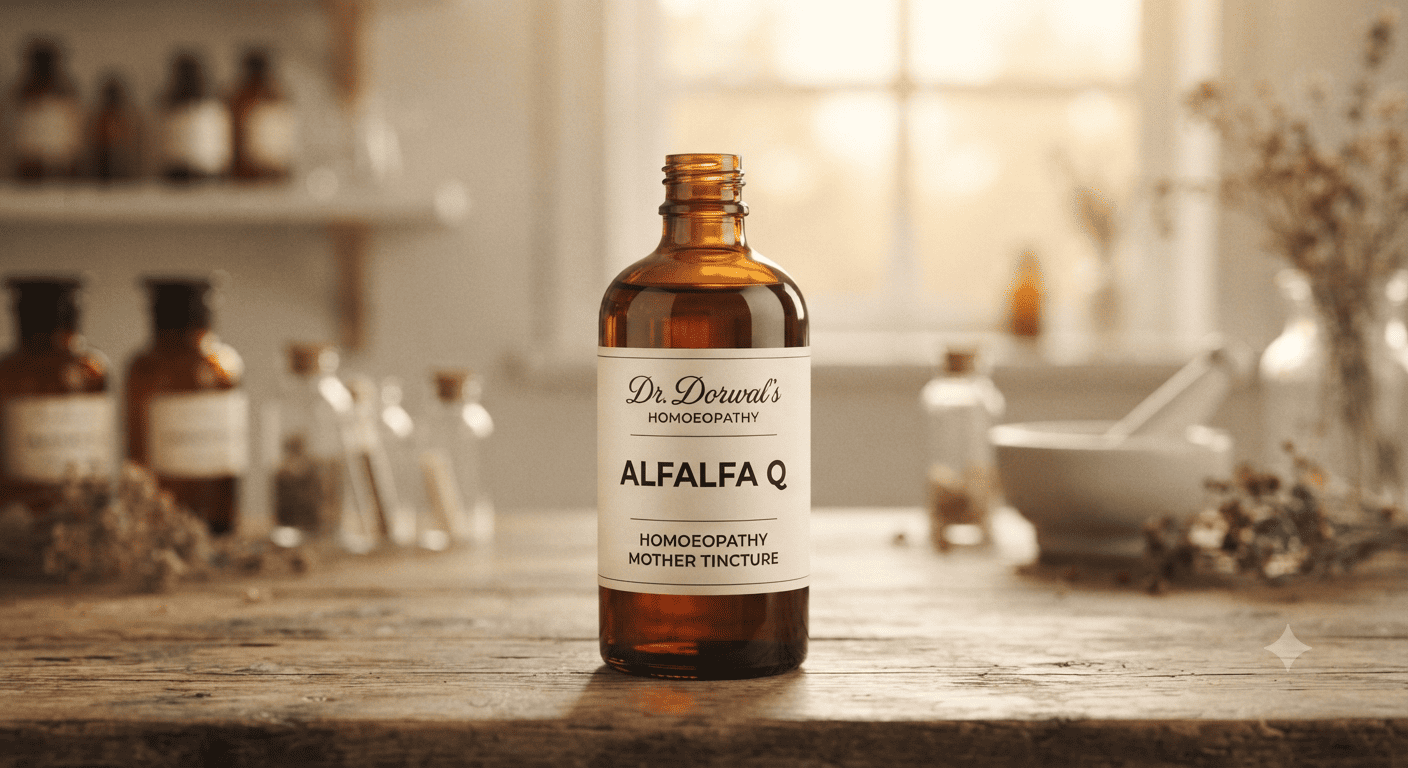
Quick Overview: Alfalfa is a widely used homoeopathic tonic known for its ability to improve sleep, physical weakness, and stomach discomfort caused by stress and anxiety. It also influence nutrition and helps to gain weight through improving the mental and physical vigor of the patient.
Alfalfa, a popular Homoeopathic tonic, is made from the fresh flowering tops and leaves of the Medicago Sativa plant. In India, we commonly say it Rizka or Lusan Ghas. In Homoeopathy, Well-Established Materia Medica (Written by Boericke, J.H. Clarke & Others) and clinical trials indicate its use to treat various clinical conditions like anorexia, depression, headaches, sleeplessness and general weakness in the body. In fact, It tone up the digestion and improve overall health of a person at physical and mental levels.
What is Alfalfa used for?
Homoeopathic preparations like Dilutions and Mother tinctures are used in:
1. Digestive System & Metabolism
- Improves appetite: Alfalfa is highly effective for people suffering from the loss of appetite and indigestion by stimulating the digestive system. It deeply works on the glands and improve impaired appetite. It covers the disorders that are identified by malnutrition. We all know that good gut health contributes to a person’s overall well-being.
- Improve digestion: Homoeopathic Mother tincture acts as a powerful digestive tonic. It relieves general stomach discomforts like stomach gas or bloating, pain in abdomen after meals and acidity. In fact, it helps people who eat frequently and can not wait for the regular meals. In cases of lost appetite alfalfa corrects weak digestion and boost up absorption of food. These actions leads to improvement in overall digestion process of the body.
- Strengthens Digestive Organs: Poor dietary habits often leads to weakness of stomach linings and digestive muscles. Alfalfa tones up the digestive organs so they can function properly by releasing essential digestive enzymes and process the food in good and healthy way.
2. Promotes healthy weight gain
Alfalfa chiefly works on the correction of tissue waste that improve absorption of nutrients in the body and makes you feel hungrier so you eat more food during meals. It induces the production of fat cells in the body. Overall improvement in physical and mental vigor significantly leads to healthy weight gain.
3. Improves Sleep
Alfalfa helps to sleep much better than usual, especially in the early morning hours, by ensuring a calm, peaceful, and fully refreshing rest in night. This undisturbed sleep leaves a feeling of complete refresh and energy for next day.
4. Boosts Mental and Physical Energy
Alfalfa acts directly upon the sympathetic nervous system and helps with nervous exhaustion, stress, and anxiety. It relieves mental tiredness and calm down the overactive mind. It alters mind and creates a happy, energized feeling of well-being, where mental dullness, sleepiness, and irritability disappear.
5. Support Nursing Mothers
It is used in decreased lactation, where it helps to increase both quality and quantity of the breast milk.
6. Urinary Health
On urinary system, Alfalfa is clinically useful in diabetes insipidus, presence of high levels of phosphate in the urine, and an enlarged prostate gland that cause frequent urging to urinate.
7. General weakness
Alfalfa fights fatigue, boosts appetite, and improves sleep by acting upon mental and physical sphere of the body. It significantly improves the physical and mental vigor of the person and aids on healthy well being.
How Alfalfa is Taken?
Homoeopathic potency and repetition are always individualised, but as a general clinical reference, Alfalfa usually shows most effective results when taken in material doses. You may take 5 to 10 drops of Mother tincture (Q), several times a day. It is advised to keep using it until the desired tonic benefits are achieved. Always consult a professional health care provider before starting Alfalfa for your health and wellness journey.
External Use: Studies indicate that when we externally use Alfalfa Q with rose water, it helps to manage mild to moderate hair fall. visible results may seen in 2-3 weeks.
Alfalfa vs Other Digestive Homoeopathic Mother tinctures (Q)
| Medicine | Best for | Key Difference (Symptoms) |
| Alfalfa Q | Acts as a toner for weak appetite and physical weakness caused by poor assimilation. | Loss of appetite, nervous indigestion, malnutrition, and flatulence. |
| Carica papaya Q | Contains papain enzymes that specifically help break down protein food. | Severe indigestion, bloating, constipation, and inability to tolerate milk. |
| Chelidonium Majus Q | Focuses on liver and gallbladder issues with pain under the right shoulder blade. | Sluggish liver, jaundice, gallstones, nausea, and clay-colored stools. |
| Hydrastis Canadensis Q | Characterized by thick, yellow, sticky mucus discharges and a white-coated tongue. | Chronic constipation, gastritis, weak digestion, and an empty/sinking feeling in the stomach. |
Dr. Dorwal’s Perspective
In my clinical experience, Alfalfa is my preferred “nutritional” homoeopathic tonic. When I observe patients especially those recovering from extended illness, students dealing with pressure of studies and mental exhaustion, or nursing mothers who shows signs of low energy, Alfalfa acts as an ideal homoeopathic tonic. It recharges the body through aids on digestive system and better sleep. In fact, its administration balance the internal balance of the body and allow body to absorb nutrition from food. Alfalfa serves as a foundational tonic in my practice if patients main concern is related to digestive suffering and nervous exhaustion. I recommend it as a crucial solution for conditions that arise from our busy and high pressure modern lifestyle.
Conclusion
Homoeopathic Alfalfa is a natural extract derived from nutrient-rich Medicago sativa plant. It is loaded with essential Vitamins (Such as Vitamin K, Vitamin A, Vitamin C, B-Complex Vitamins) and vital Minerals (Such as Calcium, Magnesium, Potassium and Iron) that provides cellular energy. If we talk about the results, It serves best to boost up digestive system and improves mental and physical vigor of a person. However, Alfalfa is generally safe and remains a time-tested, reliable natural solution for health, but to achieve the best therapeutic outcomes and ensure safety, consult a qualified healthcare professional or homoeopath for personalized dosage guidelines.
Disclaimer: This content is provided for informational purposes only. Homoeopathic medicines must be taken in the supervision of homoeopathic physician. Avoid treating chronic or serious medical conditions on your own, and always consult a professional for any advice.
- Homoeopathic Materia Medica by William BOERICKE, M.D. – Presented by Médi-T
- Alfalfa – PubMed
- Alfalfa – A multicentric clinical verification study
- A Comparative Study for the Effectiveness of Alfalfa Mother Tincture over individualized Homoeopathic medicine in management of Anorexia
- Evaluate the role of Alfalfa Q (in Homoeopathic Preparation) as a hair booster spray for reducing hair fall
Frequently Asked Questions (FAQs)
Alfalfa is used as a tonic in homoeopathy for to improve nutrition, appetite, sleep problems and generalized weakness of the body.
It is homoeopathic supplement that is commonly formulated with mixture of Alfalfa, Avena Sativa, Ginseng and Tissue Salts, depending upon the manufacture company. It is used to improve digestion and to support recovery from a weakness through providing energy to the body.
Raw alfalfa sprouts carry a risk of contamination and mainly eaten by animals. Homoeopathically, it is safe for all age group and pregnant ladies.
in men, Alfalfa supports the treatment of prostatic enlargement & improves the mental and physical vigor of the body by toning up the digestive system.
Alfalfa 200 is a highly diluted remedy and must be used in supervision of homoeopathy physician for general weakness, fatigue, and nervous exhaustion.
You may use homoeopathic Alfalfa Q everyday in the supervision of a homoeopath, until its tonic effects ensue.
Yes, In homoeopathic practice it is useful in the cases of Diabetes insipidus and Phosphaturia.
Alfalfa 30 is used for general weakness, fatigue, and nervous exhaustion.
Homoeopathically, Alfalfa is taken 20-30 minutes before meals.
In homoeopathy, When it is used in proper dose and supervision of physician, Alfalfa is safe for use.
Yes, alfalfa promotes good sleep and calm down the over-excited nervous system.
You may use it before the meals by mixing up 5-10 drops in a half cup of water.
Studies shows that alfalfa contains vitamins such as A, B-Complex, C, E and K, as well as essential minerals like calcium, potassium and iron.
No, Homoeopathic preparations like Mother tincture (Q) and dilutions don’t contain sugar. While alfalfa tonics or syrups may contain some amount of sugar, but nowadays sugar free homoeopathic tonics are also available in market.