
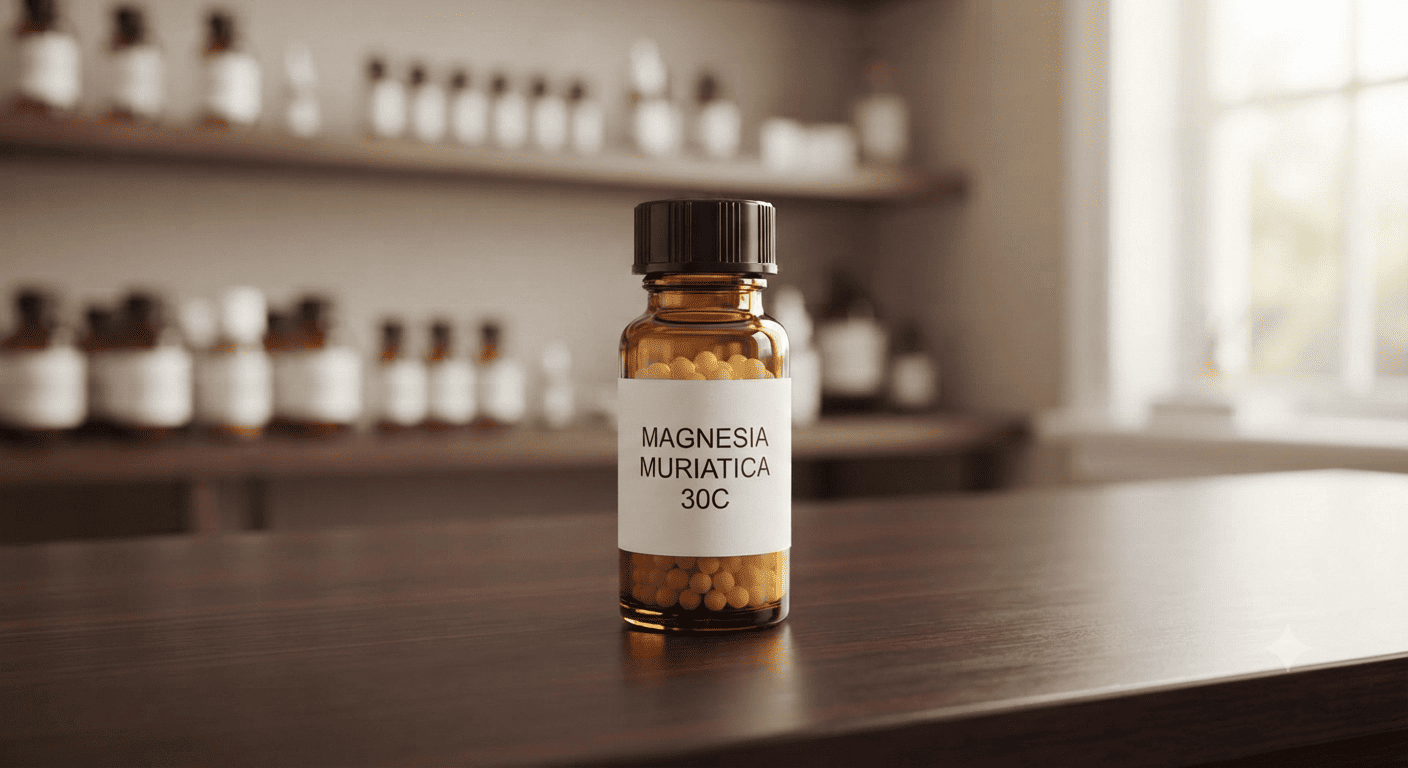
Magnesia Muriatica (Muriate of Magnesia) stands as a cornerstone remedy in the homoeopathic pharmacopoeia, particularly recognized for its profound affinity for the liver, the digestive tract, and the feminine constitution. Often described as a “deep-acting regulator,” this remedy is invaluable for chronic conditions where systemic sluggishness, specifically within the hepatic and digestive systems, manifests as persistent discomfort and emotional or physical sensitivity.
Key Benefits & Uses
Magnesia Muriatica is indicated for states of metabolic and hepatic congestion, offering support for a variety of deep-seated physical complaints:
- Liver & Hepatic Support: It is a primary remedy for chronic liver affections. It is specifically indicated when there is tenderness, swelling, or pain in the liver region that worsens when lying on the right side or after eating.
- Persistent Constipation: Highly characteristic of this remedy is the “sheep-dung” stool—small, knotty, and crumbling at the verge of the anus. It is frequently indicated for infants suffering from constipation during the teething process.
- Digestive & Nutritional Malabsorption: It serves as a vital remedy for individuals—particularly children—who suffer from an inability to digest milk, often accompanied by eructations that taste like “rotten eggs.”
- Uterine & Female Health: Magnesia Muriatica is uniquely suited to women experiencing a history of uterine complaints. It is indicated for irregular menses that are dark and clotted, often accompanied by significant emotional excitability during the menstrual period.
- Headaches & Sensitivity: It provides relief for intense, bursting headaches that are aggravated by motion or exposure to open air, yet feel better when the head is wrapped up warmly or subjected to firm pressure.
- Cardiac Support: It is notably effective for functional cardiac palpitations that occur while sitting, which paradoxically improve when the patient moves about.
Administration & Therapeutic Modalities
- Potency Selection: Due to its deep action on chronic states, potency selection should be individualized. While Mother tincture (Q) or lower potencies (Such as 30C) are often used for acute digestive disturbances, higher potencies are reserved for deep-seated constitutional or chronic liver concerns and should only be managed by a qualified homoeopath.
- Absorption: As with all homoeopathic remedies, maintain a clean palate. Avoid consuming food, coffee, or strong-flavored substances for 20 minutes before or after administration to ensure optimal sublingual absorption.
- Constitutional Sensitivity: This remedy is particularly suited to individuals who are sensitive to noise and may have a history of adverse effects following sea bathing.
Dr. Dorwal’s Prespective
In clinical practice, Magnesia Muriatica is often the “hidden” solution for chronic, stagnant conditions. When a patient presents with a history of digestive distress, a liver that feels “heavy” or tender, and a temperament that is easily agitated by physical discomfort, this remedy acts to clear the stagnation. It doesn’t force a physiological change; rather, it provides the catalyst the body requires to normalize hepatic function and improve the assimilation of nutrients, effectively lifting the heavy burden of chronic digestive and uterine congestion.
Disclaimer: This content is for informational purposes only. Homoeopathic medicines should be taken under the guidance of a qualified homoeopathic physician. Do not self-medicate for chronic or serious medical conditions, and always seek professional advice for any health concerns.
Frequently Asked Questions (FAQs)
While it is a premier liver remedy, its scope is much wider. It regulates the entire digestive tract, supports female reproductive health, and addresses specific types of nervous headaches and cardiac palpitations.
Magnesia Muriatica helps address the underlying metabolic insufficiency that makes milk digestion difficult for some infants, often relieving the associated constipation and abdominal bloating.
In homoeopathy, this is a “modalities” indicator. Because the liver sits on the right side of the body, the aggravation from lying on that side is a clinical sign that the liver is congested or enlarged and sensitive to pressure.
Yes. It is frequently indicated for women who experience heightened nervous excitement, irritability, or mood fluctuations specifically during their menstrual period, often occurring alongside physical symptoms like back pain or leucorrhoea.
