
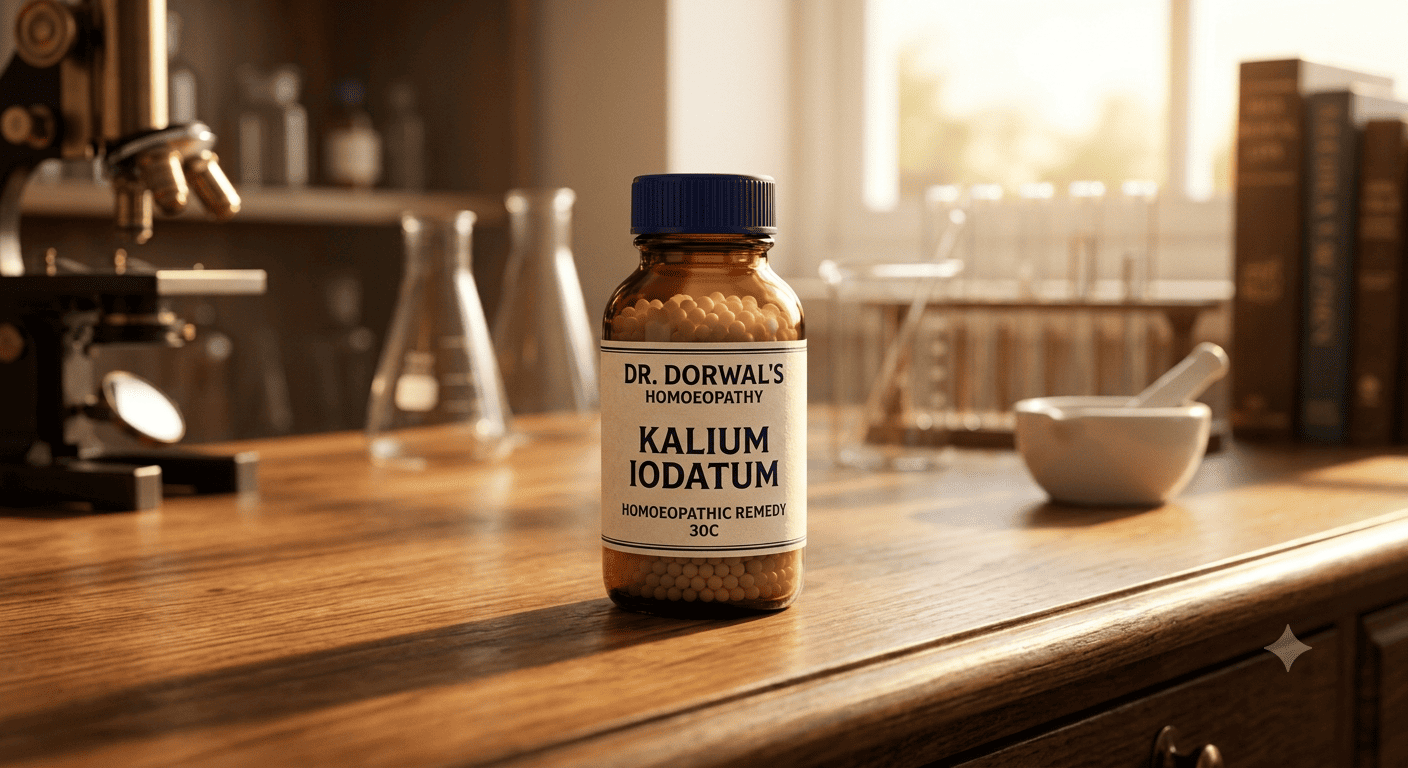
Kalium Iodatum, or Potassium Iodide, is a fundamental remedy in homoeopathic pharmacopoeia, revered for its profound influence on fibrous and connective tissues. While many remedies are surface-acting, Kalium Iodatum possesses a deep-reaching affinity for tissues prone to infiltration, edema, and glandular involvement, making it a critical choice for conditions involving chronic inflammation and structural changes. It is primarily indicated when the body’s tissues exhibit extreme sensitivity or a tendency toward ulceration and hardening.
Key Benefits & Uses
Kalium Iodatum is indicated for states of deep-seated irritation and inflammatory processes across multiple systems:
- Respiratory & Mucosal Integrity: It is a premier remedy for profuse, watery, acrid coryza, especially when accompanied by pain in the frontal sinuses. It also addresses complex respiratory conditions, including pneumonia during the stage of hepatization, asthma, and laryngeal edema characterized by a sensation of rawness.
- Osteo-Articular & Bone Support: It is highly effective for severe bone pains, particularly where the periosteum is thickened and sensitive to touch. It is frequently indicated for rheumatism that worsens at night and in damp weather, as well as sciatica where the patient cannot stay in bed due to the intensity of the pain.
- Glandular & Skin Conditions: Kalium Iodatum supports the resolution of enlarged, indurated glands and various skin eruptions, including acne, acne rosacea, and purple-spotted (haemorrhagic) conditions.
- Syphilitic & Chronic Miasmatic States: Historically, it has been indicated in various stages of syphilis, including acute forms with night sweats, mucous membrane ulcerations, and tertiary symptoms like nodes.
- Neuralgic Relief: It provides significant support for violent headaches, facial neuralgia, and lancinating pains in the upper jaw, often accompanied by intense congestion.
Administration & Therapeutic Modalities
- Potency Selection: The usage of Kalium Iodatum varies significantly. While it can be used in material doses for specific chronic conditions, when strictly homoeopathically indicated—such as in acute respiratory affections—it is often utilized in 30C potency.
- Modalities: Symptoms are characteristically worse from warm clothing, warm rooms, at night, and in damp weather. Patients typically feel better from motion and in the open air.
- Clinical Integration: It is known to often bring about favorable reactions in chronic ailments even when not clearly symptomatically indicated.
Dr. Dorwal’s Perspective
In my clinical practice, I utilize Kalium Iodatum as a vital tool for patients suffering from deep-seated, chronic inflammatory states. I find it particularly indispensable for cases involving the respiratory tract, where the discharge is acrid and watery, and for patients presenting with severe, night-aggravated bone or rheumatic pains. Its ability to penetrate into the fibrous tissues and address swelling and infiltration makes it a cornerstone remedy for complex pathologies. I view it as an essential deep-acting agent that assists the body in breaking through stagnation when localized, connective tissue recovery has been compromised.
Disclaimer: This content is for informational purposes only. Homoeopathic medicines should be taken under the guidance of a qualified homoeopathic physician. Do not self-medicate for chronic or serious medical conditions, and always seek professional advice for any health concerns.
Frequently Asked Questions (FAQs)
It is indicated when the patient experiences violent coughing—often worse in the morning—or when a cold “travels downward” to the chest, potentially leading to pneumonia or pleuritic effusion.
It is specifically indicated for rheumatic pain that is worse at night and in damp weather, particularly when there is contraction of joints or effusion in the knees.
Yes, it is indicated for violent headaches where the cranium feels as though it is swelling into a hard lump, with intense pain over the eyes and the root of the nose.
The symptoms are notably worsened by warm environments and warm clothing, so clinical advice often emphasizes seeking open air for relief.
