
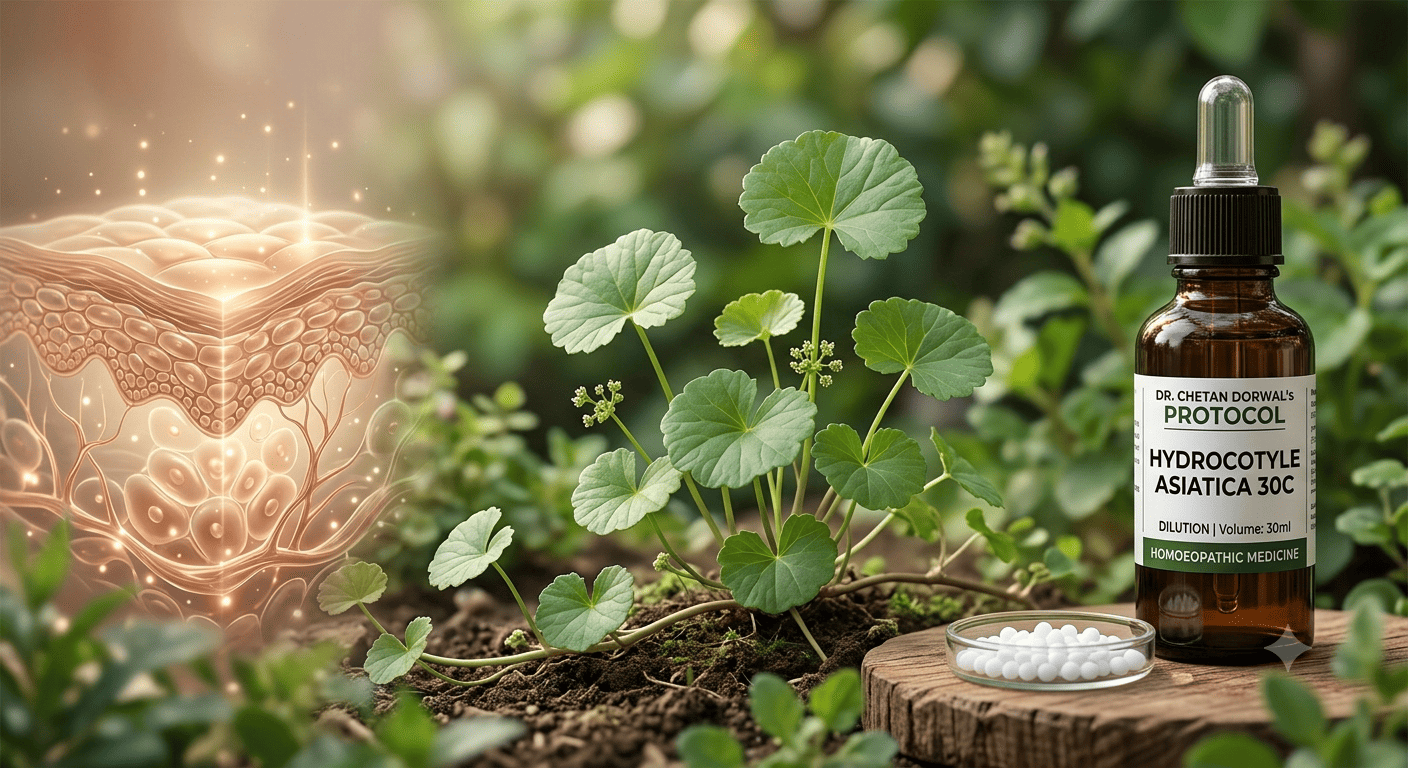
Hydrocotyle Asiatica, commonly known as Indian Pennywort, is a significant homoeopathic remedy primarily recognized for its profound influence on connective tissue and dermatological health. Its therapeutic action is characterized by the management of interstitial inflammation and cellular proliferation, making it a specialized agent in the treatment of chronic skin and tissue indurations.
Clinical Indications & Benefits
In clinical practice, Hydrocotyle Asiatica is indicated for the following conditions:
- Hypertrophy & Induration: Effectively manages conditions involving the thickening of connective tissues and epidermal layers.
- Dermatological Disorders: Highly regarded for treating chronic skin conditions, including leprosy (non-ulcerated), lupus, psoriasis (gyrate), and elephantiasis.
- Chronic Skin Eruptions: Clinically useful for dry eruptions, pustules on the chest, circular scaly spots, and acne, often accompanied by intolerable itching, particularly on the soles.
- Gynaecological Affections: Indicated for granular ulceration of the womb, profuse leucorrhoea, cervical redness, and severe pruritus of the vagina.
- Cervical & Ovarian Pain: Provides therapeutic support in alleviating the pains associated with cervical cancer and dull aching sensations in the ovarian region.
Administration & Therapeutic Modalities
- Potency & Dosage: Practitioners typically employ potencies ranging from the 30C to the 200C, depending on the nature and chronicity of the symptoms.
- Clinical Observation: The hallmark of this remedy is the patient’s sensitivity to structural changes in the skin and tissue. Monitoring the patient for characteristic exfoliation of scales, copious perspiration, and difficulty maintaining an upright posture is essential.
Dr. Dorwal’s Perspective
In my clinical practice, Hydrocotyle Asiatica is an essential remedy for managing deep-seated structural and dermatological challenges. I have observed that many patients presenting with thickened, scaly skin or chronic connective tissue disorders are essentially struggling with cellular over-proliferation and internal inflammatory processes. By utilizing Hydrocotyle, I focus on stabilizing the skin’s epidermoid health and addressing systemic indurations. It serves as a cornerstone in my protocol for patients suffering from non-ulcerated skin lesions and chronic pelvic inflammation, providing a targeted approach to tissue restoration.
Disclaimer: This content is for informational purposes only. Homoeopathic medicines should be taken under the guidance of a qualified homeopathic physician. Do not self-medicate for chronic or serious medical conditions, and always seek professional advice for any health concerns.
Frequently Asked Questions (FAQs)
It is primarily used for disorders involving interstitial inflammation, connective tissue hypertrophy, and various chronic dermatological conditions.
Yes, it is indicated for psoriasis, particularly when characterized by gyrate patterns, circular spots with scaly edges, and intense itching.
It is utilized for treating granular ulcerations of the womb, profuse leucorrhoea, and pruritus of the vagina.
Hydrocotyle is specific to indurated, thickened, or scaly skin states. A qualified physician should assess your specific symptoms to determine if it is the appropriate remedy.
