Quick Overview: Dolichos Pruriens (Cowhage) is prescribed chiefly for intense, generalized itching that occurs without any visible skin eruption, and for chronic liver congestion marked by jaundice, constipation, and burning haemorrhoids. It is a right-sided remedy, with symptoms characteristically worse at night and from scratching.
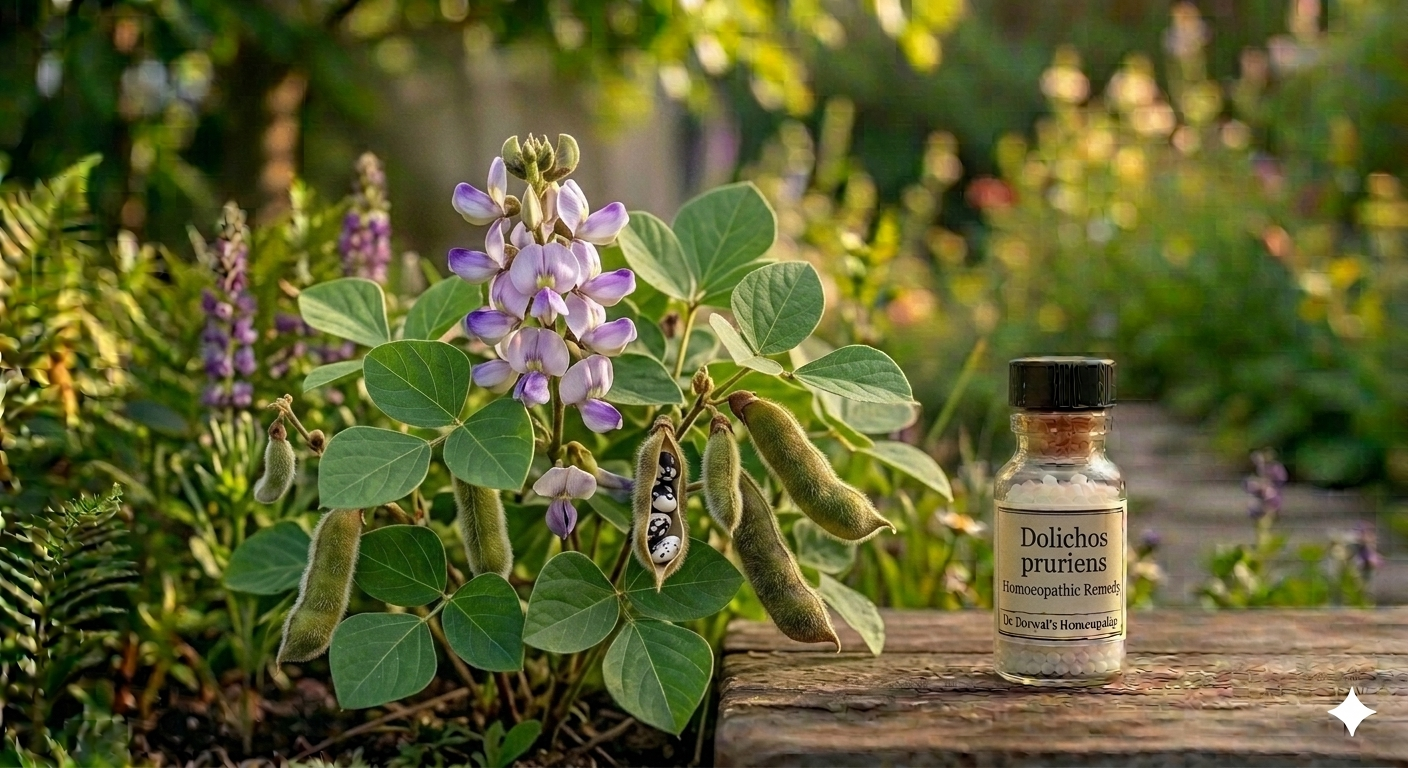
Dolichos Pruriens, commonly known as Cowhage, is a homoeopathic remedy prepared from the pods of the Mucuna pruriens plant. It is primarily recognised in clinical practice for its pronounced action on the liver and the skin together. This combination makes it a distinctive remedy, once its picture is recognised. In homoeopathic practice, it suits often older individuals, with a right-sided predominance of symptoms and a background of sluggish hepatic function, where the itching and the liver congestion are two expressions of the same underlying picture rather than separate complaints.
What is Dolichos Pruriens used for?
In clinical practice, Dolichos pruriens is used for:
1. Generalized Pruritus (Essential Itching)
Itching is the primary and best-known indication of the Dolichos. Patient suffers from intense, often unbearable itching across the body with no visible rash, swelling, or eruptions. The itching is characteristically worse across the shoulders, around the elbows and knees, and in hairy parts of the body, and it consistently worsens at night, often disturbing sleep. In old patients, this pattern of itching is sometimes described as “senile pruritus” — itching that appears with age and has no obvious dermatological cause.
2. Hepatic Congestion & Jaundice
Dolichos has a marked affinity for the liver. It is used in cases, where patient have swelling in the liver region, jaundice, and pale or clay-coloured (white) stools. Pale stools are the sign, that bile flow is impaired. Patients often show yellow, itching patches on the skin alongside the systemic signs of jaundice. This type of skin-liver connection defines this remedy.
3. Haemorrhoids
Dolichos is indicated for haemorrhoids with burning sensation. Particularly, it is used in cases where a haemorrhoidal tendency exists alongside the liver congestion that described above.
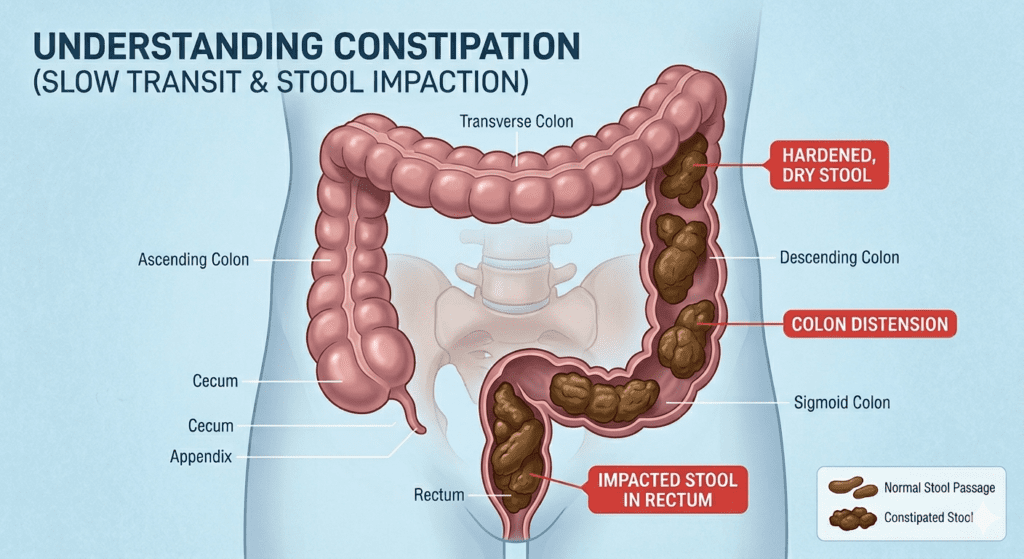
4. Constipation with Bloating
It is indicated in cases of constipation. Accompanied symptoms includes a bloated, distended abdomen and intense itching on the skin.
5. Throat & Gum Discomfort
A more specific, easily overlooked indication: pain in the throat, worse on swallowing, felt below the right angle of the jaw, described as if a splinter were lodged vertically. Gum pain severe enough to prevent sleep is also noted in the classical picture.
Dolichos Pruriens Dosage: How Is It Taken?
- Potency Selection: The 6th potency (6C/6X) is the classically indicated potency for the general pruritus and hepatic picture. Nowadays, 30C potency or Higher are commonly used in clinics.
- Mother Tincture (Q): Specifically used in drop doses for haemorrhoidal complaints, rather than for the general itching picture.
- Clinical Monitoring: Because pruritus can also arise from serious systemic causes (kidney disease, certain cancers, cholestatic liver disease), any persistent, unexplained itching should be medically investigated before assuming a benign, Dolichos-type picture.
Dr. Dorwal’s Perspective
Dolichos Pruriens is the remedy I reach for when a patient’s chief complaint is itching without any rash to show for it — this absence of visible eruption is what separates it from most other itching remedies, which are usually matched to a specific skin appearance. When this itching is accompanied by a history of constipation, pale stools, or alters in liver function, the connection becomes clinically obvious. I always confirms the diagnosis and match the symptoms that the itching isn’t the presenting sign of a more serious underlying liver or systemic condition before prescribing the Dolichos as a remedy.
Disclaimer: This content is for informational purposes only. Homoeopathic medicines should be taken under the guidance of a qualified homeopathic physician. Do not self-medicate for chronic or serious medical conditions, and always seek professional advice for any health concerns.
Frequently Asked Questions (FAQs)
Dolichos is primarily used for intense, generalised itching that occurs without any visible skin eruption, and for liver conditions presenting as jaundice, pale stools, and constipation.
Yes, It is good for specifically skin itching with no rash, swelling, or visible eruption. It is not indicated for skin conditions with a visible rash, such as eczema or psoriasis, which call for different remedies.
The 30C potency is used by homoeopaths for the itching of skin and hepatic conditions. Potency selection should be individualised by your prescribing physician based on the case.
At standard homoeopathic potencies, significant side effects are uncommon. As with any remedy, it should be taken as prescribed rather than self-administered repeatedly, and any unusual reaction should be reported to your physician.
The Mother tincture is specifically used in drop doses for haemorrhoidal complaints.
Beyond itching and liver congestion, its classical picture also includes haemorrhoids, constipation with bloating, and a specific throat/gum discomfort. But,itching -without-eruption and hepatic congestion pairing remains its most distinctive and commonly used indication.