
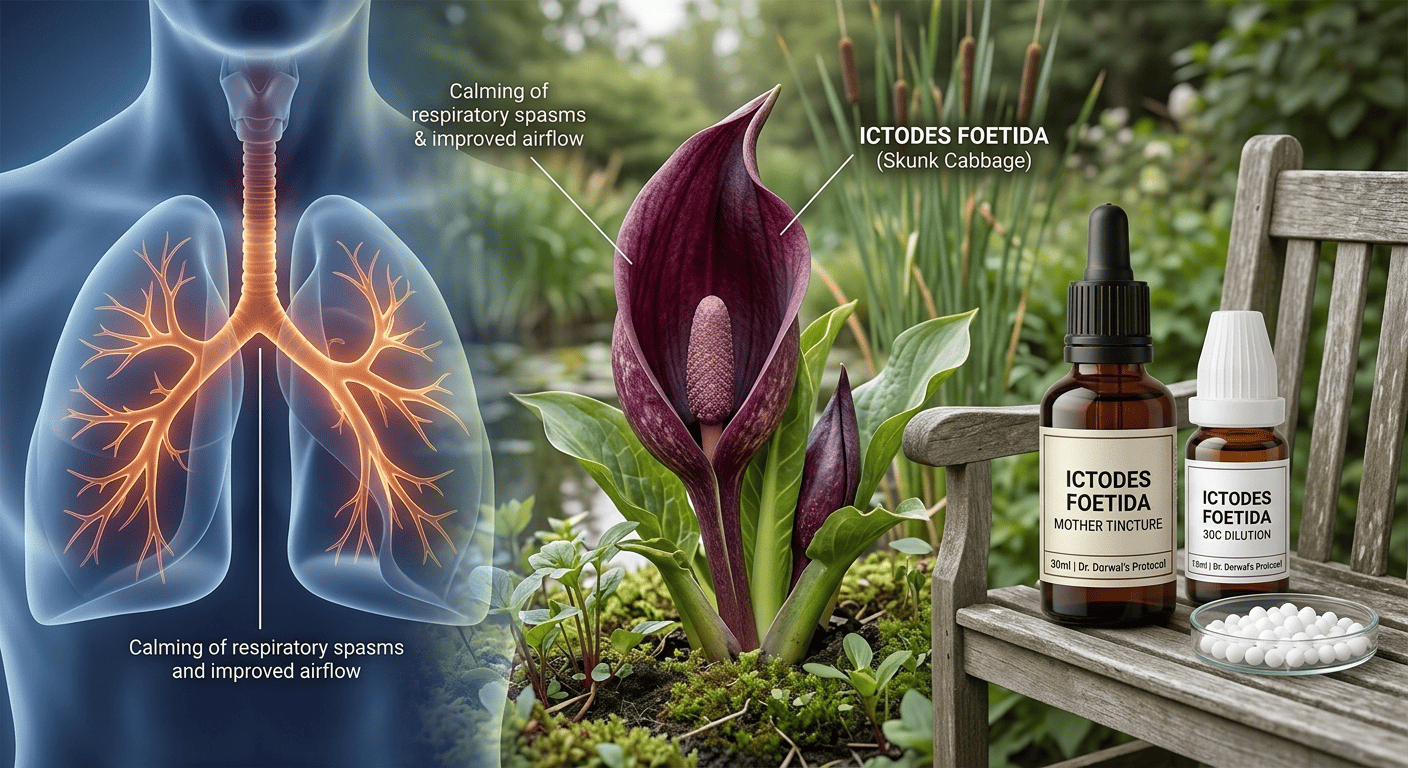
Ictodes Foetida, derived from Symplocarpus foetidus (commonly known as Skunk Cabbage), acts as a vital homoeopathic agent with a deep-seated influence on the respiratory system, the nervous framework, and the gastrointestinal tract. Its clinical application is primarily focused on alleviating spasmodic respiratory complaints, particularly asthma induced by environmental allergens, and addressing erratic, shifting spasmodic pains.
Clinical Indications & Benefits
In clinical practice, Ictodes Foetida is utilized for several specific scenarios:
- Asthma & Dyspnea: Highly indicated for asthmatic complaints and difficult breathing accompanied by a sudden feeling of anguish, anxiety, and localized sweating. A unique clinical hallmark of this remedy is that the asthma is often remarkably relieved after a bowel movement (stool).
- Dust-Induced Respiratory Allergies: Frequently indicated for bronchial irritation and acute respiratory distress where symptoms are immediately induced or significantly intensified by inhaling even small amounts of dust.
- Spasmodic Croup & Millar’s Asthma: Clinically useful for sudden spasmodic croup, troublesome respiration, and severe sneezing fits that are accompanied by sharp pain in the throat and a numb sensation on the tongue.
- Erratic Spasmodic Pains: Indicated for treating subjective symptoms that exhibit a shifting, “will-o’-the-wisp” character, where sharp or spasmodic pains appear unpredictably in single, isolated spots across the body.
- Gastrointestinal Flatulence & Tension: Often prescribed for abdominal disturbances characterized by a distinct physometric property (accumulation of gas in cavities), resulting in a painful sensation of inflation and tension in the abdomen.
Administration & Therapeutic Modalities
- Potency & Dosage: Practitioners typically employ the Mother tincture (Q) and lower potencies (such as 30C) depending on the acuteness of the respiratory spasms and individual patient responsiveness.
- Clinical Observation: The primary hallmark of Ictodes Foetida is its hypersensitivity to dust inhalation and its unique relief modality through stool. Monitoring the patient for associated symptoms—such as localized headaches with violent pulsation of the temporal arteries, a red swelling across the bridge of the nose, and improvement when breathing fresh, open air—is essential for accurate therapeutic targeting.
Dr. Dorwal’s Perspective
In my clinical practice, Ictodes Foetida serves as a highly specialized therapeutic tool for patients suffering from hyper-reactive airway diseases, particularly when environmental triggers like dust provoke immediate spasmodic attacks. I have observed that patients who require this remedy often experience a profound sense of respiratory panic paired with shifting, unpredictable physical symptoms. By utilizing Ictodes Foetida, the therapeutic focus is directed toward calming the spasmodic nervous responses of the respiratory lining and relieving associated abdominal tension. It is an invaluable asset for restoring ease of breathing and establishing physiological equilibrium in weather- and dust-sensitive individuals.
Disclaimer: This content is for informational purposes only. Homoeopathic medicines should be taken under the guidance of a qualified homeopathic physician. Do not self-medicate for chronic or serious medical conditions, and always seek professional advice for any health concerns.
Frequently Asked Questions (FAQs)
It is primarily used for spasmodic respiratory complaints, including asthma, spasmodic croup, and breathing difficulties triggered by dust inhalation, as well as erratic muscular pains.
Inhaling dust acts as an immediate aggravating factor, causing an immediate worsening or onset of asthmatic symptoms and respiratory distress.
The absolute hallmark of this remedy is that the patient’s asthma and difficult breathing are characteristically relieved following a stool.
Yes. It is highly effective for sharp, localized headaches that occur in single spots, accompanied by a violent, throbbing pulsation of the temporal arteries, which feels better when the patient is out in the open air.
