
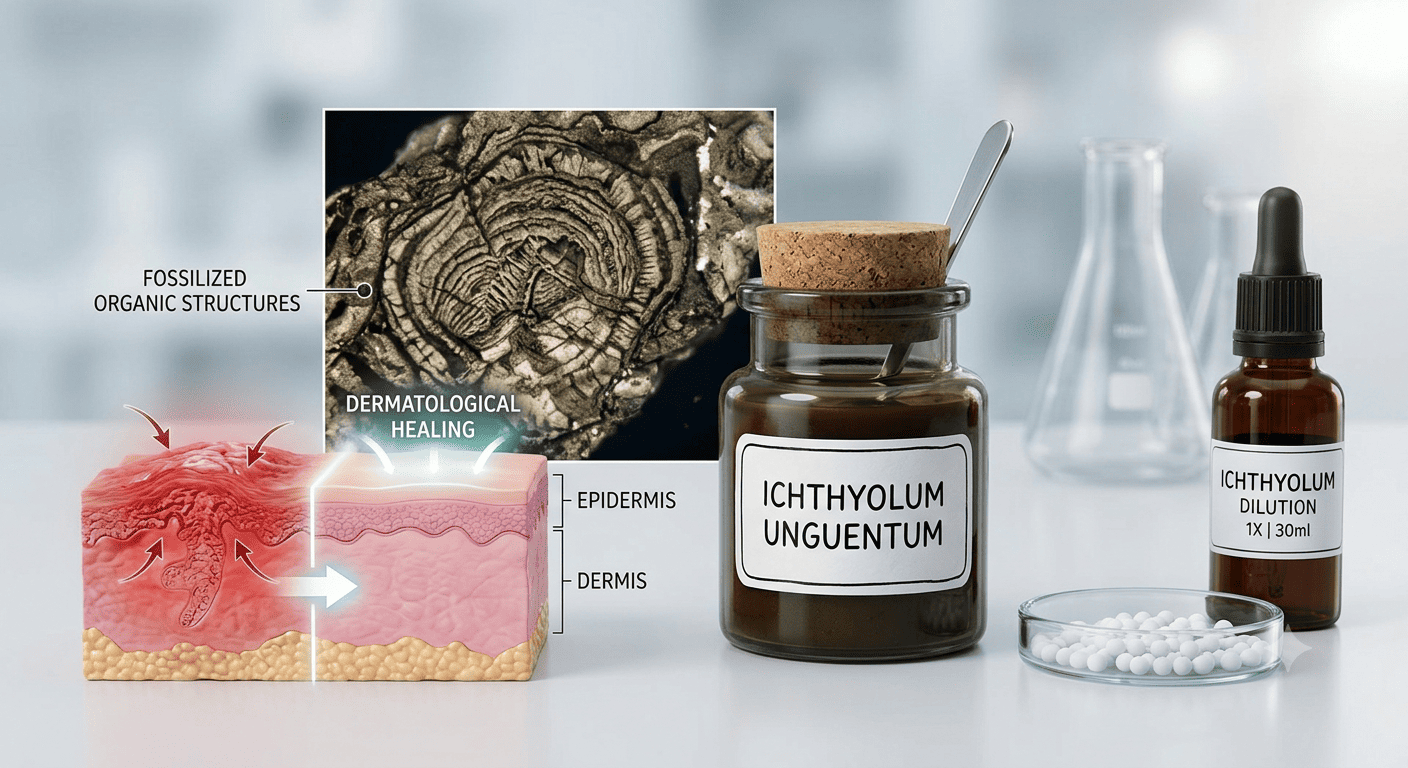
Ichthyolum is a complex substance derived from sulfonated hydrocarbons containing 10% sulfur, traditionally sourced from fossilized fish deposits in Tyrol. It is recognized in homoeopathic literature for its prompt and effective action on the skin, mucous membranes, and kidneys.
Clinical Indications & Therapeutic Applications
In professional practice, Ichthyolum is indicated for a wide variety of systemic and localized conditions:
- Dermatological Disorders: It is strongly antiparasitic and is utilized to decrease tension, redness, pain, and inflammation in conditions such as scaly, itching eczema, psoriasis, acne rosacea, erysipelas, and crops of boils. It is also indicated for the pruritus of pregnancy.
- Respiratory Support: It is excellent for winter coughs in the elderly, as well as cases of bronchitis, bronchiectasis, and phthisis. It is also noted for providing relief in hay fever and coryza.
- Rheumatological & Metabolic Conditions: Indicated for polyarthritis, chronic rheumatism, and uric acid diathesis.
- Gastrointestinal & Renal Support: Used in cases of alcoholism where the stomach cannot retain food, as well as for increased urinary frequency and quantity, particularly when uric acid deposits are present.
Administration & External Use
- Internal Dosage: Literature recommends the use of lower potencies for internal administration.
- External Application: Ichthyolum is frequently used externally as an ointment (mixed with Lanoline at concentrations of 20% to 50%) for the management of chronic eczema, psoriasis, acne rosacea, gouty joints, chilblains, and scabies. Additionally, rectal suppositories containing this substance are used for senile prostate conditions.
Dr. Dorwal’s Perspective
I do not utilize Ichthyolum in my clinical practice; therefore, I do not have personal experience regarding its efficacy in treating inflammatory or metabolic disorders. My understanding of the remedy is strictly limited to traditional homoeopathic literature, which posits that Ichthyolum functions through a dual-action mechanism—targeting localized irritation of the skin and mucous membranes while simultaneously addressing systemic metabolic needs. While the literature suggests it as a versatile resource for chronic inflammatory states, this remains a theoretical application based on historical texts rather than an endorsement based on my clinical outcomes.
Disclaimer: This content is for informational purposes only. Homoeopathic medicines should be taken under the guidance of a qualified homeopathic physician. Do not self-medicate for chronic or serious medical conditions, and always seek professional advice for any health concerns.
Frequently Asked Questions (FAQs)
It is a combination of sulfonated hydrocarbons derived from fossilized fish deposits and contains 10% sulfur.
It is used internally for conditions like eczema and psoriasis, and externally as a 20% to 50% ointment with lanoline.
It is notably effective for bronchitis in the aged, winter coughs, bronchiectasis, and hay fever.
Yes, it is indicated for polyarthritis, chronic rheumatism, and gouty joints.
