
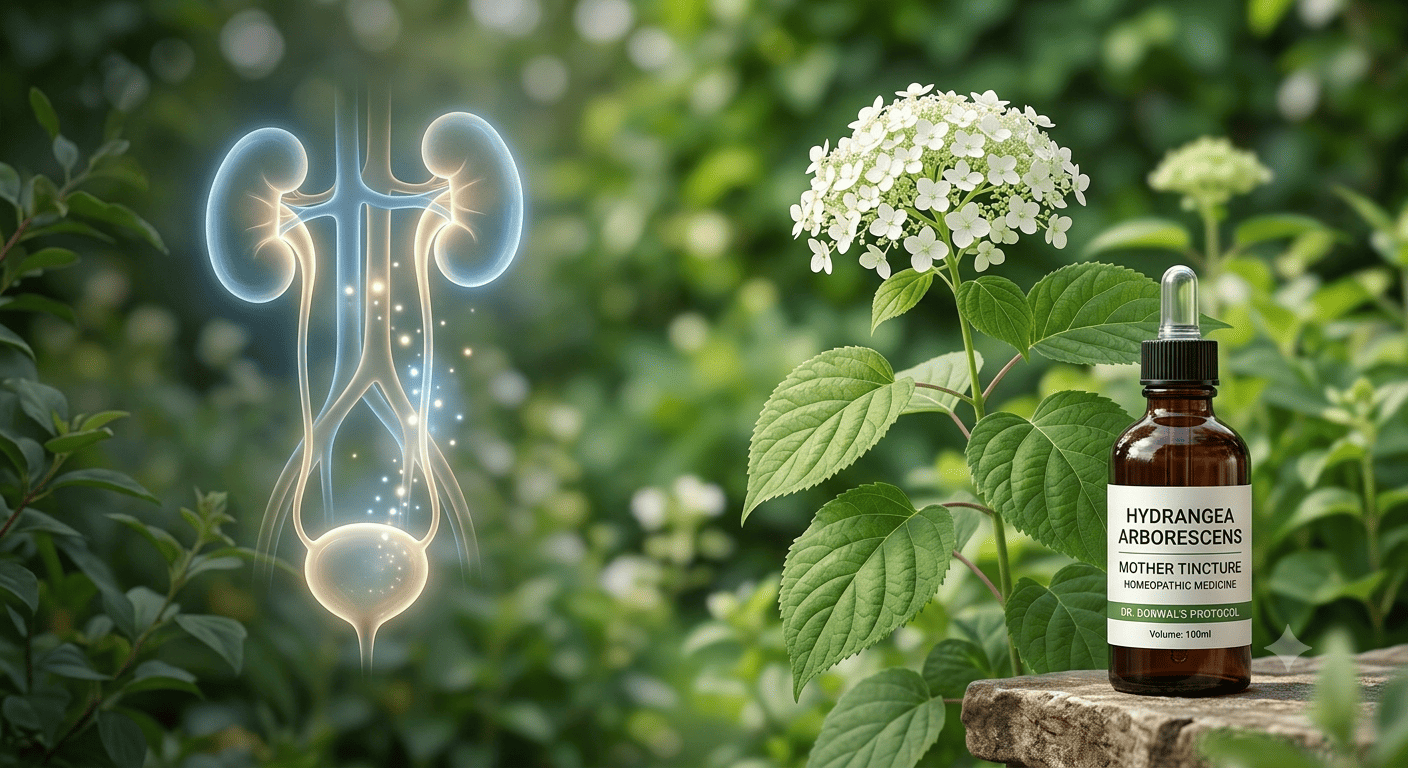
Hydrangea Arborescens, commonly known as Seven-barks, is a profound homoeopathic remedy specifically indicated for urological and renal disturbances. Its therapeutic action is predominantly directed toward the urinary tract, where it addresses conditions involving calculus formation, inflammatory processes, and metabolic disturbances manifesting in the urine.
Clinical Indications & Benefits
In clinical practice, Hydrangea Arborescens is primarily indicated for the following diagnoses and conditions:
- Renal Lithiasis (Kidney Stones) & Renal Colic: Highly indicated for the management of gravel and renal calculus, helping to alleviate the intense sharp pains associated with stone passage.
- Chronic Cystitis & Urethritis: Utilized for cases involving burning in the urethra, frequent desire to urinate, and difficulty in initiating micturition.
- Prostatic Hypertrophy (Enlarged Prostate): Clinically useful in addressing urinary difficulties and discomfort arising from an enlarged prostate, often presented with associated abdominal symptoms.
- Urinary Tract Inflammation: Indicated when the urine contains profuse deposits of white amorphous salts, mucus, or blood (hematuria), signaling irritation and catarrhal state of the urinary passages.
- Lumbar & Ureteric Pain: Specifically indicated for sharp, localized pain in the lumbar region, particularly on the left side, often radiating toward the ureters.
Administration & Therapeutic Modalities
- Potency & Dosage: Practitioners typically utilize the Mother tincture (Q) to address the drainage and elimination of urinary deposits. Dosage is strictly determined by the severity of the symptoms and the patient’s clinical presentation.
- Clinical Observation: The hallmark of Hydrangea is the “gravelly” nature of the patient’s condition. Monitoring the urinary sediment, the ease of flow, and the intensity of lumbar pain is essential for evaluating the remedy’s efficacy.
Dr. Dorwal’s Perspective
In my clinical practice, Hydrangea Arborescens serves as a vital drainage remedy for the urinary system. I have observed that many patients suffering from chronic lumbar discomfort or recurrent urinary blockages are struggling with the systemic accumulation of amorphous salts. Rather than merely treating the symptom of pain, I utilize Hydrangea to facilitate the clearance of the urinary tract and reduce the inflammatory stress on the ureters and prostate. It is a cornerstone in my protocol for patients exhibiting signs of renal gravel, helping to restore normal urinary function and mitigate the risks of recurring calculus.
Disclaimer: This content is for informational purposes only. Homoeopathic medicines should be taken under the guidance of a qualified homeopathic physician. Do not self-medicate for chronic or serious medical conditions, and always seek professional advice for any health concerns.
Frequently Asked Questions (FAQs)
It is primarily used to address renal stones, gravel, and inflammatory conditions of the urinary tract and prostate.
Yes, it is indicated for renal colic and sharp lumbar pain associated with the passage of kidney stones.
It helps in relieving urinary difficulties, such as frequent desire and difficulty starting the stream, often associated with an enlarged prostate.
Hydrangea is specific to cases involving deposits of salts, mucus, or gravel. A qualified physician should assess your specific urinary symptoms to determine if this remedy is the correct match.
