
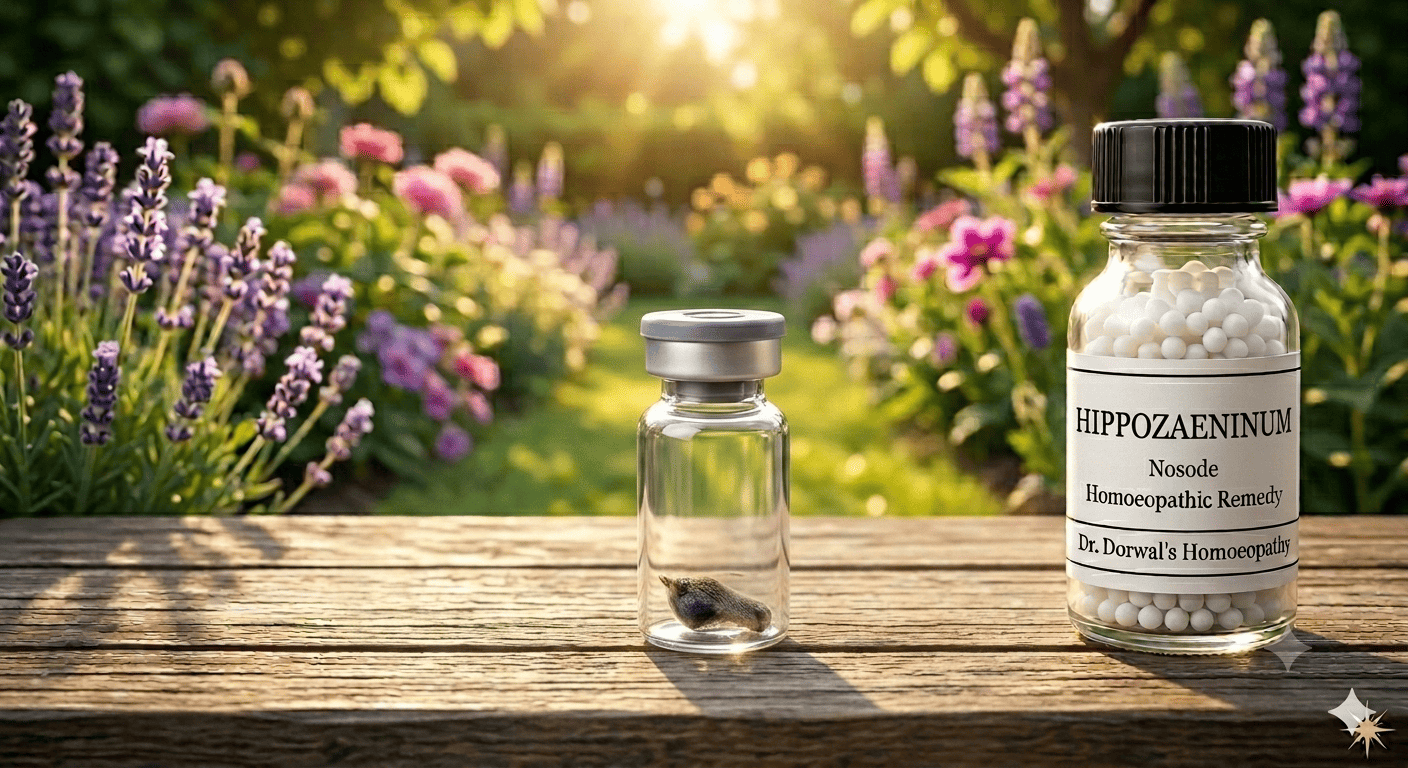
Hippozaeninum, also known as Gladerine or Farcine, is a potent homoeopathic nosode introduced by Dr. J. J. Garth Wilkinson. This remedy is indicated for complex pathological states, covering symptoms associated with chronic conditions such as consumption, malignancy, and syphilitic miasms. It serves as a valuable therapeutic agent in the treatment of systemic inflammatory and ulcerative processes.
Clinical Indications & Benefits
In clinical practice, Hippozaeninum is utilized for a wide spectrum of severe health conditions:
- Nasal & Pharyngeal Affections: Highly indicated for chronic rhinitis, ozena, and ulceration. It is specifically used when nasal discharges are acrid, corroding, bloody, and offensive. It also addresses the presence of tubercles on the alae nasi, as well as papules and ulceration within the frontal sinus and pharynx.
- Respiratory Support: Indicated for conditions involving hoarseness, bronchial asthma, and tuberculosis. It is particularly valuable for bronchitis in the elderly where there is an imminent risk of suffocation due to excessive, noisy, and irregular secretion.
- Glandular & Dermatological Conditions:
- Glandular Swelling: Addresses swollen and painful glands that are prone to abscess formation.
- Skin Manifestations: Indicated for lymphatic swellings, malignant erysipelas, pustules, abscesses, ulcers, rupia, and eczema.
- Articular Involvement: Specifically utilized for articular non-fluctuating swellings and subcutaneous nodules in the arms.
- Systemic Inflammatory States: Promises useful service in the treatment of pyemia, scrofulous swellings, and various chronic catarrhal states.
Administration & Therapeutic Modalities
- Potency & Dosage: Practitioners typically employ the 30C potency of this nosode.
- Clinical Observation: Given its status as a powerful nosode, careful monitoring is essential when treating chronic conditions like tuberculosis or malignant erysipelas to observe the patient’s systemic response to the remedy.
Dr. Dorwal’s Perspective
In my clinical practice, I have not personally utilized Hippozaeninum; however, existing homoeopathic literature suggests it represents a profound nosode for deep-seated, intractable pathologies. Observations within the literature indicate that when a patient presents with “offensive” and “corroding” catarrhal discharges, particularly in cases of chronic ozena, this remedy can address the underlying miasmatic susceptibility that other remedies might fail to reach. Its role in supporting elderly patients with bronchial congestion and imminent suffocation is described as particularly vital. By targeting the glandular and articular infiltrations—where conventional treatments often hit a wall—literature suggests that Hippozaeninum offers a strategic pathway toward stabilizing complex, multi-system health challenges.
Disclaimer: This content is for informational purposes only. Homoeopathic medicines should be taken under the guidance of a qualified homeopathic physician. Do not self-medicate for chronic or serious medical conditions, and always seek professional advice for any health concerns.
Frequently Asked Questions (FAQs)
It is a potent homoeopathic nosode introduced by Dr. J. J. Garth Wilkinson.
Yes, it is indicated for bronchitis in the aged, especially when there is excessive secretion causing an imminent risk of suffocation.
It is used for red, swollen noses with acrid, corroding, bloody, and offensive discharges, often involving ulceration.
Yes, it is indicated for a variety of dermatological issues, including malignant erysipelas, pustules, abscesses, ulcers, and eczema.
