Quick Overview: Homoeopathic remedy Guarea Trichilioides is commonly used for eye conditions, cough, and dermatological conditions like lupus.
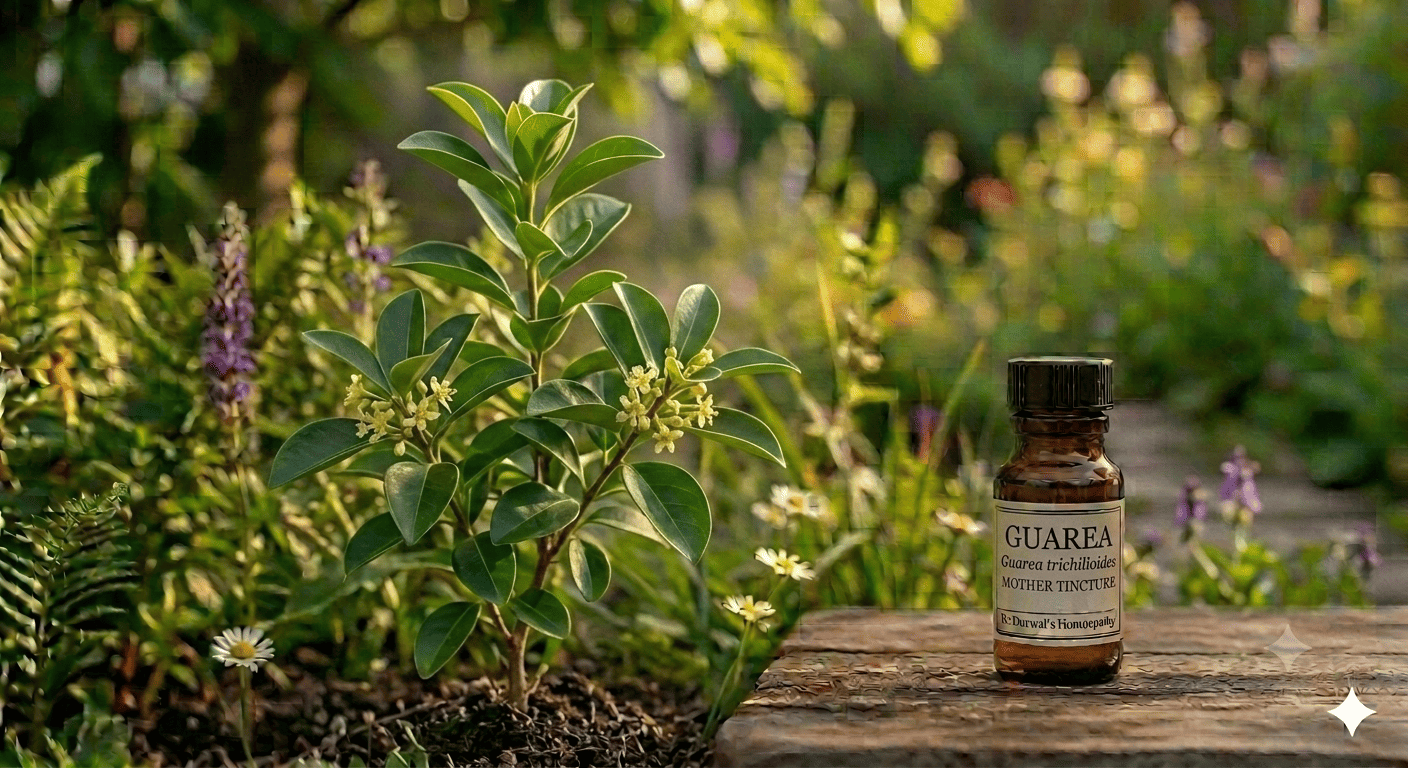
Guarea Trichilioides, derived from Ballwood, is a unique homoeopathic remedy known for its significant effects on the eyes and the respiratory system. It doesn’t come up often in day-to-day practice, but where it does show up, it tends to be for a fairly specific and recognisable picture: eye congestion, particularly swelling of the conjunctiva and a non-cancerous, wing-shaped fleshy growth on the eye, often paired with a sense of tension or pressure that seems to be pushing the eyeball outward.
Interestingly, the remedy doesn’t stop at the eyes. It also has a documented history in respiratory complaints — coughs with chest tightness — and in certain head sensations that patients describe almost like the aftermath of a blow to the head.
Key Clinical Indications and Benefits
Clinically, it is indicated for:
- Ocular & Vision Support: Primarily indicated for inflammatory and swelling conditions of the conjunctiva, including cases of chemosis. It has been documented for its use in cases of a non-cancerous, wing-shaped fleshy growth on the eye. It addresses tearing pain in the eyeballs and a sensation of tension or a “forced-out” feeling. Additionally, it is noted when objects appear gray or upside down, and when eye symptoms occur alongside reduced hearing. It’s likewise indicated where there is excessive watering of the eyes.
- Respiratory & Chest Health: Indicated for respiratory conditions characterized by a cough accompanied by sweating, chest pain, and a sensation of tightness in the chest. It also addresses irritation of the larynx.
- Dermatological & Head Symptoms: Used in treating lupus of an ochre-red color. It deals with sensations in the head, like the feeling that the brain is moving forward or as if the head has been hit.
How It Compares to Other Common Eye Remedies
Homoeopathy offers several remedies with a strong affinity for the eyes, and each is selected based on a fairly distinct symptom picture. Here’s a quick side-by-side comparison to put Guarea Trichilioides in context:
| Remedy | Key Source | Primary Eye Picture | Typical Triggers / Aggravation | Notable Modality |
| Guarea Trichilioides | Ballwood bark (Meliaceae) | Chemosis and pterygium, with tearing pain and a forced-out sensation in the eyeballs | Eye strain, cold air, associated with reduced hearing | Worse with continued eye strain; head sensations as if struck or brain moving forward |
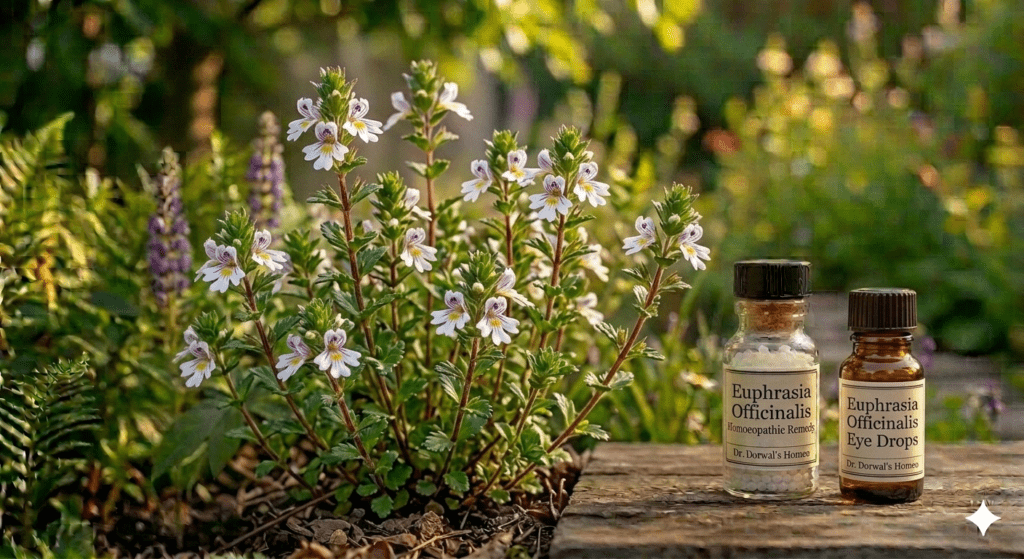
| Euphrasia Officinalis | Eyebright plant | Red, injected, gritty eyes with acrid, burning tears and photophobia | Wind, bright light, open air | Worse in open air and light; better indoors, away from light |
| Apis Mellifica | Honeybee | Puffy, oedematous chemosis with stinging, burning pain and hot tears | Heat, warm rooms, touch, pressure | Worse from heat and touch; better from cold applications |
| Ratanhia | Peruvian rhatany root | Pterygium with a sensation of a membrane growing over the eye | Local irritation, rubbing | A classical, long-documented remedy specifically for pterygium |
As with most homoeopathic comparisons, this table isn’t meant to suggest these remedies can be swapped in for one another. Classical prescribing comes down to matching the finer details of a patient’s presentation, not just the general area of the body that’s affected.
Administration & Therapeutic Modalities
- Potency & Dosage: Most commonly employed in the Mother Tincture (Q) form. The amount and dosage of the medication may changed depending on how severe the patient’s condition is and how they react to it.
- Observation: Chiefly, Guarea Trichilioides addresses eye strain and throat irritation, So it is important to keep track of any changes in patient’s vision comfort or breathing. If patient feels a greater sense of pressure or discomfort in the eye, medication dose should be changed only with the help of a healthcare professional.
Dr. Dorwal’s Perspective
In my clinical practice, I do not regularly use Guarea, but the homoeopathic literature offers solid support for its use in cases of “eye tension” and certain inflammatory eye conditions. Historical records suggest that when there is a history of eye congestion, which is shown through symptoms like excessive tearing, pain and a feeling that the eyes are being pushed out, Gurarea can help to reduce the congestion in the eye tissues. It is described as a fairly specific corrective remedy, useful not just for the eyes but for the respiratory passages when they show that same quality of tightness and irritation. Where the constitutional and clinical picture lines up closely with these symptoms, Guarea can support the body’s own healing response.
Disclaimer: This content is for informational purposes only. Homoeopathic medicines must be taken as directed by a qualified homoeopathic physician. Do not treat chronic or serious medical conditions on your own without consulting a healthcare professional, and always seek advice from a qualified expert for any health-related concerns.
Frequently Asked Questions (FAQs)
It is mainly used to treat congested eye conditions such as chemosis and pterygium. In addition, it is also used in respiratory irritation that comes with coughing and a feeling of tightness in the chest.
Yes, it is highly indicated for tearing pain in the eyeballs and a sensation of tension or a feeling as if the eyes are being forced out of their sockets.
It is beneficial for coughs that are accompanied by sweating, chest tightness, pain, and laryngeal irritation.
Guarea is most commonly used in its Mother Tincture (Q) form, though 6C, 30C, 200C and higher potencies are also available depending on the case.
Guarea has a documented history in homoeopathic literature of being used for a non-cancerous, wing-shaped fleshy growth on the eye and swelling conditions of the conjunctiva. As with any eye condition, a homoeopathic physician should assess the case directly before starting treatment.
Beyond ocular complaints, it’s associated with respiratory irritation, certain head sensations resembling the aftermath of a blow or injury, and skin changes such as ochre-red lupus.
When taken in homoeopathic dilutions as prescribed by a qualified practitioner and following the recommended dosage, it is considered as safe. It should not be self-prescribed for ongoing or serious eye or respiratory conditions.