
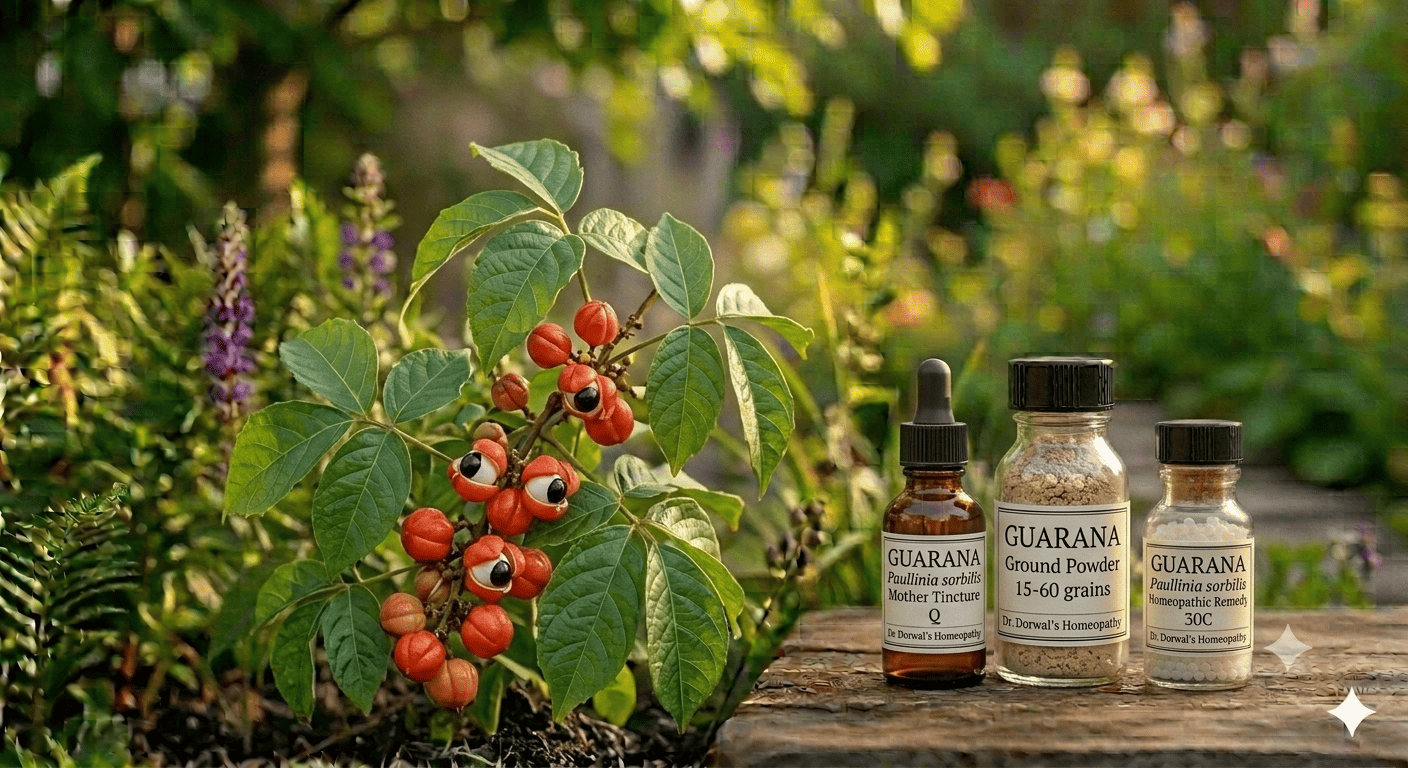
Guarana, derived from Paullinia sorbilis, is a notable remedy in the homoeopathic pharmacopoeia, primarily recognized for its high alkaloid content, specifically caffeine. This unique composition makes it a targeted remedy for conditions stemming from the overconsumption of stimulants or characterized by specific gastrointestinal and nervous system disturbances. Its clinical application is distinct, often serving as a corrective agent for patients presenting with patterns of overstimulation followed by exhaustion or specific digestive irregularities.
Key Clinical Indications and Benefits
Guarana is specifically indicated for states of nervous excitation and gastrointestinal distress. It is clinically indicated for:
- Headache & Nervous Excitement: Primarily indicated for sick headaches in individuals who have habitually consumed excessive amounts of tea or coffee. It is also effective for throbbing headaches following the consumption of liquor.
- Gastrointestinal Disorders: Acts upon the bowels in cases of cholera infantum, where stools are profuse, bright green, bloody, and intermixed with flakes. Notably, these stools are often odorless.
- Dermatological Manifestations: Used in the treatment of chloasmata (pigmentation) on the temples and arms, as well as for cases of urticaria.
- Sleep & Metabolic Response: Addresses symptoms of uncontrollable sleepiness and a sensation of heaviness in the head, often accompanied by a flushed face, occurring specifically after eating.
Administration & Therapeutic Modalities
- Potency & Dosage: Guarana is most effective when given in material doses, typically ranging from 15 to 60 grains of the powder. In addition, it is also used in form of Mother tincture (Q) or low potency (Such as 30C).
- Observation: Given its physiological action, it is essential to monitor patients for signs of continued nervous excitation or digestive changes. Its use should be carefully managed to ensure the dosage corresponds to the patient’s sensitivity to its stimulatory properties.
Dr. Dorwal’s Perspective
In clinical practice, I consider Guarana when a patient’s symptoms clearly point toward the excessive use of stimulants like coffee, tea, or alcohol. It is a unique remedy that bridges the gap between physiological stimulation and localized pathology. When I observe a patient suffering from a persistent, throbbing headache or specific green, odorless stools, I evaluate if their history aligns with the “intellectual excitement” and subsequent exhaustion characteristic of the Guarana profile. It serves as a vital tool for restoring balance in patients who have depleted their nervous reserves through external stimulation.
Disclaimer: This content is for informational purposes only. Homoeopathic medicines should be taken under the guidance of a qualified homoeopathic physician. Do not self-medicate for chronic or serious medical conditions, and always seek professional advice for any health concerns.
Frequently Asked Questions (FAQs)
It is primarily used for managing sick headaches caused by excess caffeine or alcohol consumption, and for treating specific gastrointestinal disturbances like cholera infantum.
It is indicated for states of intellectual excitement and subsequent sleepiness, particularly in those who have abused stimulants.
The stools associated with Guarana are typically profuse, bloody, and bright green, containing flakes and notably lacking in odor.
Unlike many homoeopathic medicines, Guarana is usually prescribed in material doses, specifically in the range of fifteen to sixty grains of powder.
