Quick Overview: Formalin (in hot water) is chiefly known for its use as a vapour inhalation in whooping cough (pertussis) and catarrhal respiratory conditions. Homoeopathically, Formalinum shows a distinct picture of forgetfulness, vertigo, and burning digestive irritation. It is a remedy reserved for specific, well-matched clinical pictures rather than routine use.
Formalinum is a homoeopathic preparation of formaldehyde solution, a substance widely recognised for its powerful disinfectant and antiseptic properties in its crude form. This antiseptic, tissue-altering character carries through into its homoeopathic symptom picture — a remedy associated with irritation of mucous membranes, mental dullness or forgetfulness, and a body system that seems to be reacting to a kind of internal “decay” or toxic burden. It is not a remedy for everyday complaints, but it has a genuinely useful, narrow role once its specific picture is recognised.
What is Formalinum used for?
In clinical practice, Formalinum is indicated for its intense, corrosive-like action:
- Whooping Cough & Respiratory Catarrh: This is Formalinum’s most historically well-documented use — as a vapour, inhaled in hot water, it has been considered one of the most valuable therapeutic approaches for pertussis (whooping cough), as well as for catarrhal affections of the upper airways and spasmodic closure of the voice box causing crowing-type breathing difficulty in children.
- Mental Symptoms — Forgetfulness & Disorientation: A distinctive keynote of this remedy is marked forgetfulness, sometimes alongside anxiety or a semi-conscious, dazed quality. During fever, patients may forget where they are?. This is a specific symptom and somewhat unusual mental symptom that helps to confirm the remedy.
- Urinary Symptoms: it is indicated in reduced urine output and cases where protein is present in the urine. It require proper medical/lab evaluation rather than assumption.
- Antiseptic & Deodorizing Properties: It is effectively utilized in conditions involving offensive, putrid, or foul-smelling discharges, often acting to neutralize or correct systemic tendencies toward decay or decomposition.
- Digestive Irritation & Inflammation: It is indicated for intense irritation of the mucous membranes, particularly in the respiratory tract or the gastrointestinal system, often presenting with burning or excoriating sensations.
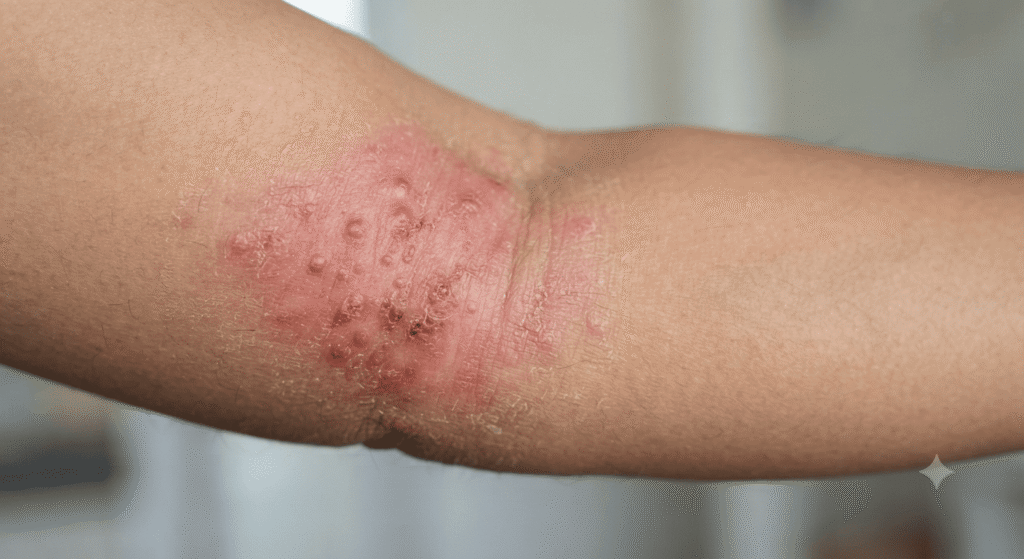
- Skin Changes: It is used in cases where skin becomes leathery. Sometimes scaling, is part of the classical picture, along with eczema developing in the area around a wound and damp sweating localised to the right upper arm.
- Fever: Used in fever cases, where chills occur in the forenoon (late morning), followed by a prolonged fever during which the bones ache throughout, and the patient may lose track of their surroundings.
- Constitutional Debility: Similar to other remedies focused on deep-seated pathology, it is useful when the patient exhibits significant physical decline and a lack of vitality, often correlated with chronic or acute toxic-like states.
Formalinum Dosage: How Is It Taken?
- Respiratory Use: For whooping cough and catarrhal respiratory conditions, the classical method is inhalation of the vapour from a dilute solution in hot water, done under professional guidance.
- Other Indications: For the digestive, urinary, and skin symptoms described above, 30C potency is used.
- Safety Note: Because the source substance is a potent chemical, Formalinum must only be used in properly diluted homoeopathic potencies prepared by a licensed pharmacy, and only under a qualified physician’s supervision — this is not a remedy for any form of home preparation.
Dr. Dorwal’s Perspective
Formalinum occupies a narrow, specialised place in my practice — it is a remedy I keep in mind specifically for the combination of respiratory catarrh with the characteristic forgetfulness or disoriented quality that sets it apart from more commonly reached-for cough remedies. I recognize its unique value for patients presenting with symptoms of “decomposition”—where the discharges are exceptionally foul or the tissues show signs of rapid breakdown. It is not a remedy for routine ailments; rather, it is intended for severe, often advanced, pathologies where its specific ability to counteract putrefactive tendencies may provide relief and support the restoration of tissue health. It remains an essential, albeit rare, remedy to keep in consideration for the most intense constitutional and pathological challenges.
Disclaimer: This content is for informational purposes only. Homoeopathic medicines should be taken under the guidance of a qualified homoeopathic physician. Do not self-medicate for chronic or serious medical conditions, and always seek professional advice for any health concerns.
Frequently Asked Questions (FAQs)
Formalinum best-documented use is as a vapour inhalation for whooping cough (pertussis) and catarrhal conditions of the upper respiratory tract; it is also used in potency for a specific picture involving forgetfulness, digestive burning, and skin changes.
In properly diluted homoeopathic potencies prepared by a licensed pharmacy and used under professional guidance, yes. The crude substance is a potent chemical and must never be used directly or self-prepared at home.
It is reserved for a more specific catarrhal/respiratory picture (particularly whooping-cough-type symptoms and disorientation) rather than being a general remedy for every common cold — a homoeopath would confirm whether the fuller picture fits before selecting it.
The combination of respiratory catarrh or spasmodic cough with marked forgetfulness or a dazed mental state during fever is the most distinctive combination pointing toward this remedy.
Yes, for a specific skin picture — puckered, leathery, wrinkled skin, sometimes with scaling or eczema around a wound — though this is a secondary indication compared to its respiratory and mental-symptom uses.