
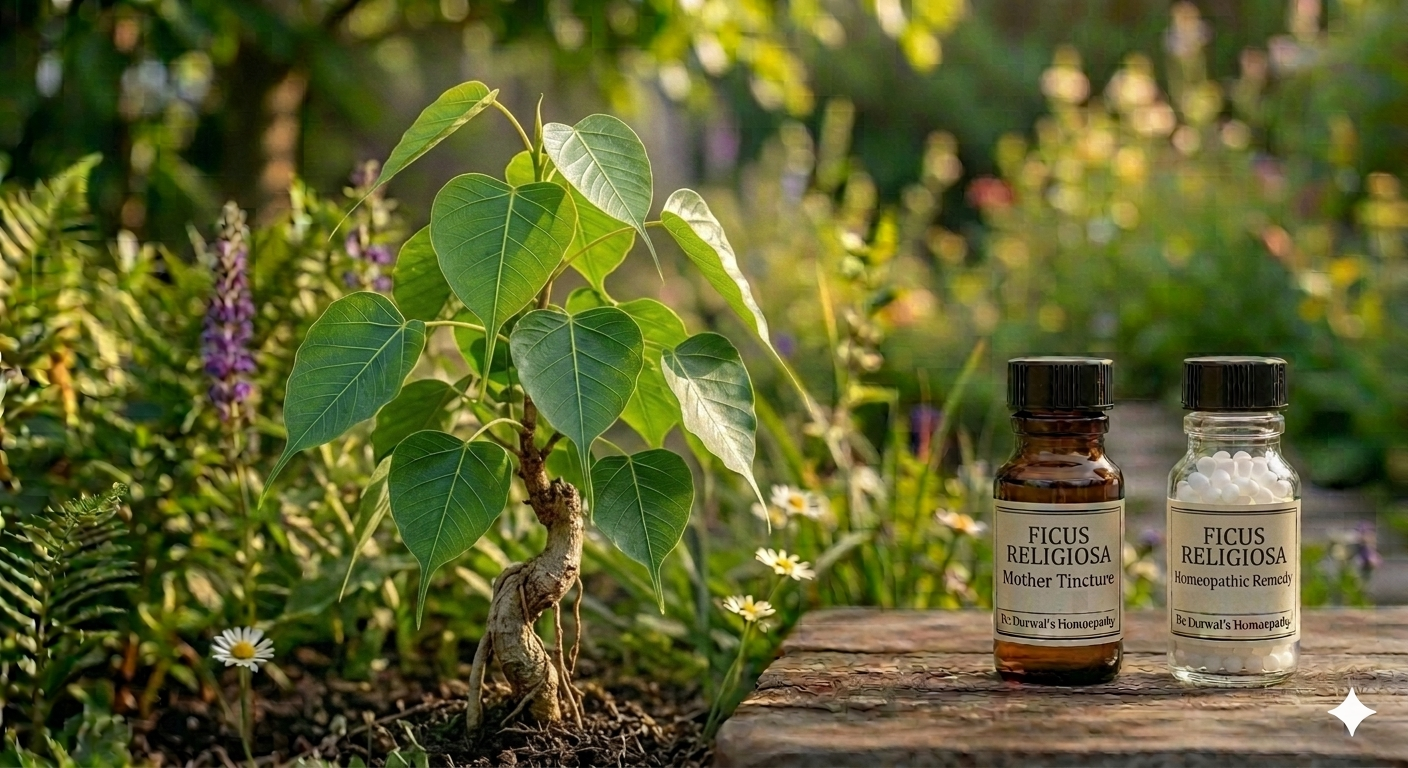
Ficus Religiosa, commonly known as the Pipal tree or Bodhi tree, is a significant remedy in homoeopathy, particularly valued for its action on the circulatory system and its unique ability to address hemorrhagic conditions.
Clinical Indications & Benefits
In clinical practice, Ficus Religiosa is indicated for states characterized by active bleeding and congestion:
- Hemorrhagic Affections: It is highly regarded for its efficacy in controlling various forms of hemorrhage, including epistaxis (nosebleeds), hematemesis (vomiting blood), and menorrhagia (excessive menstrual bleeding).
- Circulatory Congestion: Often indicated when there is a sensation of fullness or throbbing in the head or chest, frequently associated with the underlying hemorrhagic tendency.
- Respiratory Support: Occasionally employed in cases of hemoptysis (coughing up blood) where the discharge is bright red and accompanied by a sense of circulatory irritability.
Administration & Therapeutic Modalities
- Potency & Dosage: Practitioners typically utilize lower potencies, particularly in tincture (Q) or 30C, when addressing acute bleeding episodes. The dosage is managed based on the urgency and severity of the hemorrhage.
- Clinical Observation: The primary indicator for this remedy is the sudden appearance of bright red, arterial-type bleeding, often accompanied by local congestion. Monitoring the stability of the patient’s circulatory state and the cessation of bleeding is essential.
Dr. Dorwal’s Perspective
In my clinical practice, Ficus Religiosa serves as a specialized remedy for patients experiencing acute, active hemorrhages. I find it particularly effective in cases where the bleeding is bright, sudden, and seemingly unprovoked, reflecting a state of circulatory imbalance. By stabilizing the vessels and calming the associated congestion, I utilize Ficus Religiosa to provide immediate support during episodes of menorrhagia or other localized hemorrhages. It remains a precise choice for those acute, blood-related complaints that require swift and focused intervention.
Disclaimer: This content is for informational purposes only. Homoeopathic medicines should be taken under the guidance of a qualified homeopathic physician. Do not self-medicate for chronic or serious medical conditions, and always seek professional advice for any health concerns.
Frequently Asked Questions (FAQs)
It is primarily utilized in homoeopathy for controlling active, bright red hemorrhages such as nosebleeds and excessive menstrual bleeding.
It is indicated for hemoptysis, especially when the bleeding is bright red and accompanied by a sense of circulatory throbbing.
Yes, it is often employed when hemorrhagic tendencies are accompanied by sensations of fullness or throbbing in the head or chest.
The hallmark of this remedy is active, bright red arterial-type bleeding with local congestion.
