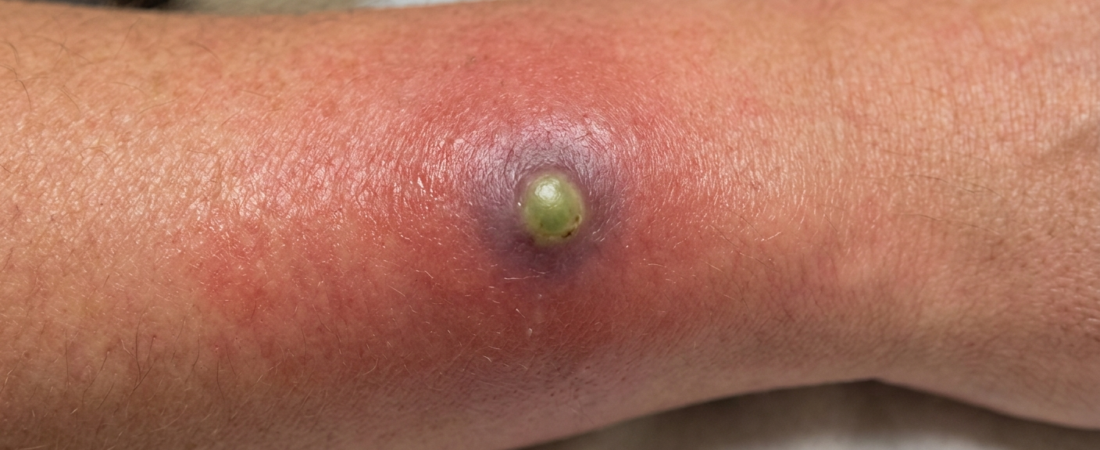
Abscess is known as localized collection of pus within or under the skin. It usually contains dead and decaying neutrophils or translucent fluid materials. Vast number of abscess are caused by infections and can develop along any part or organ of body. Some of abscess can resolved by own healing process of our body but some needs medical treatment. Abscess are classified into
- Pyogenic abscess – These are commonest form of abscess produced by staphylococcal infections.
- Pyaemic abscess – These abscess occurs due to circulation of pyaemic emboli in the blood.
- Cold abscess – These refers to tubercular abscess due to involvement of either lymph node or spine.
Signs and symptoms
Localized collection of pus within or under skin shows symptoms of inflammation including
- Throbbing pain
- Redness
- Swelling
- Heat at affected part
- Tumor or pus formation under skin
- Fever and chills in some cases
- Inflamed skin
- Lesions on skin
What causes abscess?
Majority of abscess are caused by
- Infections – Bacterial infections or skin infections, especially infection from Staphylococcus bacteria can results into formation of pus. Our immune system fights with foreign bodies including various bacteria and viruses, sometimes inflammatory reactions can produce pus in nearby tissues and cells.
- Infected hair follicles – Infected hair follicles can develops into pus formation in advanced stages from inflammatory reactions. Hair follicles can infect if hair present in follicle is trapped within follicle or hair is unable to penetrate the skin.
- Injury or trauma – Any injury and trauma can further results into pus formation by exposure of trauma or open injury with foreign bodies.
- Other medical conditions – Abscess can develop from complications of other medical conditions such as diabetes, cancer, sickle cell disease, crohn’s disease and many more.
Major surgical works, poor living hygiene, injections in skin for medical procedures, exposure of individual with dirty environment and many more factors result into formation of pus.
Complications
Avoidance of abscess for longer time may cause serious complications. Complications includes
- Infection – Avoidance of pus for longer times may results into spread of infection to vital organs of our body via blood stream.
- Sepsis – It is a life threatening response of our body immune system to variety of infections. It includes high fever and other manifestations in our body.
- Endocarditis – It is known as inflammation of heart inner lining. Advance cases of abscess may leads to endocarditis.
- Gangrane – It is known of cell or tissue death of a particular area. In cases of abscess lining cells and tissue deacth may occurs.
Osteomylities, Methicillin-resistant Staphylococcus aureus (MRSA), development of new abscesses and many more may also occurs in advance stages.
Who is at risk?
There are several factors including causes mentioned above. These factors can also increase risk of development of abscess
- Weak immunity – Person with weakened immunity have higher chances to be infected from an infection. Weak immunity also decreases healing process of our body which results into serious medical conditions including skin affections.
- Person with other disease condition such as diabetes, cancer and many more have higher risk of skin affections.
- Excessive alcohol drunkers are at higher risk for skin affections.
- Person who lives in poor hygiene or in dirty environment is at higher risk for skin affections.
How abscess is diagnosed?
These may diagnose with presence of fluid filled pus and presence of signs and symptoms. In some cases samples are taken by doctors for identification of causative agent of pus. Although, inspection of pus by doctors with presence of signs and symptoms and perceiving of medical history is enough to diagnose abscess.
How abscess is treated?
Doctors may cut and drain fluid from abscesses in most of cases and cover the area with antiseptic solution. Generally, antibiotics such as dicloxacillin and cephalexin are prescribed to heal infected area. Although, skin affections like abscess can also effectively treated by using of holistic approach of homoeopathy and medicines in early and advanced stages.
Homoeopathy approach and suggested medicines
Homoeopathy tends to treat number of skin and other affections of our body on basis of similarity of symptoms over 200 years by using easily comprehensive laws. In cases of abscess physicians perceive an overall image of patient to select a similimum at physical, mental, emotional and spiritual level with including factors of infections, suppuration’s and many more. Some of the recommended medicines by physicians to treat cases of abscess are
- Belladonna – It is a medicine most often indicated in early inflammatry stages where parts swell rapidly, become bright red with intense throbbing pain. So, Belladonna is an indicated medicine for unmatured abscess with dry, hot and inflammtary symptoms.
- Hepar sulphur – It closely keeps relation with Belladonna and Mercurius where Belladonna is first indicated medicine and Mercurius often follows Hepar sulphur. It suits especially lymphatic, phlegmatic individuals with indication of excessive sensitiveness of the parts. In further stages it is indicated by chilly sensations, throbbing or sharp, sticking pains which are worse at night and from cold. In clinical studies suppurative process will often aborted by Hepar sulphur if given in higher potencies. So, it is an indicated medicine in progressive cases of abscess.
- Silicea – It is a medicine used where suppuration continues and wound refuses to heal. Pus is usually thin, watery, and process of formation is indolent one with granulation’s appearance. So, it can be prescribed in cases where abscess has been lanced or opened by means of poultice.
- Mercurius – It is one of best medicine for abscess after Belladonna which can used in progressive stages of formation of pus, especially in lower potencies. Pus is greenish in tint and quite thin with fluid. There is intense, shining redness with throbbing and stinging pains but suppurative process is usually slower than Hepar sulphur.
- Lachesis – A medicine derived from snake venom is used in low conditions of abscess where pus is thin, dark, ichorous and offensive in character. Often affected parts are purplish in appearance. So, we can use Lachesis in thin, ichorous pus.
- Sulphur – It is highly effecious medicine in chronic cases where discharge is profuse, accompaned with emaciation and hectic fever. It is suited to scrofulous persons, where there is marked psoric taint. Pus is usually with intense itching and burning sensation indicate Sulpur as a medicine.
- Arnica montana – It is an indicated medicine in prematured abscesses with sore and bruished feeling. It helps to treat progressive abscess which are purplish in colour and filled often with blood. Arnica montana is considered as a medicine to prevent suppuration and particularly to hinder the absorption of pus to prevent pyaemia.
- Echinacea – It is a reputated medicine for affections after suppurative conditions, especially where symptoms of blood poisoning are present. So, Echinacea is a medicine for abscess originated from suppurative conditions.
- Nitric acid – Nitric acid is subjected to the syphilitic conditions where discharge is offensive, excoriating and of a dirty, greenish yellow colour. So it seems a medicine for offensive and excoriating pus formations in our body.
Kali iodatum, Phosphorus, Pyrogen, Calcarea carb, Graphitis, Lycopodium, Carbo vegetabilis, Chamomilla, Fluric acid, Rhus tox and many more can also used to treat abscess and other skin affections with their own peculiar symptomatology.
References
- https://www.healthline.com/health/skin-abscess#common-causes
- https://www.nhs.uk/conditions/abscess/
- https://academic.oup.com/cid/article/33/1/35/316998
- Boerick’s New Mannual of Homoeopathy Materia Medica – W.Boericke