
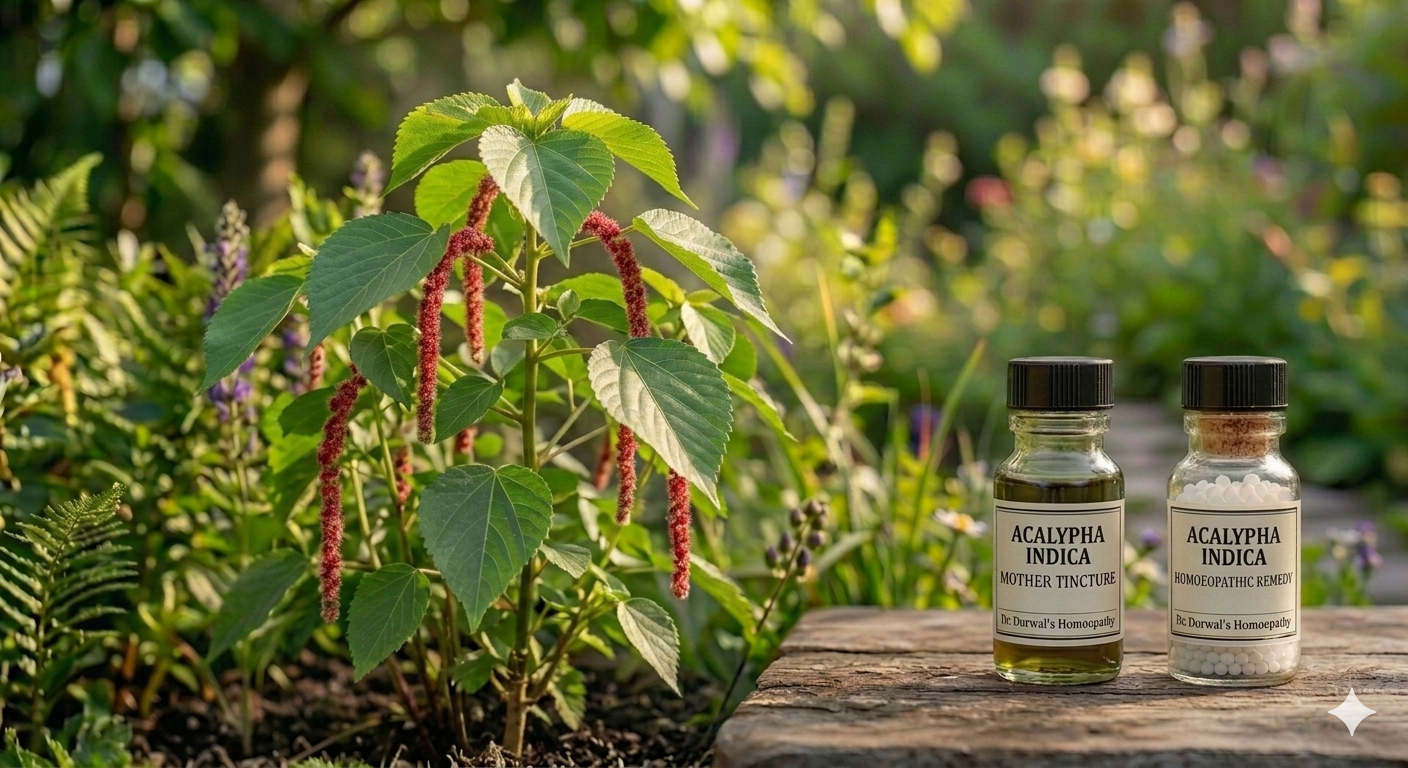
Acalypha Indica, commonly known as Indian Nettle, is a significant homoeopathic remedy derived from the Acalypha indica plant. It is primarily recognized for its potent action on the respiratory tract and the gastrointestinal system, particularly in cases involving haemorrhage.
Key Clinical Indications & Benefits
Acalypha Indica is specifically indicated in the following clinical contexts:
- Respiratory Haemorrhage: It is a primary remedy for hemoptysis (coughing up blood). The condition is often characterized by a violent, dry, hacking cough followed by the expectoration of bright red blood, particularly in the morning.
- Gastrointestinal Bleeding: The remedy is indicated for cases involving haemorrhage from the bowels, where the blood is bright red, often associated with weakness and a sensation of rawness in the chest.
- Tuberculosis-related Symptoms: It is frequently employed in the management of early-stage pulmonary tuberculosis where the patient experiences significant emaciation, weakness, and a persistent, dry cough that worsens during the night and morning.
- Wasting Conditions: Patients requiring this remedy often exhibit signs of general wasting (marasmus) or extreme debility, where the physical decline is accompanied by distinct pulmonary or abdominal distress.
Administration & Therapeutic Modalities
- Potency & Dosage: Clinical application typically involves lower potencies, such as the mother tincture (Q) or 30C dilution, administered frequently to control active haemorrhagic symptoms.
- Clinical Observation: The hallmark presentation of Acalypha Indica is the combination of “morning aggravation” and the intensity of the bleeding—if the cough is particularly violent in the morning and results in bright red blood, the remedy is highly suggested.
Dr. Dorwal’s Perspective
In my clinical practice, Acalypha Indica serves as a critical bridge between simple respiratory irritation and serious haemorrhagic states. I prioritize this remedy when a patient presents with a history of chronic cough that has recently evolved to include blood, specifically bright, arterial blood. Unlike other remedies that address deeper lung tissue changes, I find Acalypha Indica acts with remarkable speed to suppress the acute tendency to haemorrhage. It is my go-to choice when the patient’s general constitution reflects significant emaciation, reinforcing the need to address both the physical weakness and the localized bleeding simultaneously.
Disclaimer: This content is for informational purposes only. Homeopathic medicines should be taken under the guidance of a qualified homoeopathic physician. Do not self-medicate for chronic or serious medical conditions, and always seek professional advice for any health concerns.
Frequently Asked Questions (FAQs)
It is primarily used for conditions involving bleeding (haemorrhage) from the respiratory tract or the gastrointestinal system, often associated with a dry, hacking cough.
Key symptoms include the expectoration of bright red blood, violent coughing in the morning, general physical emaciation, and a raw, burning sensation in the chest.
Yes, it is indicated for persistent, dry coughs, particularly when they lead to hemoptysis or when the patient is in a state of marked weakness.
It is a established homoeopathic remedy. However, given its specific action on haemorrhages, it must be used under the strict supervision of a qualified homoeopathic physician to ensure correct diagnosis and dosage.
