
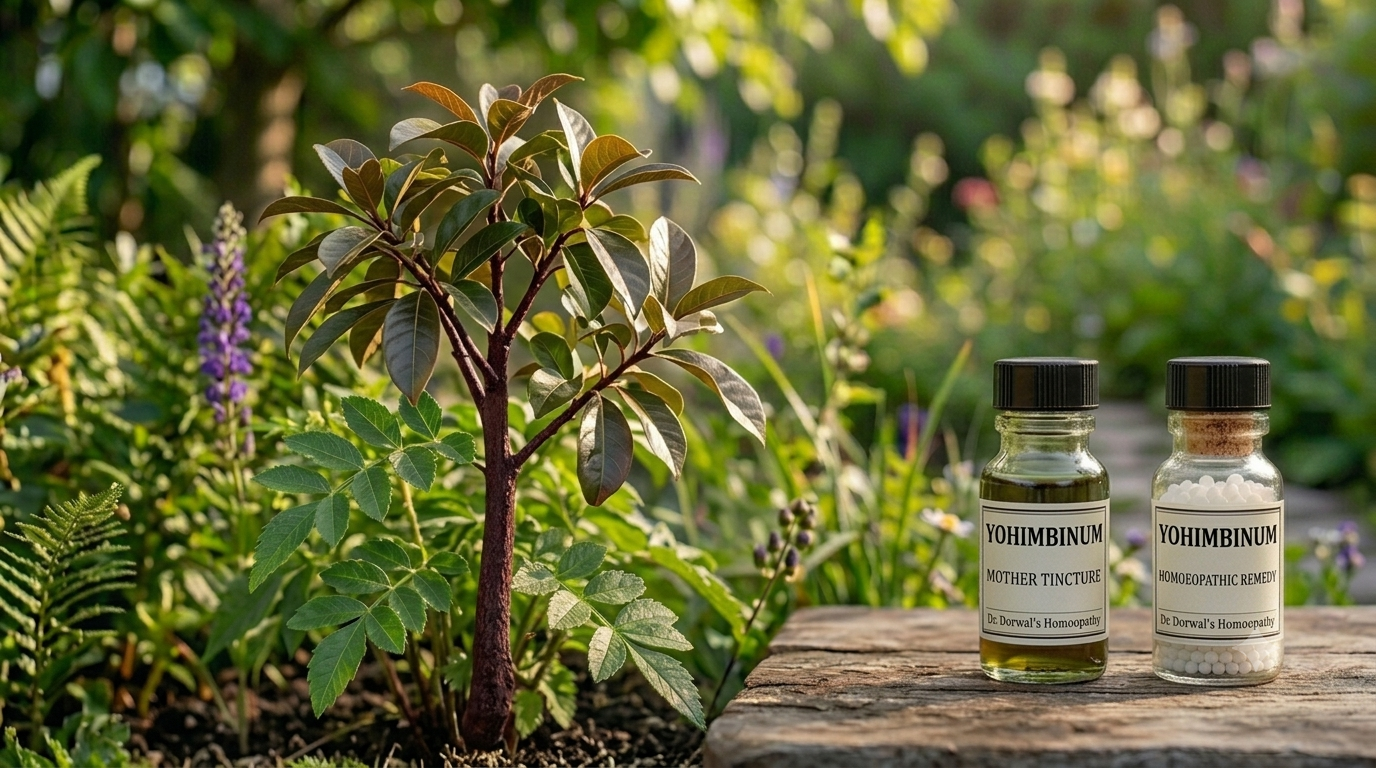
Yohimbinum—derived from the bark of the West African Pausinystalia johimbe tree—stands out as a potent, specialized agent. Unlike general tonics, this remedy has a highly specific affinity for the circulatory system, particularly the blood vessels of the pelvic region. It is most frequently utilized by clinicians to address specific vascular and autonomic nervous system concerns.
Key Clinical Indications
Yohimbinum is not a remedy for widespread constitutional use; rather, it is employed when specific physiological “blocks” manifest in the circulatory or reproductive sphere. Its primary indications include:
- Circulatory & Pelvic Congestion: It is highly effective in states characterized by localized venous congestion. It works by stimulating the circulation, helping to move blood through systems where there is a sensation of sluggishness or localized pooling.
- Sexual Dysfunction & Vitality: Historically and clinically, This remedy is frequently applied in cases of reduced libido and erectile dysfunction, specifically when these conditions are rooted in poor pelvic circulation or diminished nerve signaling to the genital region.
- Autonomic Nervous System Support: It is occasionally indicated for symptoms of nervous exhaustion where the patient feels a sudden “drop” in vitality, often accompanied by palpitations or a feeling of coldness, indicating poor peripheral blood flow.
- Vascular Tone: It acts as a stimulant to the vasomotor nerves, making it a targeted choice for conditions where blood pressure regulation is sluggish or where there is a marked lack of physical “drive.”
Administration & Therapeutic Modalities
- Potency & Dosage: Given its stimulating nature, Yohimbinum is typically prescribed in lower potencies (30C) or as a Mother Tincture. Because it directly influences blood pressure and circulation, it must be used with care; consistent, moderate dosing is often preferred over high-potency, erratic administration.
- Formulation: It is most commonly dispensed in mother tincture, liquid dilutions or globules. Because of its physiological action, I often advise that it be taken with a clear understanding of the patient’s existing cardiovascular health to ensure safety and efficacy.
Dr. Dorwal’s Perspective
In my clinical practice, I utilize Yohimbinum with a high degree of precision for patients seeking support for their sexual health. I do not prescribe it lightly; rather, I view it as a ‘surgical’ tool for cases of vascular sluggishness. It is remarkably effective when I treat patients for erectile dysfunction or pelvic congestion where the root cause is poor circulatory tone rather than a hormonal deficiency. By enhancing vasomotor supply, it acts as a vital catalyst to restore healthy sexual function. However, I must stress that because this remedy directly influences the circulatory system, it is a specialized clinical intervention that requires a thorough assessment of the patient’s cardiac and vascular health profile.
Disclaimer: This content is for informational purposes only. Homoeopathic medicines should be taken under the guidance of a qualified homoeopathic physician. Do not self-medicate for chronic or serious medical conditions, and always seek professional advice for any health concerns.
Frequently Asked Questions (FAQs)
It is primarily used to improve circulatory tone, particularly in the pelvic region, and is clinically indicated for cases of sexual dysfunction, such as erectile dysfunction, arising from poor vascular flow.
While it provides a “stimulant” effect on the vascular system, it is not a general fatigue remedy. It is specifically suited for circulatory or nerve-related exhaustion.
Because Yohimbinum acts on the vasomotor system, it can affect blood pressure. It is imperative that patients with hypertension or cardiovascular concerns consult a physician before using this remedy.
Yohimbinum works specifically by dilating peripheral blood vessels and stimulating the nerves that control blood flow, rather than acting as a central nervous system stimulant like caffeine.
