
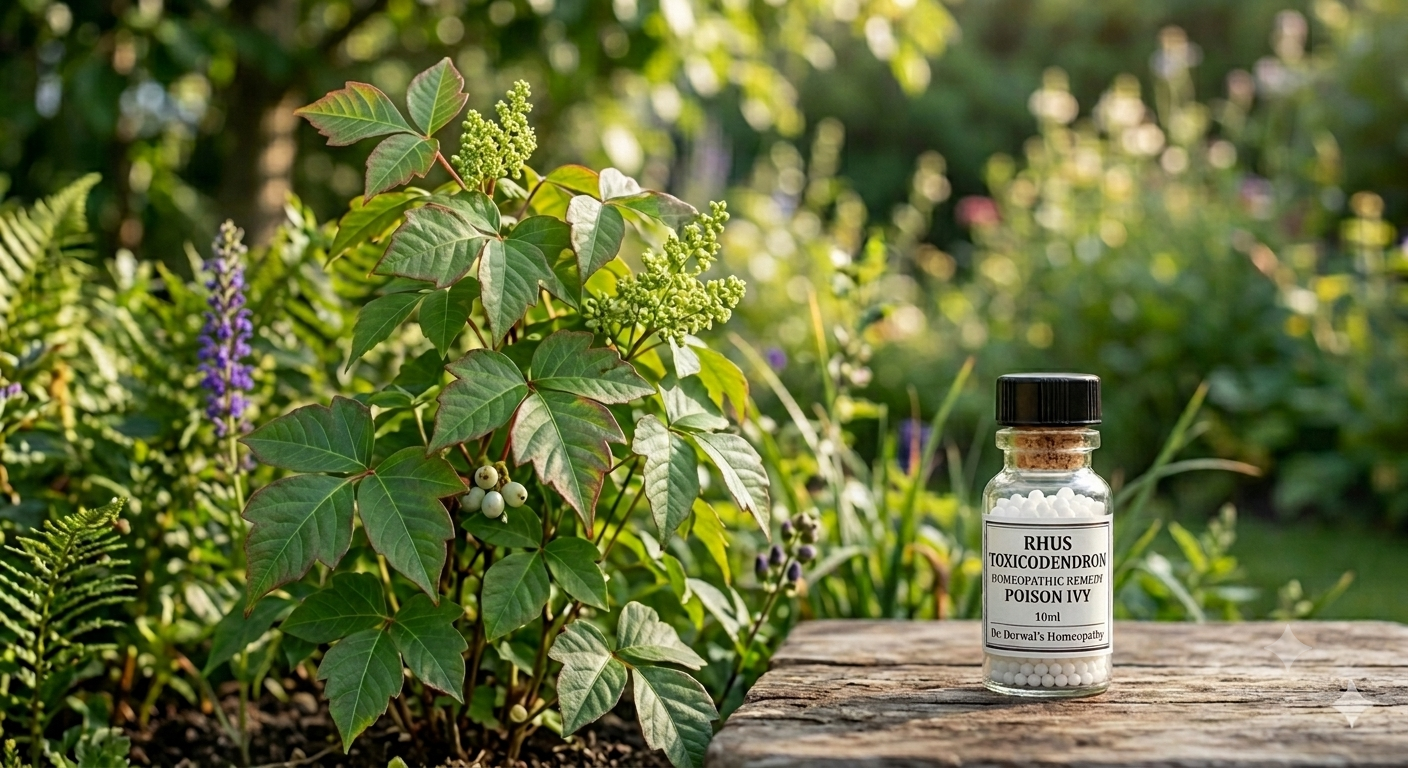
Rhus Toxicodendron, derived from the poison ivy plant, acts as a profound remedy for conditions affecting the fibrous tissues of the body, including joints, tendons, ligaments, and the skin. Its action is characterized by a specific rhythm: the patient feels significant stiffness and pain upon initial movement or after periods of rest, but finds relief through continued motion and warmth.
Clinical Profile and Key Indications
- Musculoskeletal & Rheumatic Disorders: The primary sphere of action is the fibrous tissue. It is indicated for arthritis, rheumatism, and sciatica, especially when symptoms worsen in cold, damp weather or after exposure to rain. It is the go-to remedy for the “rusted gate” sensation—stiffness that improves as the patient “limbers up” through activity.
- Acute Injuries & Overexertion: This remedy is excellent for physical strain, including athletic injuries, muscle overstretching, or heavy lifting. It works effectively to soothe ligament inflammation, alleviate intense soreness, and relieve the sharp, tearing pains associated with such physical trauma.
- Skin & Surface Infections: This remedy targets inflammatory skin issues marked by swelling, redness, and the development of clear, fluid-filled vesicles (blisters). It is highly beneficial for treating localized skin eruptions that exhibit these specific, irritation-prone symptoms. It is frequently used for erysipelas, severe eczema with burning/scaling, and carbuncles in their early stages.
- Respiratory & Fever Support: It is a major remedy for adynamic fevers (such as those of a typhoid type) where the patient is extremely restless, the tongue is dry/coated, and the mind feels dull or clouded. It also supports bronchial coughs and influenza, particularly when body aches are severe.
Key Diagnostic Features (“The Rhus Tox Patient”)
- The Modality Rule: Worse with rest, cold/damp conditions, and at night. Better with continuous motion, change of position, warmth, and stretching.
- Mental State: A distinct sense of restlessness. The patient is unable to stay still, constantly tossing and turning, often plagued by feelings of anxiety, sadness, or a fear of being poisoned.
- Physical Sensations:
- The “Board” Sensation: A feeling as if a heavy board is strapped across the forehead.
- The “Loose Brain” Feeling: A sensation as if the brain is shaking or striking against the skull when walking.
- The Triangular Tip: A red, triangular area at the tip of the tongue when the rest of the tongue is coated.
Administration & Therapeutic Modalities
- Potency & Dosage: Typically used in potencies ranging from 6C to 30C for general symptoms. Higher potencies (200C and above) are often employed by practitioners for their antidotal effect in cases of plant poisoning or deep-seated chronic conditions.
- Supportive Environment: Since the patient is aggravated by cold and dampness, maintaining a warm, dry environment is essential. Gentle, moderate movement is encouraged to manage stiffness.
Dr. Dorwal’s Perspective
In my clinical practice, I rely heavily on Rhus Toxicodendron for rheumatic conditions, arthritis, and chronic joint pain. I view it as the essential ‘oil’ for stiff joints that require movement to function. While it is a primary remedy for both physical trauma and systemic inflammation, I treat it as a catalyst for recovery—always to be used alongside a precise medical diagnosis, never as a substitute for acute surgical or emergency intervention.
Disclaimer: This content is for informational purposes only and is not medical advice. Persistent pain or severe injury requires immediate evaluation by a medical professional. Always consult a qualified homoeopathic physician for an individualized assessment.
Frequently Asked Questions (FAQs)
Rhus Toxicodendron is primarily used for conditions affecting the fibrous tissues of the body, such as joints, ligaments, and tendons. It is a cornerstone remedy for addressing stiffness, inflammatory pain, and discomfort that is triggered by cold, damp weather or physical overexertion.
Yes, it is highly effective for joint pain and arthritis, especially when the symptoms follow the “rusted gate” pattern—meaning the joints feel stiff and painful after periods of rest or upon waking, but improve significantly once the patient begins to move and “limber up.”
When used according to homoeopathic principles and in the appropriate, highly diluted potencies, it is considered safe. However, because it is derived from the poisonous Toxicodendron radicans (poison ivy) plant, it should never be taken in its crude, undiluted form. Always use it under the guidance of a qualified homoeopathic practitioner to ensure the correct dosage and potency for your specific health needs.
No, it is not a steroid. Homoeopathic Rhus Toxicodendron is a natural, plant-based remedy prepared through a process of potentization (dilution and succussion). It works differently than conventional anti-inflammatory drugs or steroids and does not carry the side effects typically associated with long-term steroid use.
