Quick Overview: Homoeopathic medicine Belladonna, is indicated in acute conditions and commonly used for Fevers, Headaches, Tonsillitis, Ear pain, Localised Skin inflammations, and Inflammatory pains.
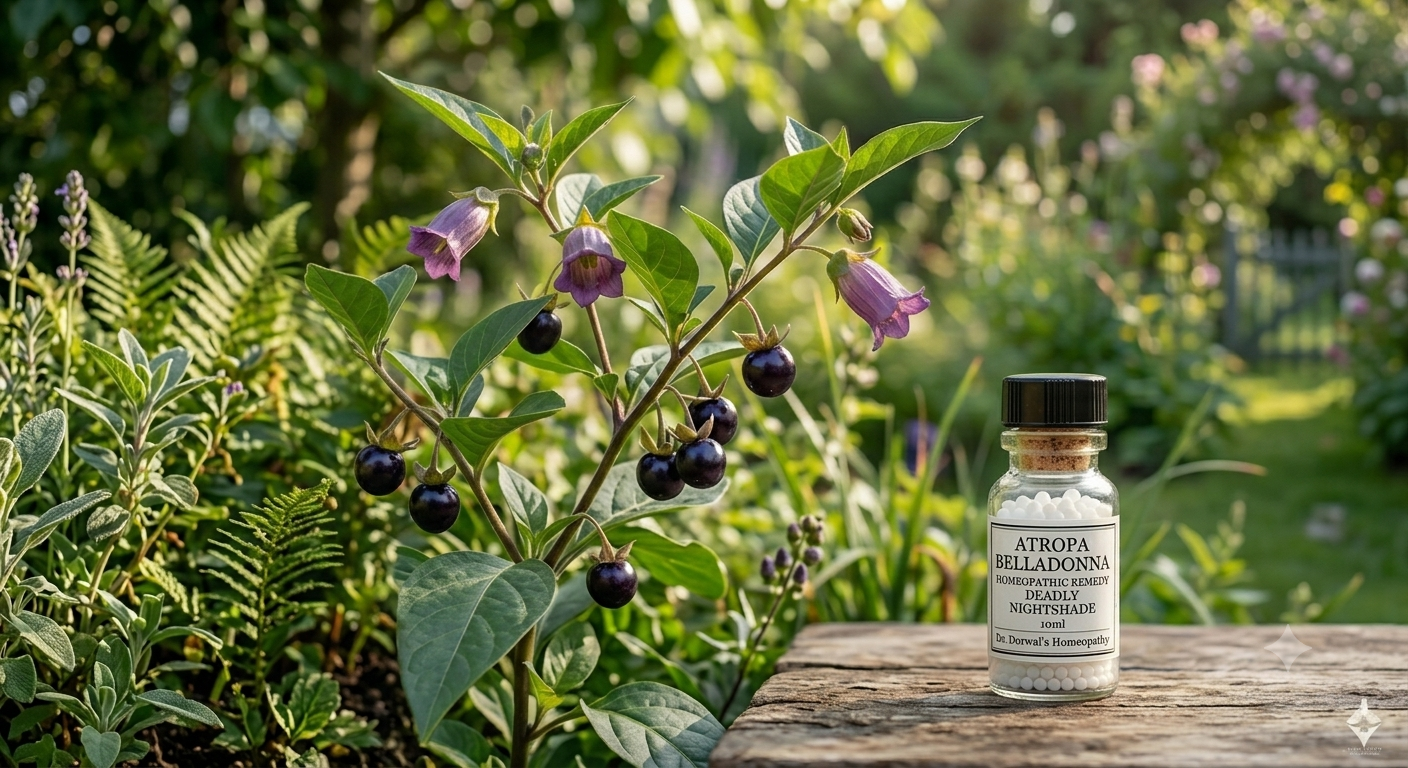
Belladonna, prepared from the Deadly Nightshade plant, is one of most frequently reached homoeopathic medicine for acute conditions. Its signature is speed and intensity: complaints that come on suddenly and violently, with heat, redness, and throbbing. Where other remedies suit a slow build-up, Belladonna suits the case that seems to explode within hours.
Key Clinical Indications & Uses
- Fevers: Sudden, high fever with a burning, radiating heat that can be felt without touching the skin; the face is flushed and hot while the extremities may remain cool.
- Head & Headaches: Throbbing, bursting headaches with a sensation of blood pounding in the head; worse from light, noise, and jarring motion; better from firm pressure and sitting up.
- Throat & Ear Infections: Acute tonsillitis and ear pain with intense redness, heat, and a sensation of throbbing pain; onset is typically abrupt.
- Skin & Local Inflammation: Localised inflammations marked by the classic four signs — redness, heat, swelling, and throbbing pain — coming on suddenly.
- Delirium & Restlessness: Fever accompanied by a flushed face, dilated pupils, and a restless, sometimes delirious state; the patient may be oversensitive to light and noise.
How It Differs From Similar Remedies?
| Remedy | Key Distinguishing Feature |
| Belladonna | Throbbing, radiating heat; sudden violent onset; sensitive to light, noise, jarring |
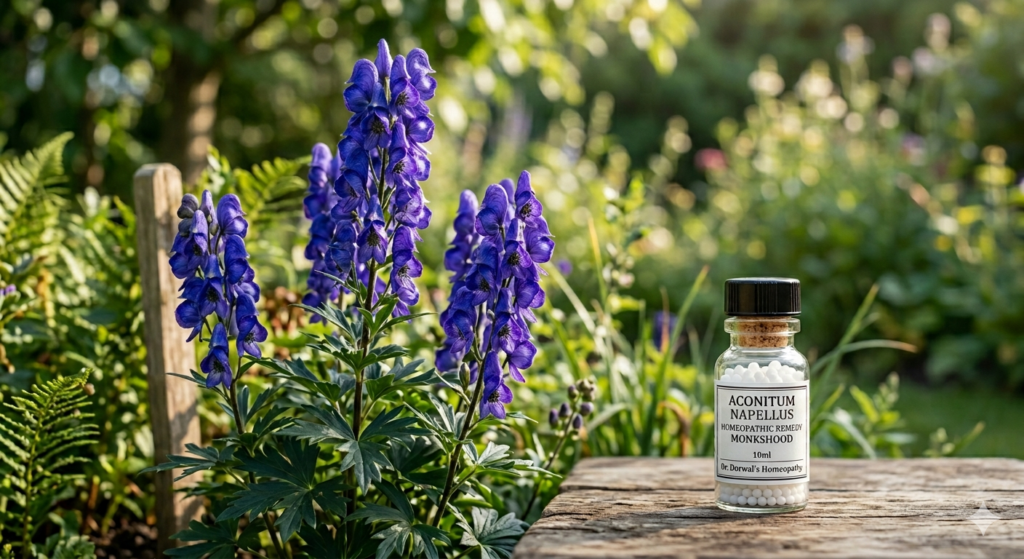
| Aconitum Napellus | Also sudden onset, but with marked anxiety, fear, and restlessness following exposure to cold or fright |
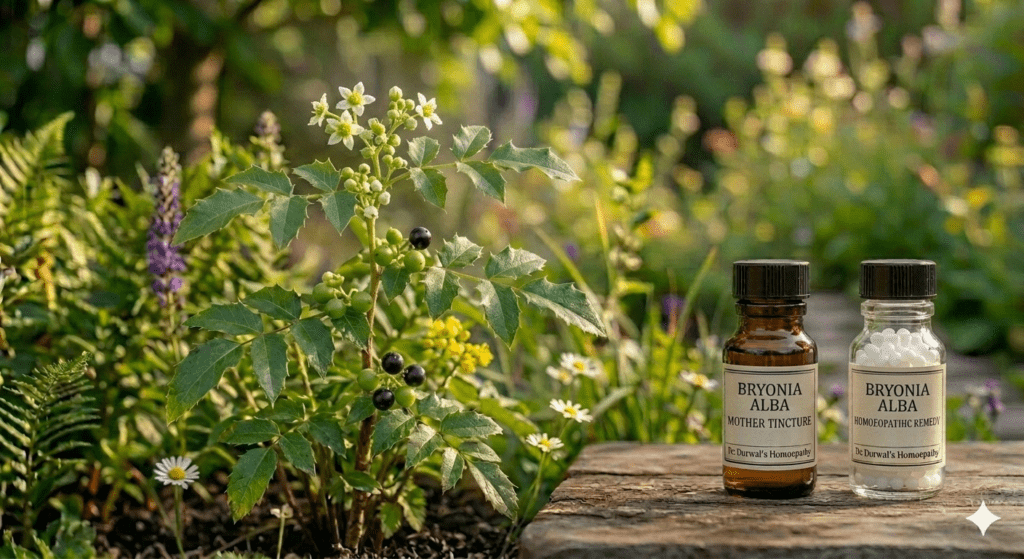
| Bryonia Alba | Onset is more gradual; great thirst for large quantities at long intervals; worse from any motion, better from lying still |
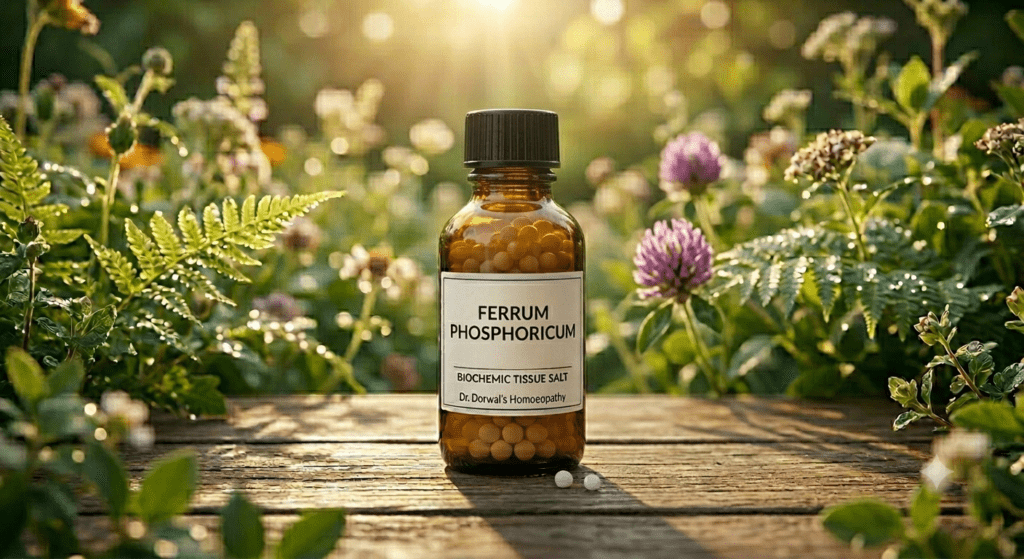
| Ferrum Phosphoricum | A milder, more transitional febrile state — less intense heat and throbbing than Belladonna |
Potency & Administration
30C is the most commonly used potency for acute presentations of this kind. Some practitioners consider closer repetition in the initial hours, but this should be individualised by a qualified physician rather than followed as a fixed schedule.
Dr. Dorwal’s Clinical Perspective
In practice, I look for the tempo of a complaint as much as its symptoms — Belladonna cases announce themselves with a suddenness that is hard to mistake. When a patient or a attender describes a fever or ear pain that seemed to come out of nowhere, with heat and redness, this is usually the first remedy I consider, always alongside a full case assessment rather than symptom-matching alone. I often recommend Belladonna for acute conditions in my clinical practice.
Disclaimer: This content is for informational and educational purposes only and reflects general homoeopathic materia medica knowledge. It is not a substitute for individualised medical consultation. Homoeopathic medicines should be taken only under the guidance of a qualified homoeopathic physician. Do not self-medicate for chronic or serious medical conditions — always seek professional advice.
Frequently Asked Questions (FAQs)
In Homoeopathy, It is used for sudden, intense fevers, throbbing headaches, and acute inflammations marked by redness, heat, and throbbing pain.
Belladonna 200 is high potency homoeopathy remedy, Commonly used for acute conditions like Fevers and Headaches.
Homoeopathic remedy Belladonna 30CH is commonly used to address High grade fevers, throbbing headaches and to assist acute inflammatory conditions.
Belladonna 1M is a High potency in Homoeopathy and used carefully by the physicians for fever, headaches and to assist acute inflammatory conditions.
Homoeopathic remedy Belladonna is a ultra diluted liquid and used on the basis of its peculiar symptomatology. It is safe for use and have no side effects when used in the supervision of qualified homoeopathic physician.
Yes. Homoeopathic belladonna 200 is safe for use in the supervision of the qualified homoeopathic physician.
Yes. Belladonna 30 is a homoeopathic remedy and used by physicians to treat high grade fever with no thirst.