
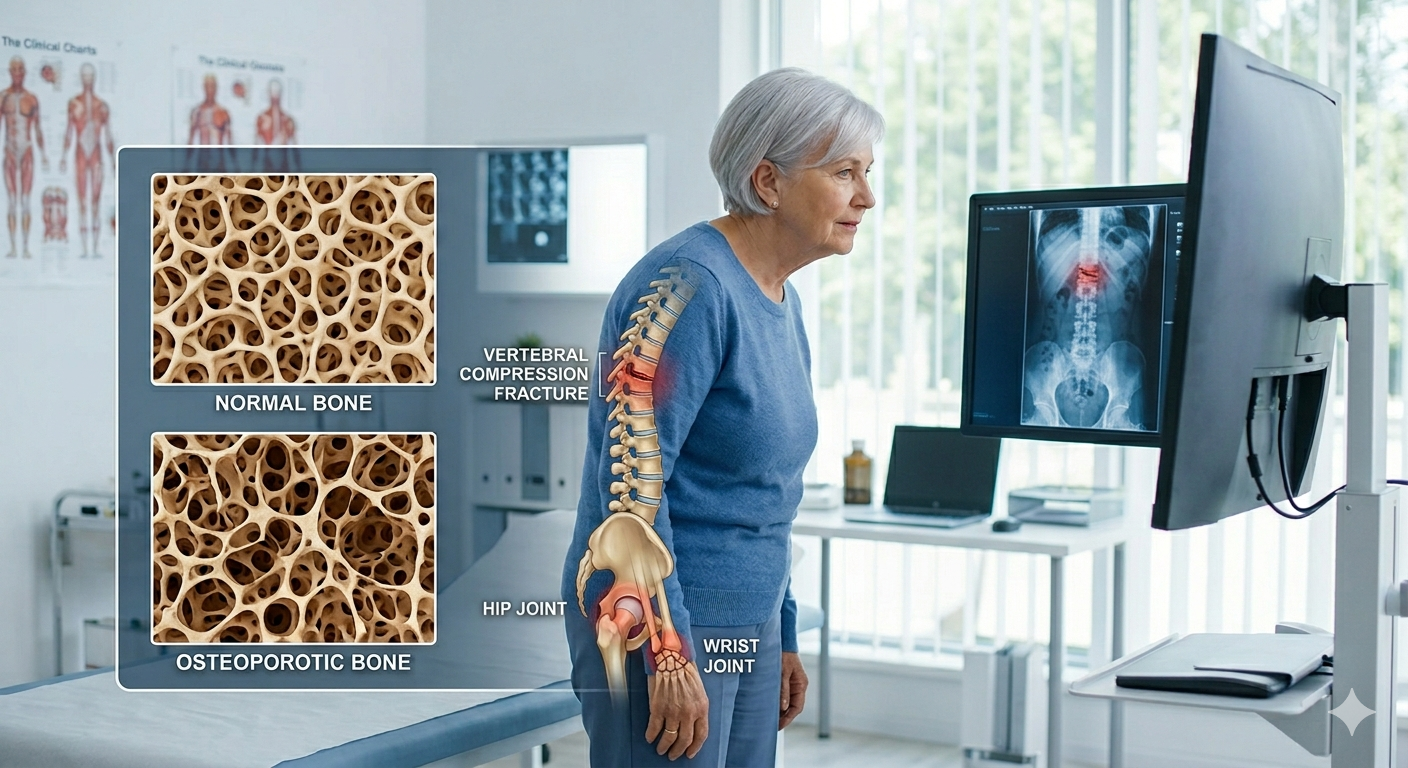
Osteoporosis, meaning “porous bone,” is a condition characterized by low bone mass and the structural deterioration of bone tissue. This leads to increased bone fragility and a significantly higher risk of fractures. While bone remodeling—a balance between bone degradation (by osteoclasts) and bone formation (by osteoblasts)—is a normal physiological process, osteoporosis occurs when this balance is disrupted, favoring bone loss.
It is estimated that 200 million people globally suffer from osteoporosis. Because early symptoms are often absent, many individuals remain undiagnosed until a fracture occurs.
Signs and Symptoms
Osteoporosis is often called a “silent” disease because it rarely manifests in its early stages. In advanced stages, symptoms may include:
- Chronic Pain: Persistent bone, back, or neck pain.
- Radicular Pain: Pain radiating from the spine due to vertebral compression affecting nerves.
- Fractures: Often the first clinical sign, typically occurring in the wrist, hip, ribs, or vertebrae. In severe cases, even minor stressors—such as lifting a heavy shopping bag—can cause a fracture.
- Loss of Height: A noticeable decrease in height accompanied by a curvature of the spine (kyphosis).
Causes and Risk Factors
Osteoporosis is caused by an excessive breakdown of the spongy (trabecular) bone tissue, which decreases overall bone density. Several factors contribute to this:
- Age: Bone density typically peaks around age 30; after this, the risk of osteoporosis increases. Symptoms are most commonly observed after age 50.
- Gender: Women are at a higher risk, especially post-menopause, due to a sharp decline in estrogen, which plays a protective role in bone health.
- Genetics/Family History: Inherited factors influence bone structure and development.
- Hormonal Imbalances: Elevated levels of thyroid hormones, cortisol, or parathyroid hormone, and decreased levels of estrogen, testosterone, or insulin-like growth factor (IGF1).
- Lifestyle Factors: Smoking, excessive alcohol consumption, and physical inactivity.
- Medications: Prolonged use of glucocorticoids, anticonvulsants, anticoagulants, barbiturates, and chemotherapeutic agents.
- Nutrition: Insufficient intake of calcium, magnesium, and Vitamin D.
Diagnosis
A doctor assesses the risk of osteoporosis through medical history and physical examination. Key diagnostic procedures include:
- Bone Density Test (DEXA Scan): The gold standard for measuring bone mineral density (Dual-energy X-ray absorptiometry).
- X-rays: Used to visualize bone structure and identify existing fractures.
- CT Scans: Provide detailed, multi-angle images to assess the likelihood of vertebral fractures.
- Quantitative Ultrasound (QUS): A screening tool to evaluate bone density.
Management and Treatment Approaches
Effective management of osteoporosis involves a multi-faceted approach combining conventional medical treatment with holistic lifestyle modifications.
1. Conventional Medical Approach
Conventional treatment focuses on slowing bone resorption and promoting bone formation:
- Bisphosphonates: (e.g., Alendronate, Risedronate, Ibandronate) used to inhibit bone breakdown.
- Bone-Building Medications: (e.g., Teriparatide, Abaloparatide, Romosozumab) to stimulate new bone growth.
- Hormone Therapy: Often used to manage bone loss related to hormonal changes, particularly in post-menopausal women.
- Monoclonal Antibodies: Targeted therapies to improve bone density and reduce fracture risk.
2. Holistic and Lifestyle Approach
- Dietary Management: A daily intake of approximately 1,000 mg of calcium, supported by adequate Vitamin D for optimal absorption. Focus on dairy products, green leafy vegetables, nuts, and fortified foods.
- Physical Activity: Weight-bearing exercises (walking, jogging) and muscle-strengthening exercises are crucial.
- Yoga: Specific practices like Surya Namaskar (Sun Salutation) and various Hatha yoga poses help improve agility, posture, balance, and bone stability.
- Weight Maintenance: Maintaining a healthy BMI (avoiding being underweight) is essential for structural bone health.
3. Homoeopathic Treatment Approach
Homoeopathy is a system of medicine based on the principle of the similimum—the selection of the most precise medicine that corresponds to the individual’s unique symptom profile. Rather than targeting a disease in isolation, homoeopathic medicines work by stimulating the body’s vital, homeostatic reactions, thereby facilitating the body’s innate ability to heal itself. To determine the correct treatment, a practitioner assesses the “totality of symptoms,” taking into account the patient’s physical, mental, and emotional states. In the management of osteoporosis, practitioners often utilize the following homoeopathic medicines:
1. Mother Tinctures (Botanical Extracts)
Mother tinctures are the crude, concentrated extracts of medicinal plants. In osteoporosis, they are often used to provide general support for bone healing:
- Symphytum officinale Q: Widely recognized for its ability to promote osteogenesis and accelerate the healing of fractures by favoring the production of callus.
- Alfalfa (Medicago sativa) Q: Known as a “great restorative tonic,” Alfalfa is rich in naturally occurring vitamins (A, C, E, and K) and essential minerals, including calcium, phosphorus, and potassium. It is frequently prescribed to improve appetite, increase nutrient assimilation, and combat the physical fatigue and “leanness” often seen in osteoporotic patients.
- Avena Sativa Q: Derived from the common oat, this tincture is highly regarded for its ability to restore energy in states of nervous exhaustion and physical debility. In the context of bone health, it acts as a general health tonic, helping the body recover from chronic illness and improving the patient’s overall vitality and resilience.
- Withania Somnifera (Ashwagandha) Q: Often used in cases where chronic stress and hormonal imbalance (such as elevated cortisol) contribute to bone loss. It acts as an adaptogen, helping to stabilize the endocrine system and improve the body’s resistance to physical and mental strain, which can indirectly support skeletal integrity.
- Chelidonium Majus Q: While primarily known for its action on the liver and gallbladder, it is often utilized by practitioners in cases where poor digestion and sluggish metabolism are the root causes of poor calcium absorption. By improving the liver’s metabolic function, it indirectly aids in the better utilization of dietary minerals.
2. Biochemic Salts (Schuessler’s Tissue Salts)
These are essential minerals prepared in a way that allows for better cellular absorption. They are often used as supplements to correct mineral deficiencies:
- Calcarea fluorica: A powerful tissue remedy for bone malnutrition, tooth enamel health, and restoring elasticity to connective tissues and ligaments.
- Calcarea phosphorica: Known as the “bone builder,” it is essential for the assimilation of calcium and the healing of fractures, especially in children or thin individuals.
- Magnesia phosphorica: Used primarily for nerve and bone pain, offering relief from muscle cramps and spasms often associated with weak bones.
- Silicea: Often called as the “homeopathic surgeon,” it aids in the absorption of nutrients and is used when there is a deficiency in silica resulting in weak bones or recurrent bone issues.
3. Ultra-Diluted (Potentized) Medicines
These medicines are used to stimulate the body’s self-healing mechanisms:
- Calcarea carbonica: Ideal for individuals with weak, porous bones who are prone to weight gain or have a family history of bone issues.
- Phosphorus: Indicated for fragile bones where the patient is tall, thin, and suffers from bone pain that worsens with weather changes or exertion.
- Fluoric acid: Used in chronic cases of bone degeneration, such as necrosis or where there is a lack of healing in broken bones.
- Other Medicines: Ruta graveolens, Hypericum perforatum, Syphilinum, Argentum metallicum, Sulphur and many more homoeopathy medicines can also be used to treat osteoporosis with their own peculiar symptomatology.
Conclusion
Osteoporosis is a systemic metabolic disorder characterized by decreased bone density and structural deterioration. While age, hormonal shifts, and nutritional deficiencies are primary drivers, the condition is both manageable and preventable. A comprehensive approach integrating conventional medical oversight, lifestyle modifications, and holistic homoeopathic support offers a structured pathway to maintain skeletal integrity. Early diagnosis and proactive intervention are essential to mitigate fracture risk and preserve long-term mobility.
Disclaimer: This information is for educational purposes only. Consult a licensed healthcare provider before initiating any medical, nutritional, or homoeopathic treatment.
