
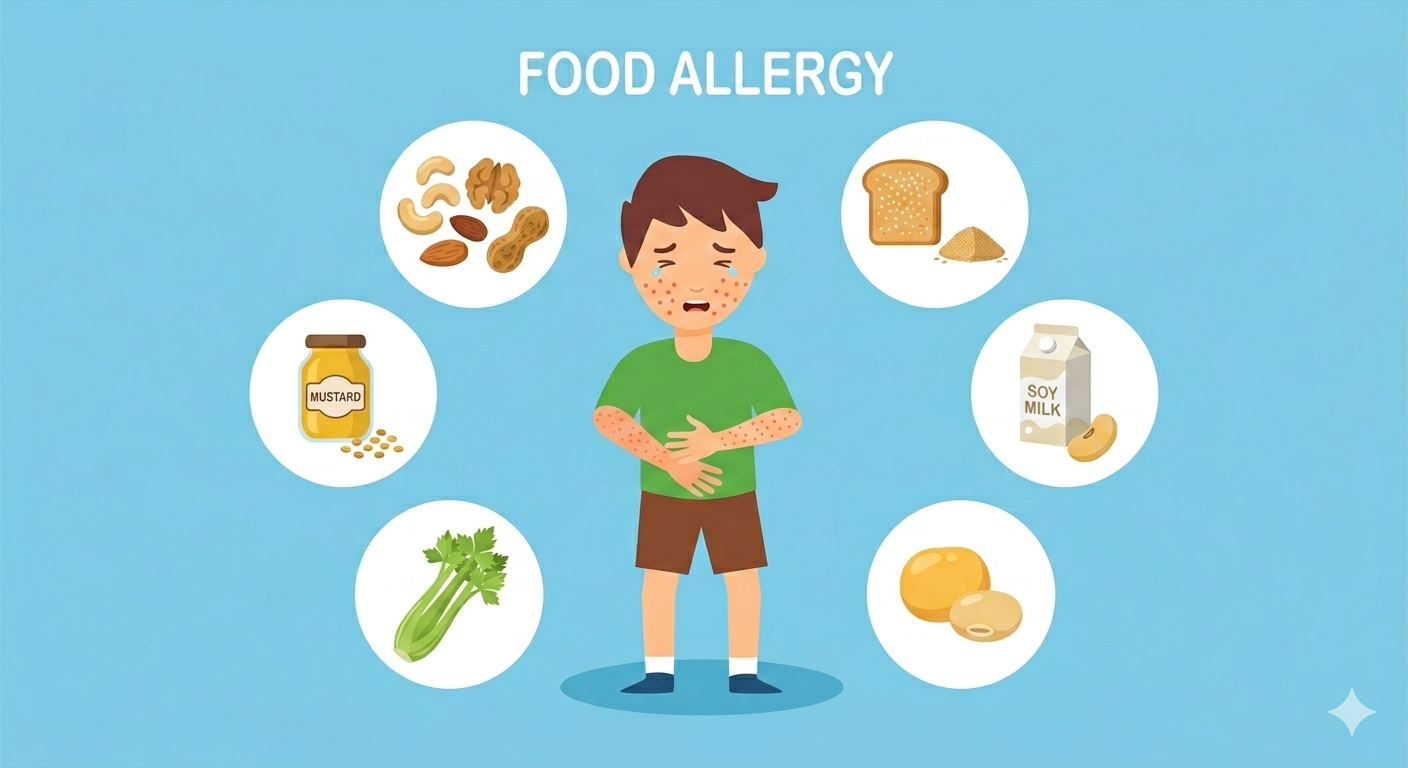
Food allergy is an abnormal immune response triggered by specific proteins in food. This hypersensitivity can be IgE-mediated (immediate reactions), non-IgE-mediated (delayed reactions), or a mixed immune response involving both pathways.
When a sensitized individual eats these specific proteins, the immune system overreacts, release inflammatory chemicals that manifest as mild to severe systemic symptoms. While any food may cause a reaction, but the vast majority of cases are driven by a core group: milk, eggs, wheat, peanuts, and tree nuts.
⚖️ Key Distinction: Food Allergy vs. Food Intolerance
It is common to confuse these two conditions due to overlapping symptoms, but their underlying biological mechanisms are entirely distinct.
| Feature | Food Allergy | Food Intolerance |
| System Involved | Immune System (IgE or non-IgE pathways) | Digestive System (e.g., enzyme deficiencies) |
| Trigger Amount | Even trace amounts can cause a reaction | Usually requires a normal or large portion size |
| Severity | Can be life-threatening (Anaphylaxis) | Localized discomfort; never life-threatening |
| Typical Symptoms | Hives, swelling, wheezing, systemic shock | Bloating, gas, cramps, diarrhea |
Symptoms & Critical Complications
Symptoms typically develop within minutes to an hour after ingestion, though delayed reactions can occur up to two hours or more post-exposure.
Clinical Manifestations
- Respiratory/Nasal: Sneezing, nasal congestion, wheezing, and shortness of breath.
- Gastrointestinal: Oral itching, abdominal pain, stomach cramps, nausea, vomiting, and diarrhea.
- Dermatological: Eczema, hives, skin rashes, and pale or bluish skin coloration.
- Systemic: Loss of consciousness and shock.
🚨 Critical Medical Emergencies If left unmanaged, severe allergic reactions can escalate into the following life-threatening emergencies within seconds or minutes:
- Anaphylaxis: A rapid, systemic reaction inducing shock and airway obstruction.
- Respiratory Distress: Acute, widespread pulmonary inflammation causing severe shortness of breath.
- Cardiac Arrest: Systemic shock and severe respiratory failure leading to sudden cardiovascular collapse.
Risk Factors
Over the last three decades, the global prevalence of food allergies has steadily increased. Possible risk factors includes:
- The Lifestyle Factor: Experts largely attribute this rise to westernized lifestyles and modern dietary modifications.
- Demographics: Allergies primarily affect infants and young children (particularly those under age 3). While some outgrow them, many retain these allergies for life.
- Quality of Life: Beyond physical symptoms, food allergies impose profound mental, emotional, and social burdens on patients and families.
- Genetic Predisposition: Having a family history of allergies greatly increases risk.
- Concomitant Atopic Diseases: Individuals with pre-existing conditions like hay fever (allergic rhinitis) or eczema are at a much higher risk.
Diagnosis
Diagnosing a food allergy begins with a detailed clinical history and physical examination, followed by targeted objective testing like:
- Skin Prick Test (SPT): A rapid, frontline diagnostic method. Minute amounts of allergen extracts are introduced into the skin’s surface to evaluate IgE-mediated sensitization within 15–20 minutes.
- Blood Testing (Specific IgE): Quantifies the levels of allergen-specific IgE antibodies circulating in the blood to confirm sensitivity.
- Basophil Activation Test (BAT): A specialized functional assay used in complex or ambiguous cases. It measures the activation of basophils (white blood cells) in response to allergens and helps monitor response to immunomodulatory therapies.
- Component-Resolved Diagnosis (CRD): An advanced molecular diagnostic tool that identifies IgE responses against specific individual proteins within an allergen. While highly accurate, it is more expensive and less widely accessible.
Management & Treatment Approaches
Managing food allergies effectively requires an integrated, multi-disciplinary strategy combining conventional medicine, dietary planning, and holistic supportive care.
1. Conventional Medical Management (Pharmacological)
For immediate, acute management—especially during accidental exposures—conventional rescue medications are the absolute gold standard and necessary for survival:
- Epinephrine Auto-Injectors: The definitive first-line treatment for anaphylaxis. It must be administered immediately into the outer thigh during a severe reaction to reverse airway constriction and low blood pressure.
- Antihistamines & Corticosteroids: Medications like diphenhydramine (antihistamine) or prednisone (glucocorticoid) help minimize mild swelling, hives, and pruritus (itching).
- H2 Blockers: Medications like ranitidine can be utilized to manage gastrointestinal allergic symptoms.
2. Homoeopathic Treatment Approach
In homoeopathy, food allergy is not viewed as an isolated disease of the immune system, but rather as an outer expression of an internal, systemic imbalance. Homoeopathy focuses on the patient’s constitutional profile, aiming to address chronic hypersensitivity. Selection is based on individual symptom presentations. Widely used homoeopathic medicines by homoeopathy physicians include:
| Medicine | Key Symptom Indicators |
| Carbo vegetabilis | Indigestion, burning stomach, and sour eructations (burping) 30 minutes after eating; aversion to milk and fats. |
| Lycopodium | Weakened digestive tract, heavy bloating immediately after light meals; aggravated by gas-producing foods. |
| Nux vomica | Often used as a constitutional remedy for digestive pain, nausea, or vomiting triggered by rich, spicy foods. |
| Sulphur | Used to stimulate systemic vitality when well-chosen remedies stall; sensitive abdomen. |
| Urtica urens | Specifically indicated for shellfish allergies presenting with intense skin rashes and hives. |
| Aethusa cynapium | Primary remedy for infant milk intolerance or allergy where milk is vomited immediately. |
| Antimonium crudum | Indicated for gastric complaints stemming from bread, pastries, or sour wine; curdled vomiting. |
Quick Reference Guide for Specific Foods:
- Banana: Coffea cruda, Ignatia amara, Kali phos, Nux vomica, Rumex
- Chicken: Bacillinum, Bryonia alba
- Eggs: Calcarea carb, Cinchona, Colchicum, Ferrum met, Pulsatilla, Sulphur
- Fish: Fluoric acid, Kali sulph
- Gluten: Aluminum acidicum
- Milk: Aethusa cynapium, Natrum carb, Psorinum
- Onions: Lycopodium, Sulphur, Thuja occidentalis
- Peanuts: Molybdenum
- Rice: Ignatia amara, Pulsatilla, Sulphur
Important Safety Note: Homoeopathic management should exclusively serve as a supportive modality for long-term health. It cannot replace epinephrine auto-injectors during an acute, life-threatening anaphylactic event. Always consult a qualified Homoeopathic physician or allergist.
3. Diet, Nutrition & Lifestyle Modifications (Non-Pharmacological)
Dietary adjustments represent the foundational baseline for preventing allergic flares:
- Strict Allergen Elimination: Removing confirmed trigger foods entirely. A detailed food diary is essential to track exposures and identify hidden ingredients.
- Specialized Formulas: In infants with confirmed cow’s milk allergies where breastfeeding isn’t possible, highly hydrolyzed or amino acid-based elemental formulas prevent systemic reactions. These must be monitored by a pediatric nutritionist to prevent nutritional deficiencies.
- Maternal Dietary Tracking: Pregnant or lactating mothers with a personal history of severe allergies should consult their specialist regarding allergen restriction to minimize potential early sensitization in offspring.
- Cross-Reactive Trigger Control: Limiting exposure to environmental allergens like dust mites, pollen, and smoke can help reduce overall immune system hyperactivity.
4. Holistic Approaches (Yoga & Stress Management)
While mind-body practices do not change the underlying genetic code or specific IgE antibody levels, they are valuable therapies that optimize systemic resilience:
Improving Gastrointestinal Health: Gentle physical activity and specific yoga postures stimulate gut motility and support a balanced gut microbiome, which is intrinsically linked to systemic immune tolerance.
Down-Regulating the Nervous System: Stress and high cortisol levels are known to destabilize mast cells, making them more prone to releasing histamine. Yoga, breathwork (Pranayama), and meditation shift the body out of a sympathetic (fight-or-flight) state into a parasympathetic state.
Conclusion
Food allergies are a complex, rising global health concern deeply intertwined with western lifestyles and immune dysregulation. Because reactions can progress rapidly to dangerous, life-threatening emergencies, true safety relies on a multifaceted framework. Combining conventional pharmacological interventions for emergency relief, strict nutritional avoidance policies, and supportive therapeutic models like homoeopathy, targeted nutrition, and yoga offers patients the most comprehensive path toward stabilizing their immune health and improving their overall quality of life.
