
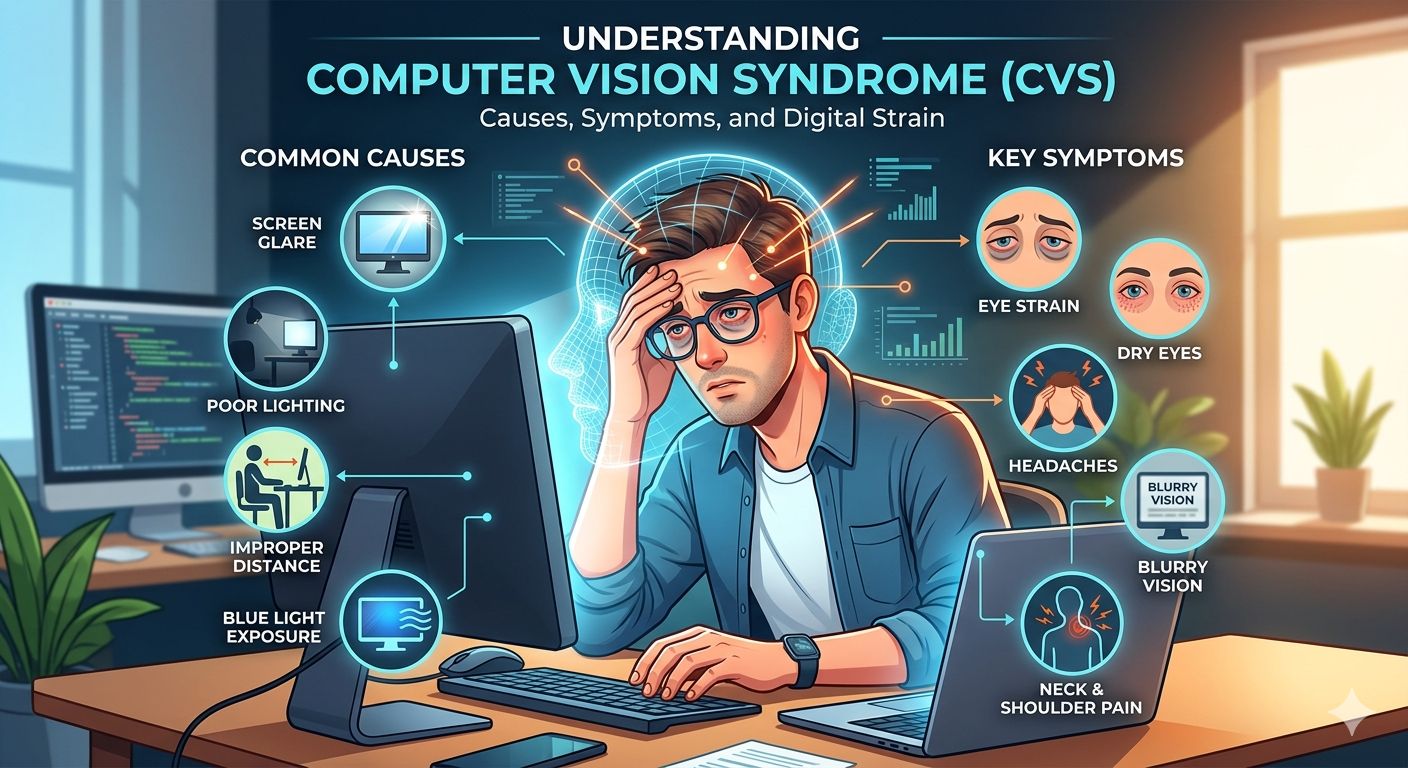
Computer Vision Syndrome (CVS), also known as digital eye strain, is a medical condition characterized by a group of eye- and vision-related problems resulting from the prolonged use of digital devices. Individuals experiencing CVS face a variety of symptoms, including eye strain and headaches, while working on digital screens.
Today, computers, smartphones, and tablets are indispensable parts of our daily routines. Many professions and academic tracks depend entirely on digital interfaces. This rapid societal transformation from paper to digital media over a short period of time has produced a major impact on the ocular health and mental well-being of individuals globally.
Studies carried out by various health institutions, including the National Institute of Occupational Safety and Health (NIOSH), estimate that roughly 60% of digital device operators suffer from back, shoulder, and neck pain, while up to 70% experience eye strain and headaches. These statistics show that a vast portion of the population is affected by this modern lifestyle disorder. Fortunately, CVS can be effectively managed through targeted lifestyle adjustments, ergonomic changes, and proper dietary choices.
Signs and Symptoms
The symptoms of Computer Vision Syndrome can range from mild to severe. Most symptoms are temporary and typically subside after taking a break from digital screens. Common signs include:
- Eye strain and ocular fatigue
- Irritation, burning sensations, or grittiness in the eyes
- Redness and dryness of the eyes
- Blurred or double vision
- Headaches (often frontal or behind the eyes)
- Difficulty shifting focus between distant objects and the near screen
- Accompanying musculoskeletal complaints, such as neck, shoulder, and back pain
What Causes Computer Vision Syndrome?
Several environmental and behavioral factors play a role in causing or worsening CVS symptoms:
- Screen Glare: High-contrast, intense light and reflections from digital screens force the eyes to work harder. Working on highly reflective surfaces leads to strain, dry eyes, and a foreign-body sensation.
- Proximity to the Screen: Continuously staring at digital screens from an inappropriately close distance stresses the eye’s focusing mechanism (accommodation), inducing headaches and temporary blurring.
- Poor Lighting: Working in an environment with low ambient light or mismatched screen-to-room brightness forces the eyes to strain to distinguish screen details.
- Poor Posture: Sitting incorrectly over prolonged periods causes musculoskeletal strain. Poor posture is frequently tied to viewing screens at incorrect distances or awkward angles.
- Uncorrected Vision Problems: Using an inaccurate prescription lens power, poor workplace ergonomics, stress, and uncoordinated eye muscles heavily compound digital fatigue.
Who is at Risk?
Computer Vision Syndrome chiefly affects individuals who continuously work on digital displays. This includes IT professionals, accountants, bank employees, students, and administrative officers who:
- Work continuously for more than 3 to 4 hours on computer screens without taking breaks.
- Operate under high levels of mental stress.
- Use screens set to inappropriate brightness levels.
- Have underlying, uncorrected refractive errors or eye muscle imbalances.
Potential Complications
Prolonged, unmanaged suffering can lead to broader health and lifestyle complications, including:
- Keratitis: Long-term neglect of severe dry eye symptoms and chronic irritation can occasionally lead to superficial inflammation of the cornea, causing extreme redness and pain.
- Persistent Visual Blur: In advanced stages, unaddressed eye fatigue can cause prolonged periods of blurred vision, making daily tasks difficult even when away from the screen.
- Insomnia: Chronic eye irritation, localized discomfort, and excessive blue light exposure at night can disrupt melatonin production, leading to sleep disturbances.
- Asthenopic Accommodation Issues: Chronic strain can weaken the focusing muscles of the eye, worsening conditions like hyperopia (farsightedness) or making near-work increasingly painful.
- Chronic Migraines: Persistent, daily eye strain can serve as a potent trigger for severe recurring headaches or migraines.
Diagnosis and Conventional Treatment
CVS is diagnosed through a comprehensive eye examination, which includes a detailed patient history regarding daily screen time and workplace setup, visual acuity measurements to check for clarity, a refraction test to determine the exact lens power needed, and eye focus/coordination tests.
While conventional medicine doesn’t offer a single “cure” pill for CVS, doctors focus on symptomatic relief and behavioral management:
- Lubricating Eye Drops: Prescribed to prevent dryness, soothe irritation, and reduce mild inflammation.
- The 20-20-20 Rule: A foundational behavioral practice to rest the eyes. Every 20 minutes, take a 20-second break and look at an object at least 20 feet away.
Holistic Approaches
Because CVS is fundamentally a lifestyle disorder, managing it requires an individualized, multi-pronged approach combining ergonomics, homeopathic therapeutic support, and targeted physical exercises like yoga.
1. Homoeopathic Approach
Homoeopathy operates on the principle of Similia Similibus Curentur (“Let likes be cured by likes”). It addresses ailments based on individual physical, mental, and emotional symptom profiles. To manage the specific presentation of digital eye strain, practitioners frequently consider the following oral and homoeopathic eye drops:
Oral Medicines
- Arnica montana: Indicated when the eyes feel bruised, sore, and lame after intense, close-up work.
- Ruta graveolens: A primary remedy for severe strain from overwork. It targets irritated, red, and burning eyes accompanied by a headache that feels like deep pressure in the eye sockets.
- Natrum muriaticum: Useful when eye strain is accompanied by weak, stiff ocular muscles, a bruised sensation in the orbits, and tension headaches.
- Onosmodium: Indicated for dull, heavy, aching eyes associated with systemic fatigue, dizziness, and headaches caused by fine-focus work.
- Euphrasia officinalis (Eyebright): Ideal when chronic screen time causes localized inflammation of the eyelids, burning or stinging pains, and a profuse, watering discharge that feels worse at night.
- Jaborandi (Pilocarpus): Indicated when the eyes tire easily from the slightest use, causing the vision to become hazy or indistinct for distant objects.
Note: Other remedies such as Conium, Senega, Apis mellifica, Belladonna and many more may also be used based on an individual’s unique symptom characteristics.
Homoeopathic Eye Drops
In addition to constitutional oral remedies, topical homoeopathic eye drops are frequently utilized to provide immediate, soothing relief from localized discomfort, dryness, and environmental glare:
- Cineraria Maritima Drops: Prepared from the juice of Cineraria maritima (dusty miller), these drops are highly valued in homoeopathy for boosting metabolic circulation within the tissues of the eye. They help relieve ocular fatigue, clear mild vascular congestion, and soothe the chronic dry, gritty feeling caused by failing to blink while looking at screens.
- Euphrasia Officinalis Drops: Derived from the “Eyebright” plant, topical Euphrasia drops work as a natural soothing agent. They target acute redness, burning sensations, irritation of the eyelid margins, and excessive lacrimation (tearing) triggered by bright artificial screen lighting.
- Combination Formulas: Many clinical homoeopathic formulations combine Euphrasia, Cineraria, and soothing agents like Argentum nitricum or Calendula to provide comprehensive defense against environmental dryness and digital fatigue.
Clinical Note: Always choose alcohol-free, sterile formulation eye drops explicitly manufactured for ophthalmic use, and consult a registered homoeopathic physician for a tailored dosage.
2. Yogic Techniques for Eye Health
Integrating specific yogic practices (Netra Vyayam) can strengthen the extraocular muscles, improve blood circulation to the eyes, and stimulate blinking to restore the natural tear film.
- Palming (Asan): Rub your palms together vigorously until they feel warm, then gently cup them over your closed eyes without applying pressure to the eyeballs. Breathe deeply and allow the warmth to relax the optic nerve.
- Blinking Exercise: Sit comfortably and blink rapidly 10 to 15 times. Close your eyes and rest for 20 seconds. Repeat this process a few times to stimulate natural lubrication.
- Directional Movements (Eye Yoga): Without moving your head, slowly move your gaze as far up as possible, then as far down as possible. Repeat horizontally (left to right) and diagonally. Conclude by slowly rotating your eyes in full clockwise and counter-clockwise circles to stretch and strengthen eye muscles.
- Trataka (Candle Gazing): Sit in a dark room and stare intently at a single point—traditionally a candle flame—without blinking until the eyes begin to water slightly. Close your eyes and visualize the flame in your mind’s eye. This practice improves concentration and builds muscle endurance.
Conclusion and Prevention Checklist
Managing Computer Vision Syndrome requires conscious adjustments at home and in the workplace. To protect your eyes, implement this everyday prevention checklist:
- Optimize Ergonomics: Keep your screen 20–28 inches away from your eyes, with the center of the screen 4–5 inches below eye level.
- Adjust Lighting: Match your screen brightness to the surrounding room lighting and install anti-glare filters.
- Blink Consciously: Make a habit of blinking completely and frequently to keep the surface of the eye moist.
- Take Structured Breaks: Strictly practice the 20-20-20 rule during long work blocks.
- Maintain Nutrition: Eat a balanced diet rich in Vitamins A, C, and E, Omega-3 fatty acids, and Zinc to support long-term ocular tissue health.
A holistic combination of proper workplace ergonomics, dietary awareness, homeopathic support, and gentle yogic eye exercises can help you maintain sharp, comfortable, and healthy vision in a digital world.
References
- American Optometric Association (AOA) – Computer Vision Syndrome Guide.
- National Center for Biotechnology Information (NCBI) – Digital Eye Strain Studies.
- Cedars-Sinai Medical Center – Conditions: Computer Vision Syndrome.
- Boericke, W., New Manual of Homoeopathic Materia Medica.
