
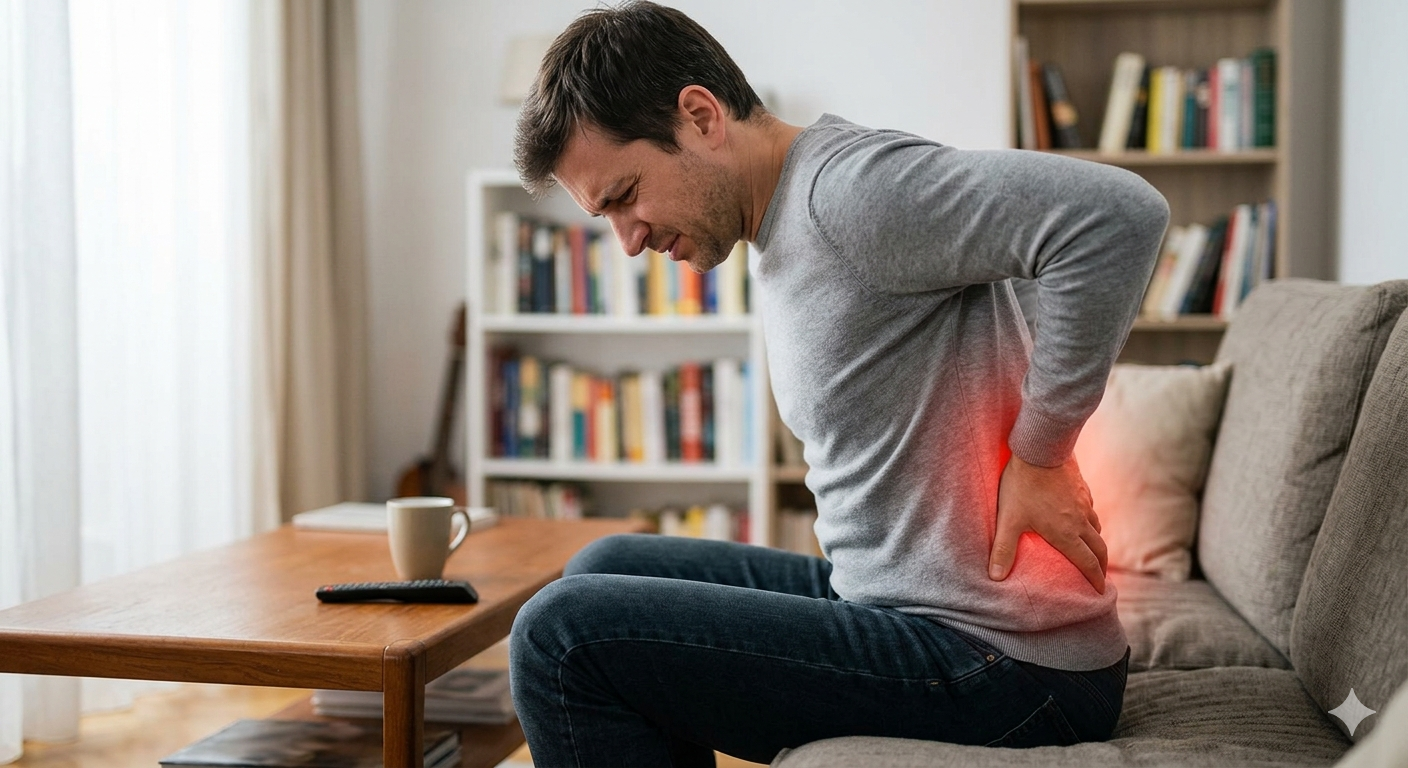
Back pain, or a backache, is the most common cause for which patients seek medical aid and features a wide range of etiologies. Studies carried out by various health institutes estimate that 23% of the world population suffers from chronic back pain. Along with the back, pain can sometimes run all the way down to the buttocks and legs without causing any serious crisis in the body. Although back pain is considered a symptom, most cases are diagnosed without any underlying pathological causes or structural abnormalities.
What Causes Back Pain?
The vast majority of back pains originate from unknown or mechanical causes, but some cases are linked to specific medical conditions such as shingles, spinal cancer, and osteoporosis. Clinicians widely recognize the following factors as primary causes of back pain:
- Sprains and Strains of Muscles and Ligaments: Overstretching muscles and tendons while pulling, lifting heavy materials, or bending in awkward positions can trigger back pain.
- Disc Degeneration and Rupture: Discs between the vertebrae act as cushions to absorb shocks during daily routines and physical activities. With age, these discs degenerate, causing vertebrae to put pressure on nearby nerves, which leads to back pain originating from nerve irritation.
- Traumatic Injury: Traumatic injuries to the spine, ligaments, and muscles during daily routines, accidents, or sports also lead to back pain.
- Spine Osteoarthritis: Spine osteoarthritis is known as the wear and tear of the cartilage located between the spinal joints. In advanced stages, osteoarthritis stiffens the joints and causes pain throughout the back.
- Structural Irregularities: Structural irregularities of the vertebrae in the spinal column can lead to nerve irritation due to disc dislocation or rupture, resulting in nerve-induced back pain.
- Infections: Infections of the urinary bladder, kidneys, or urethra are often associated with back pain, fever, and a burning sensation during urination. This back pain typically resolves automatically once the infection subsides.
- Sciatica: Back pain also occurs due to the compression of the sciatic nerve, which radiates along the nerve pathway. Sciatica pain runs from the pelvis down to the foot through the hips and buttocks.
Obesity, poor sleeping posture, driving or sitting for prolonged periods, spinal fractures, and various medical conditions are also cited by physicians as causes of serious back pain. Still, it remains difficult for clinicians to diagnose the exact cause because of the wide range of contributing factors.
How is Back Pain Diagnosed?
In most cases, back pain is diagnosed simply through touch, palpation, visual inspection, and joint movement evaluation. However, the following diagnostic procedures are followed in advanced cases:
- X-ray: While X-rays do not reveal soft tissue pathology, doctors can clearly detect structural abnormalities in or caused by the bones.
- CT Scan and MRI Scan: These procedures are utilized to diagnose soft tissue and nerve pathologies.
- Electromyography (EMG): This is performed to confirm back pain resulting from nerve compression by measuring the electrical impulses produced by nerves.
- Bone Scans: These are performed to confirm pain stemming from bone pathology, such as bone tumors or osteoporosis.
While the procedures mentioned above help assess the physical origin of back pain, diagnosing pain resulting from an unknown etiology remains a medical challenge.
How Can You Prevent Back Pain?
Maintaining better lifestyle hygiene and implementing the steps below can lower your risk of developing back pain:
- Weight Management: Managing body weight through a balanced diet lowers the risk of back pain, as individuals with obesity show a higher incidence of back pain compared to those of normal weight.
- Nutrient-Rich Diet: Consume a diet rich in calcium and Vitamin D to support healthy bones.
- Proper Lifting Techniques: Avoid holding or lifting heavy items far from the body. Keep items close to your core to avoid tightening and straining the muscles around the back and abdomen.
- Regular Exercise: Consistent physical activity helps keep the body healthy by managing weight, providing flexibility to the spine, and strengthening the muscles of the back and abdomen.
- Avoid Smoking: Studies have proven that smokers have a higher incidence of back pain.
- Ergonomic Support: Use good cushions that provide proper lumbar support while driving. Taking frequent breaks during long journeys also helps prevent back strains.
- Posture Management: Practice good posture by keeping your back straight while standing, sleeping, and sitting.
How is Back Pain Treated?
Many cases of back pain resolve by adopting healthier living standards and proper self-management, but medical intervention is required if the pain is long-lasting. Physicians commonly prescribe or recommend several medications and interventions:
- Nonsteroidal Anti-inflammatory Drugs (NSAIDs): Medications like ibuprofen are prescribed to provide short-term pain relief. However, prolonged use may cause gastrointestinal ulcers or damage the liver and kidneys.
- Muscle Relaxants: These are administered to relieve painful spasms in the back muscles.
- Steroids: Cortisone injections can be administered into the epidural space to effectively reduce localized inflammation.
- Narcotics: For severe pain, medications like oxycodone or hydrocodone may be prescribed for short-term relief.
- Traction: Traction therapy is used to stretch the back muscles, which can provide significant pain relief.
- Acupuncture: Fine needles are inserted into specific acupuncture points on the body, triggering the release of natural, pain-relieving chemicals.
- Physical Therapy Exercises: Doctors frequently advise targeted exercises—such as knee-to-chest stretches and bridges—to alleviate pain.
Despite these options, many back pain patients seek individual, holistic approaches to find long-term relief. Homeopathy, combined with lifestyle management and targeted yogic exercises, offers a reliable alternative framework using easily comprehensible therapeutic laws.
The Homoeopathic Approach to Back Pain
Homoeopathy is a branch of medical science based on the principle “Similia Similibus Curentur,” which means “Let likes be treated by likes.” Homoeopathic physicians look at the totality of a patient’s symptoms—perceiving them at physical, mental, emotional, and spiritual levels—to select the most suitable medicine based on constitution and individualization.
Physicians frequently suggest the following homoeopathic medicines to relieve back pain:
- Rhus tox: Widely used for ailments arising from overstretching muscles and tendons due to sports or heavy lifting. It is indicated for violent back pain that feels “as if broken.” A characteristic symptom of Rhus tox is pain that is relieved by motion and pressure, but worsens while lying in bed. It is considered highly suitable for affections of the deeper back muscles.
- Sulphur: Recommended for treating back pain caused by intervertebral disc abnormalities. The patient may feel as if the vertebrae are gliding over each other; they find relief when stooping but experience worsening pain when standing. It is prescribed based on constitutional similarity.
- Hypericum: Indicated for aching and stitching pains in the small of the back, particularly in individuals who frequently lift heavy loads or strain while walking up and down stairs. Hypericum is also highly effective for pain originating from coccyx (tailbone) injuries due to falls. Such injuries can cause muscle spasms, twitching, and spinal nerve irritation.
- Calcarea fluorica: A biochemic tissue salt with a strong clinical reputation for treating back pain originating from spinal irritation. Symptoms include a full or burning pain in the lower back. It is indicated for lumbago that worsens upon initial movement but improves with continued motion, as well as lumbago caused by physical strains.
- Gnaphalium: Frequently deals with chronic back pain accompanied by a tired, aching sensation in the lumbar region that saps the patient’s strength and ambition. The patient feels better while resting in bed but experiences worsening symptoms with continued motion.
- Nux vomica: Indicated when back pain is linked to spinal affections. The pain in the lumbar region is drawing, lacerating, or bruised in character, often accompanied by stitching sensations. It worsens at night while lying in bed, forcing the patient to sit up completely in order to turn over.
- Oxalic acid: Indicated for acute back pain that is relieved by a change in posture. The patient’s symptoms tend to worsen when they think about the pain, and it is often accompanied by bodily debility and numbness in the limbs.
- Sepia: Frequently indicated for back pain originating from uterine conditions. It addresses general weakness in the back that worsens while sitting or walking. The patient may experience sudden back pain that feels “as if struck by a hammer,” which is temporarily relieved by pressing the back against something hard.
Other medicines, such as Zincum metallicum, Staphisagria, Kali carbonicum, Bryonia alba, Kali phosphoricum, Phosphorus, Lycopodium, Aesculus, and Cimicifuga, are also utilized by physicians to address back pain alongside proper lifestyle management and physical exercises.
Conclusion
Back pain is not a standalone disease but a constellation of symptoms that can be either self-limiting or chronic. Long-lasting back pain creates numerous obstacles in daily routines, and many patients struggle to find permanent relief. Because so many cases present with an unknown etiology, diagnosing the precise origin remains a challenge for modern medical science.
However, a combined approach utilizing targeted medications, appropriate lifestyle adjustments, exercises, and holistic therapeutic methods can yield significant improvements—restoring a patient’s quality of life across physical, mental, emotional, and spiritual dimensions.
References
- Ehrlich, G. E. Low back pain. Bulletin of the World Health Organization, 81(9). https://www.who.int/bulletin/volumes/81/9/Ehrlich.pdf
- Mayo Clinic. Back pain: Symptoms & causes. https://www.mayoclinic.org/diseases-conditions/back-pain/symptoms-causes/syc-20369906
- Healthline. What causes back pain? https://www.healthline.com/health/back-pain
- National Institute of Neurological Disorders and Stroke (NINDS). Low back pain fact sheet. https://www.ninds.nih.gov/Disorders/Patient-Caregiver-Education/Fact-Sheets/Low-Back-Pain-Fact-Sheet
- WebMD. Back pain health center. https://www.webmd.com/back-pain/guide/back-pain-symptoms-types
- Boericke, W. Boericke’s New Manual of Homeopathic Materia Medica.
