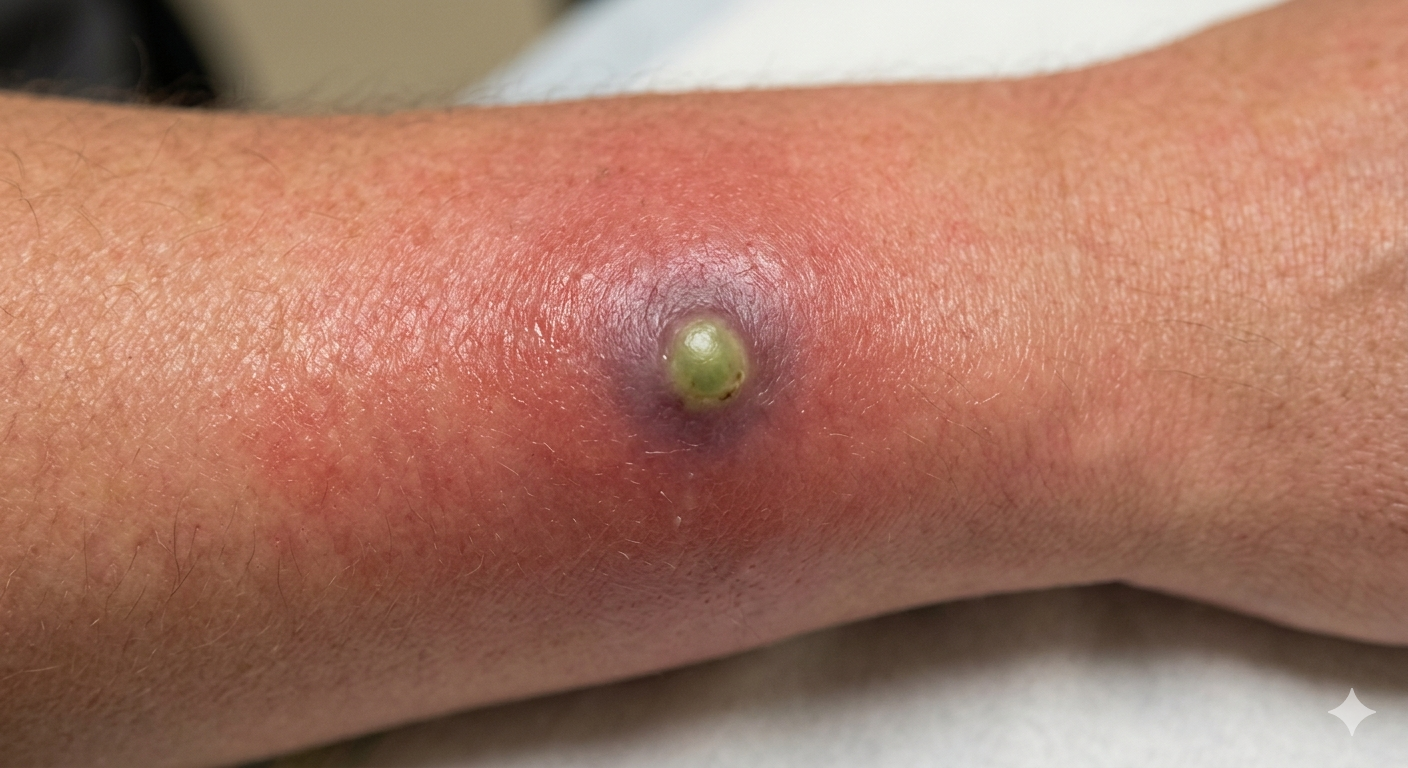
What is an Abscess?
An abscess is a localized collection of pus within or under the skin. It usually contains dead and decaying white blood cells (neutrophils) or translucent fluid materials. The vast majority of abscesses are caused by infections and can develop in any part or organ of the body. Some abscesses can resolve on their own through the body’s natural healing process, while others require medical treatment.
Classification
Abscesses are generally classified into:
- Pyogenic abscess: The most common form, typically produced by Staphylococcus infections.
- Pyaemic abscess: An abscess that occurs due to the circulation of pyaemic emboli (infected blood clots) in the bloodstream.
- Cold abscess: Refers to a tubercular abscess, usually lacking typical signs of acute inflammation, often involving the lymph nodes or spine.
Signs and Symptoms
A localized collection of pus within or under the skin typically displays signs of inflammation, including:
- Throbbing pain
- Redness and inflamed skin
- Swelling or a visible lump under the skin
- Heat in the affected area
- Lesions or draining sores
- Fever and chills (in systemic or severe cases)
What Causes an Abscess?
- Infections: Bacterial skin infections, especially from Staphylococcus bacteria, frequently result in pus formation. When the immune system fights off foreign invaders, the resulting inflammatory reaction produces pus in nearby tissues.
- Infected Hair Follicles: If a hair follicle becomes trapped or fails to penetrate the skin, it can become infected, leading to localized inflammation and eventual pus formation.
- Injury or Trauma: Any physical injury or open wound can expose deeper tissues to foreign bodies and bacteria, resulting in an abscess.
- Underlying Medical Conditions: Complications from chronic diseases like diabetes, cancer, sickle cell disease, and Crohn’s disease can increase vulnerability. Major surgical procedures, poor hygiene, medical skin injections, and exposure to unsanitary environments are also significant risk factors.
Complications
Leaving an abscess untreated for an extended period can lead to serious medical complications, such as:
- Deep Infection: The spread of bacteria to vital organs or deeper tissues like bones (osteomyelitis).
- Sepsis: A life-threatening, systemic immune response to a severe infection characterized by high fever and organ dysfunction.
- Endocarditis: Inflammation of the inner lining of the heart chambers and valves.
- Gangrene: Tissue death (necrosis) in the affected area due to blood supply obstruction or severe infection.
- MRSA: Infections caused by drug-resistant Staphylococcus aureus strains, which are highly difficult to treat.
Who is at Risk?
- Immunocompromised Individuals: People with weakened immune systems have a lower capacity to fight infections and slower wound healing.
- Chronic Illness Patients: Individuals managing conditions like diabetes or cancer.
- Heavy Alcohol Consumption: Excessive drinking impairs immune function and increases susceptibility to skin conditions.
- Poor Environmental Hygiene: Living or working in dirty environments increases bacterial exposure.
Diagnosis and Conventional Treatment
Abscesses are typically diagnosed through physical inspection of the fluid-filled mass alongside the patient’s medical history. In some cases, a fluid sample is taken to identify the specific causative bacteria.
Conventionally, doctors will perform an incision and drainage (I&D) to empty the pus, clean the area with an antiseptic solution, and pack or cover the wound. Oral antibiotics (such as dicloxacillin or cephalexin) are frequently prescribed to clear the remaining infection. Early-stage or minor skin ailments are also sometimes managed with holistic approaches, including homoeopathy.
Homoeopathic Approach and Common Homoeopathic Medicines
Homoeopathy selects medicines based on the principle of symptom similarity. Homoeopathic physicians look at the totality of physical, mental, and emotional symptoms to choose a corresponding remedy (simillimum). Commonly cited remedies in historical homoeopathic literature include:
- Belladonna: Indicated for early, immature inflammatory stages where the area is bright red, hot, rapidly swelling, and accompanied by intense throbbing pain.
- Hepar sulphur: Used in progressive stages of suppuration, especially for individuals highly sensitive to cold and touch. It is often used to either abort the suppurative process or hasten the discharge of pus when sharp, splinter-like pains are present.
- Silicea: Prescribed when suppuration lingers, the wound heals slowly, or the pus is thin and watery. It is often considered after an abscess has opened or been drained.
- Mercurius: Indicated in progressive stages when pus is thin and has a greenish tint. It presents with intense, shining redness and stinging pains, though it typically progresses slower than Hepar sulphur.
- Lachesis: Utilized in severe or low-vitality states where the skin appears purplish or dark, and the discharge is thin, offensive, and ichorous (watery/bloody).
- Sulphur: Indicated for chronic cases accompanied by intense burning, itching, profuse discharge, and systemic symptoms like hectic fever.
- Arnica montana: Indicated for early, bruised-feeling abscesses that may be purplish or blood-filled, often used to hinder the absorption of pus and prevent pyemia.
- Echinacea: Known as a systemic remedy often considered when there are signs of blood impurities or secondary complications following suppuration.
- Nitric acid: Indicated when the discharge is highly offensive, excoriating (skin-stripping), and has a dirty, greenish-yellow color, accompanied by sharp, splinter-like pains.
Other remedies such as Kali iodatum, Phosphorus, Pyrogen, Calcarea carb, Graphitis, Lycopodium, Carbo vegetabilis, Chamomilla, Fluoric acid, and Rhus tox are also prescribed based on their unique symptom profiles.
Dr. Dorwal’s Perspective
As a clinician, I believe that timely intervention is the key to managing abscesses effectively. While homoeopathic medicines are excellent for supporting immunity and promoting recovery, they should be viewed as part of an integrated approach, not a replacement for essential surgical care.
My clinical philosophy rests on three pillars:
- Precision in Diagnosis: Do not ignore warning signs like spreading redness, fever, or intense throbbing. If a ‘pus pocket’ has formed, Incision and Drainage (I&D) is the only safe, immediate solution to prevent the infection from spreading.
- Integrated Healing: Use surgical intervention to remove the source of infection and homoeopathic medicine to accelerate tissue healing, reduce inflammation, and address constitutional susceptibility.
- Root Cause Focus: Recurrent abscesses are often ‘alarm bells’ for underlying systemic issues like diabetes or immune deficiency. We must treat the patient, not just the lesion.
Conclusion
In conclusion, managing an abscess requires a balanced approach that prioritizes immediate clinical intervention over self-treatment. While homoeopathic medicines offer valuable support in reducing inflammation and aiding long-term recovery, they should never delay necessary surgical drainage. Always prioritize professional medical assessment to prevent systemic complications and address any underlying health issues. By combining timely conventional procedures with appropriate supportive care, you ensure a safer, faster, and more effective healing process.
Medical Disclaimer: Information provided in this article is for educational purposes and not a substitute for professional clinical advice or diagnosis. Dr. Dorwal strongly recommends immediate consultation for any suspected abscess, as professional evaluation is essential to prevent severe complications. Always seek prompt medical attention for personalized care and treatment.