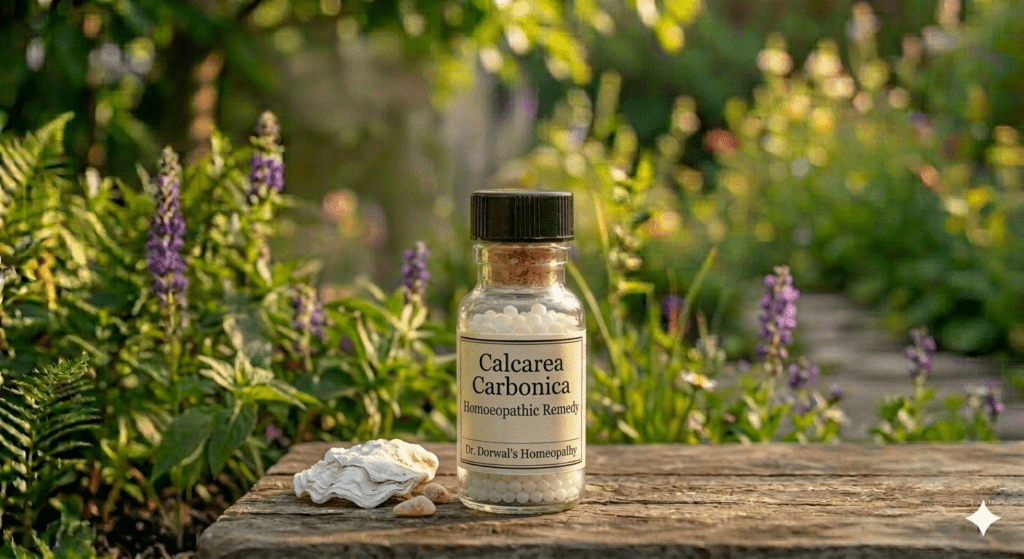
Quick Overview: For weight loss, Homeopathic remedies are given on the basis of individual’s constitution, appetite pattern, and the specific trigger behind it — metabolic, thyroid-linked, or emotional — rather than treating “obesity” as one fixed condition. Commonly used remedies for weight loss includes Calcarea Carbonica and Antimonium Crudum, mother tinctures such as Fucus Vesiculosus Q, and biochemic tissue salts such as Calcarea Phosphorica.
Understanding Weight Gain, the Homeopathic Way
Weight gain is rarely just a matter of “eating too much.” In clinical practice, it is usually associated with a combination of slow metabolism, thyroid function, emotional eating patterns, and habits built up over years. It is managed through holistic approaches, lifestyle modifications, and individual care.
Homeopathy approaches weight gain through studying the person’s build, appetite, food cravings, and the circumstances under which the weight was gained, rather than reaching for one standard remedy for everyone labelled “overweight.” No single remedy works as a stand-alone solution; the ones that genuinely help are chosen to match the individual case and are used alongside sustained changes in diet and activity, not instead of them.
Homeopathic (Dilution) Remedies for Weight Loss
These are prescribed on the basis of patient’s constitution, appetite pattern, and accompanying symptoms.
1. Calcarea Carbonica
Calcarea Carbonica is suited to fair, flabby, chilly individuals who sweat easily and gain weight with a slow, sedentary metabolism. It is frequently used constitutional remedy for obesity.
2. Antimonium Crudum
It is indicated in cases where weight gain is linked to overeating, with a thickly coated white tongue and gastric disturbance after rich or excessive food.
3. Graphites
It is used for obesity in chilly, constipated individuals, often with accompanying skin eruptions and delayed or irregular menstrual cycles.
4. Kali Carbonicum
Suited to weight gain accompanied by general weakness, fluid retention, and backache, particularly in patients who tire easily.
5. Thyroidinum
Considered specifically where weight gain is linked to reduced thyroid activity, generally used under close professional supervision.
6. Lycopodium
Suited to weight gain concentrated in the lower body, often with bloating, a craving for sweets, and sluggish liver function.
Homeopathic Mother Tinctures (Q) for Weight Loss
Mother tinctures are the most commonly recommended homeopathic preparations for weight management. Common Mother tinctures include:
1. Fucus Vesiculosus Q
Prepared from sea kelp, this is the most widely used remedy for obesity linked to a sluggish thyroid, and also helps with constipation and flatulence that often accompany weight gain.
2. Phytolacca Decandra Q
Works on regulating appetite and fat metabolism, helping reduce food intake and support weight loss without the accompanying weakness sometimes seen with appetite suppression.
3. Garcinia Cambogia Q
A commonly used appetite-modifying tincture, considered supportive where cravings and portion control are the primary challenge.
4. Chionanthus Virginica Q
Supports sluggish liver function that can accompany weight gain, particularly where digestion and fat metabolism both appear affected.
Biochemic (Tissue Salt) Homeopathic Remedies for Weight Loss
Biochemic remedies are cell salts prescribed in low potencies (such as 3X, 6X or 12X) to correct mineral imbalance at the cellular level, generally used to support metabolism rather than as a stand-alone weight-loss treatment.
1. Calcarea Phosphorica
Used to support sluggish metabolism and nutrition, particularly in individuals whose weight gain is linked to poor tissue nourishment despite adequate food intake.
2. Natrum Muriaticum (Biochemic)
Considered for weight gain linked to water retention, helping to correct the body’s fluid balance and supporting a persistent craving for salty food.
Comparing the Commonly Used Remedies
| Remedy | Best For | Key Differentiator |
| Calcarea Carbonica | Flabby obesity, sluggish metabolism | Chilly, sweats easily, fair complexion, cold and damp |
| Fucus Vesiculosus Q | Thyroid-linked obesity | Sluggish thyroid, constipation, non-toxic goitre |
| Phytolacca Decandra Q | Fat metabolism, appetite regulation | Reduces appetite without causing weakness |
| Natrum Muriaticum | Emotional or stress-linked weight gain | Salt craving, water retention, reserved temperament |
Homeopathic Weight Loss Remedies: Dosage & Administration
- Potency remedies: Generally prescribed in 30C or 200C potency as part of a constitutional plan, with repetition guided by the physician based on response.
- Mother tinctures: Typically taken as 10 to 15 drops diluted in water, two to three times a day before meals, and are often continued over several months for a gradual, sustained effect.
- Biochemic salts: Taken in low decimal potencies such as 6X or 12X, usually as tablets dissolved under the tongue, and can generally be combined with other remedies.
Alongside remedies, sustainable weight loss with homeopathy is closely tied to diet, activity levels, and, where relevant, correcting underlying thyroid or metabolic issues.
Clinical Note: This is general educational information, not a personal prescription. Please consult a qualified homeopathic physician before starting any remedy, especially where thyroid or other metabolic conditions are involved.
Dr. Dorwal’s Clinical Perspective
One thing I tell every patient upfront: there is no single homeopathic medicine that, taken on its own, delivers reliable clinical results for weight loss. Fucus Vesiculosus, Calcarea Carbonica, Phytolacca — none of them work as a stand-alone fix. What actually works is the combination — the right remedy matched to the person, a realistic diet plan and a basic yoga routine, used consistently over time.
In my practice, weight-related cases rarely respond to a remedy taken alone. Patients who see results are almost always the ones willing to pair it with a basic yoga routine and a realistic change in diet, not a crash one. I usually build in some form of daily movement, even 15 to 20 minutes of surya namaskar or a simple pranayama practice, because it directly supports digestion and metabolism, which is exactly what remedies like Fucus Vesiculosus or Phytolacca are trying to correct from within.
On the diet side, I don’t push extreme restriction. I ask patients to cut down on processed food and late-night eating first, since that one change alone affects how well the remedy performs. Weight loss with homeopathy, in my experience, is slow and steady rather than dramatic. It is achieved through the remedy, diet, and yoga working together, not through the medicine alone. When patients treat all three as part of the same prescription rather than an afterthought, the results hold far better.
Disclaimer: This content is for informational purposes only and is not a medical advice. Homeopathic medicines should be taken under the guidance of a qualified homeopathic physician. Do not self-medicate for chronic or persistent weight issues, especially where a thyroid or hormonal condition may be involved — consult a professional for proper diagnosis.
- Repertory – by Oscar E. BOERICKE, M.D. – Presented by Médi-T
- Individualized Homeopathic Therapy in a Case of Obesity, Dysfunctional Uterine Bleeding, and Autonomic Dystonia
- The Effect of Nutritional and Homeopathic Treatments Versus Exclusive Nutritional Treatments in Patients with Obesity or Overweight
- A Comparative Study on The Effectiveness of Individualised Homoeopathic Medicine and Lifestyle Modifications in The Management of Overweight -A Prospective Observational Study
- Evaluation of antiobesity activity of Fucus vesiculosus
- A RANDOMIZED, PLACEBO-CONTROLLED, DOUBLE-BLIND, PARALLEL, SUPERIORITY TRIAL WITH HOMEOPATHIC MEDICINE CALCAREA CARBONICA OSTREARUM FOR OBESITY IN ADOLESCENTS
Frequently Asked Questions
There is no single “best” medicine. Selection of the Right remedy is depends on the individual’s build, appetite pattern, and whether thyroid function is involved. Calcarea Carbonica, Fucus Vesiculosus Q, and Phytolacca Decandra Q are among the most frequently prescribed remedies.
Homeopathy works on the underlying metabolic and digestive pattern rather than targeting fat at a specific site; visible reduction, including around the abdomen, generally follows gradual, whole-body improvement supported by diet and physical activities like yogic sessions.
Results are typically gradual, often becoming noticeable over a few months rather than weeks, if dietary and physical activities like yoga are strictly followed.. Homeopathy works with the body’s underlying metabolism rather than through rapid appetite suppression.
Yes — Fucus Vesiculosus and Thyroidinum are commonly considered for weight gain linked to reduced thyroid activity, generally used under a physician’s supervision alongside thyroid monitoring.
Yes, and it is generally recommended — homeopathic remedies work best when paired with sensible dietary changes and regular activity such as yoga or walking, rather than used as a stand-alone solution.
When prescribed and monitored by a qualified physician, homeopathic remedies are generally considered safe for extended use, though periodic review is recommended, especially where thyroid or metabolic factors are involved.