
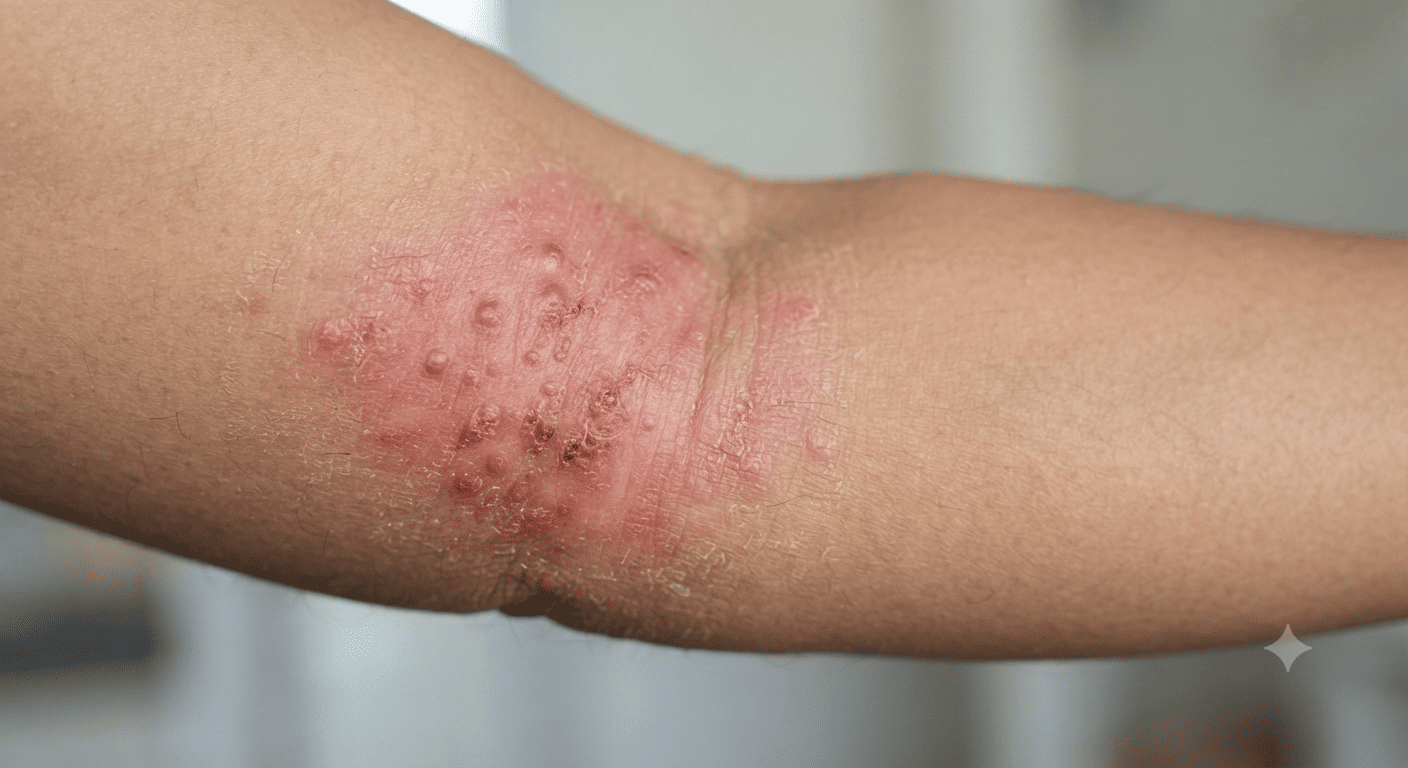
Eczema is a chronic inflammatory skin condition, characterized by dry, red or itchy skin patches over the skin. In skin cases, It is diagnosed as the one of the most common type of dermatitis in clinical practice of a homoeopathic doctor. It can affect both children and adults. Commonly, Homoeopaths know this condition as the skin rashes that ‘itch’. Although eczema is not contagious, the illness can last long periods, and is often found occurring as an outgrowth of flare-ups or episodes of resistance. In this homoeopathic guide, we understand the signs & symptoms, causes, diagnostic tools, risk factors, complications and treatment/ management approaches including conventional, homoeopathic and lifestyle interventions.
Signs and Symptoms
Signs and symptoms of Eczema include:
- Red, dry and itchy rashes over the common locations (Common locations: Often occurs on the face, hands, feet, inner elbows and behind the knees)
- Thickening of skin at the site of eruptions due to continuous scratching or rubbing
- Redness and Inflammation: Affected areas look red, brownish-gray or inflamed.
- Small, Raised Bumps: The swelling/snaking that may ooze out and crust over when smashed is too extreme (especially in acute flare-ups).
What Causes Eczema?
Evidence based studies shows that a single particular cause for the eczema is not fully understood, but following cases may contribute in the development of the disease pathology:
- Skin Barrier Dysfunction: Unlike any other facial injury or illness, one based on their disease, it tends to reduce skin barrier properties, giving better resistance to moisture and preventing allergens and bacteria as well as irritants.
- Immune System Overreaction: An abnormal immune response may results in hypersensitivity to skin cell and develop rashes over the body.
- Genetics: Sensitivity to the atopic triad is greatly increased by family history of eczema, asthma or hay fever (atopic triad).
- Environmental Impacts: Bad soap, dirty products, synthetic fabrics, cigarette smoke and smell of allergens like dust mites or pollen also play an important role in development of eczema and other skin related disorders.
How eczema is Diagnosed?
Doctors diagnose eczema on the basis of disease history given by the patient and appearance of the rashes over skin. Doctors may also go through the following diagnostic procedures to confirm the diagnosis:
- Allergy Testing: Nowadays, it is done through the collection of the blood sample to discover the specific triggers or allergens that may trigger the condition. It helps to rule out sensitive patients who show specific hypersensitivity to Food, Environmental triggers (Such as Dust, Pollens), Animal dander’s, Medicines and many more.
- Skin biopsy: usually, it is not recommended, but in more advanced cases doctors may recommend it to distinguish one type of dermatitis to another
Who is at Risk?
Studies shows that variety of factors increase the risk of Eczema. Factors include
- Family: A positive family history of eczema, asthma, or allergic rhinitis.
- Age: Youngest and younger are at the highest incidence, but they do exist at different ages.
- Allergic disorders: Personal history of allergic diseases.
- Occupational exposure (specifically in hairdressers, health workers, and cleaners): Continuous exposure to the chemicals and other irritants may increase the risk of skin affections including development of eczema.
Complications
Unmanaged cases and chronic scratching can lead to various range of issues:
- Secondary Skin Infections: Scratches allows bacteria to enter the skin, which may leads to an infection.
- Neurodermatitis (Chronic Lichen Simplex): The long process of scratching deals with the thickening of the skin, which sometimes makes the permanent leathery.
- Sleep Impairments: Itching and flareups at the night reduces normal sleep parameters and can also result in fatigue and irritability.
- Mental Health Impacts: Recent signs of chronic skin disorders are strongly related to anxiety, depression, and social withdrawal, due to visible signs.
- Allergic Contact Dermatitis: Increased skin vulnerability leads to development of hypersensitive responses against topical products like Soap and shampoos that we daily use in our cosmetic life.
Management / Treatment
Managing eczema requires a multi-faceted approach tailored to control inflammation, repair the skin barrier, and prevent flare-ups. Available treatment and management protocols for eczema includes medicines, lifestyle changes and hydration to prevent flare-ups. Treatment is solely focused on to improve the over all quality of the life.
1. Hydration & Prevention
Patients are advised to drink plenty of water for proper hydration of body and applying of skin hydration ointment (Specially Coconut Oil) to prevent the skin flare ups and itching. In addition, they also instructed to avoid such daily cosmetic items including soaps that trigger the symptomatology of the eczema. All above prevention is necessary to improve quality of life.
2. Conventional Treatment Approach
In conventional treatment doctors usually use topical corticosteroids to ease out the itching, Systemic medications, and phototherapy to decrease the inflammation and immunosuppression in skin.
3. Lifestyle Approaches
Yoga: Yoga offers a systemic balance over working upon physical, mental, spiritual and dynamic levels of the body. It helps to stabilize the body’s physiological balance, which results into good sleep patterns and overall improvement in hormonal regulation. Patients may perform various yogic asanas and exercises (Such as Sun salutation) to support the treatment of Eczema.
Diet: Clinical studies shows that the diet rich in anti-inflammatory foods may helps to improve the symptomatology of the skin affections.
4. Homoeopathy Approach
Homoeopathy is a system of medicine that works on ‘Similia’ means medicines that produce specific symptoms in a healthy person during medicine trial, will also cures that symptoms in sick person. In fact, homoeopathy looks at the patients in many ways, rather than the individual affected region. For cases of eczema, Homoeopathy Materia Medica have a large number of medicines that covers specific symptoms. These medicines are selected upon totality of the patient symptoms that are perceived through proper case taking. Common homoeopathic medicines include:
- Graphites: Graphites is suited to the fair complexion patients who are prone to the skin affections and constipation. It is used in the cases of weeping eczema where eruptions, ooze out a sticky exudation. Skin is unhealthy and patient may also experience burning sensation in the eruptions.
- Sulphur: It is indicated in cases where patient present the complaints of dry, scaly and dirty skin with extreme, dull itching and burning. Symptoms become worse after scratching, washing and from heat. Patient is being aversion to being bathed.
- Mezereum: It is used to extinguish eruptions with thick leathery crusts. Purulent matter accumulates under that skin, which is often accompanied by harsh chilliness. Itching is intolerable and become worse at night.
- Oleander: It is indicated in cases where eczematic eruptions are present with violent itching and oozing or bleeding. Eruptions are sensitive.
- Sepia: Chiefly, a woman’s medicine, is indicated in cases where symptoms are not relieved by scratching. In practice, it is used in high doses like 30C or Higher in infrequent doses.
- Petroleum: A homoeopathic medicine prepared from Crude Rock-oil is indicated in cases where skin is thick, dry and cracked. Symptoms get worse in night and winters. Skin represents greenish crusts with itching and redness.
In addition, Arsenic album, Rhus tox and many more homoeopathic medicines are also used in cases of eczema with their unique symptomatic profiles.
Dr. Dorwal’s perspective
In my clinical practice, I see Eczema as a standalone skin condition; it reflects an external manifestation of an internal systemic imbalance, pointing to an immune reaction caused by weakened immunity or an overactive defense system. In homoeopathy, True healing requires a deeper understanding of the patient’s constitution, genetic predisposition, and vital force. Symptoms are the reflection of the internal imbalance of the body.
A successful therapeutic strategy in the treatment of Eczema requires more than just a modern diagnostic protocol. Homoeopathy offers a profound advantage here by treating the patient as a whole. It means that treatment is given on the basis of addressing both physical skin pathology and underlying mental, emotional fluctuations of the body.
Conclusion
Eczema is a challenging, chronic inflammatory condition that significantly impacts a patient’s physical comfort, emotional well-being, and overall quality of life. Successfully navigating this condition requires a comprehensive, multi-faceted approach that incorporates:
- Accurate Diagnosis & Risk Awareness: Recognizing early signs, identifying personal triggers through careful case evaluation, and understanding hereditary or occupational risk factors.
- Proactive Prevention & Lifestyle Care: Maintaining optimal skin barrier function through rigorous hydration, avoiding harsh cosmetic irritants, integrating anti-inflammatory dietary habits, and practicing stress-reducing disciplines like yoga.
- Integrated Therapeutic Modalities: Leveraging the immediate symptomatic relief of conventional medicine alongside the deep-acting, root-cause resolution offered by constitutional homoeopathic care.
Ultimately, by combining rigorous medical insight with patient education and personalized holistic management, individuals suffering from eczema can break free from the exhausting cycle of flare-ups, achieve long-lasting skin health, and reclaim their vitality.
Medical Disclaimer: This article is for informational and educational purposes only and does not constitute medical advice, diagnosis, or treatment. Always consult a qualified healthcare professional or certified homoeopathic physician before starting any new treatment, supplement, or lifestyle change.
- Healing from Within Homoeopathy for Eczema, Psoriasis, and Acne
- Classic Homeopathic Medicine and the Treatment of Eczema
- Eczema
- Homeopathy in dermatology
- Comparative Effectiveness of Homoeopathic vs. Conventional Therapy in Usual Care of Atopic Eczema in Children: Long-Term Medical and Economic Outcomes
- A case of eczema treated with homoeopathic medicine
Frequently Asked Questions (FAQs)
There is no single “best” medicine in homoeopathy because treatment is entirely individualized. Practitioners selects a remedy based on your unique symptom profile—such as Graphites for weeping, sticky eruptions, or Sulphur for dry, intensely itchy skin that worsens with washing.
Eczema is a chronic, recurring condition, means that medical science cannot always promise to you for 100% curable in every single case. However, with the right combination of identifying personal triggers, proper skin care, and constitutional homoeopathic treatment, flare-ups can be managed so effectively, many patients achieve a long-lasting relief.
Eczema is not directly caused by a simple vitamin deficiency. Instead, it is a complex inflammatory skin condition driven by a mix of immune system overactivity, skin barrier dysfunction, and genetic factors, though overall nutritional health may play a supporting role in skin recovery.
Eczema manifests on the surface of the skin, but holistic practitioners often view it as a systemic imbalance tied to internal immune or digestive sensitivities. It isn’t strictly caused by a failing liver or gut, but supporting overall internal health and reducing systemic inflammation can go a long way in calming skin flare-ups.
