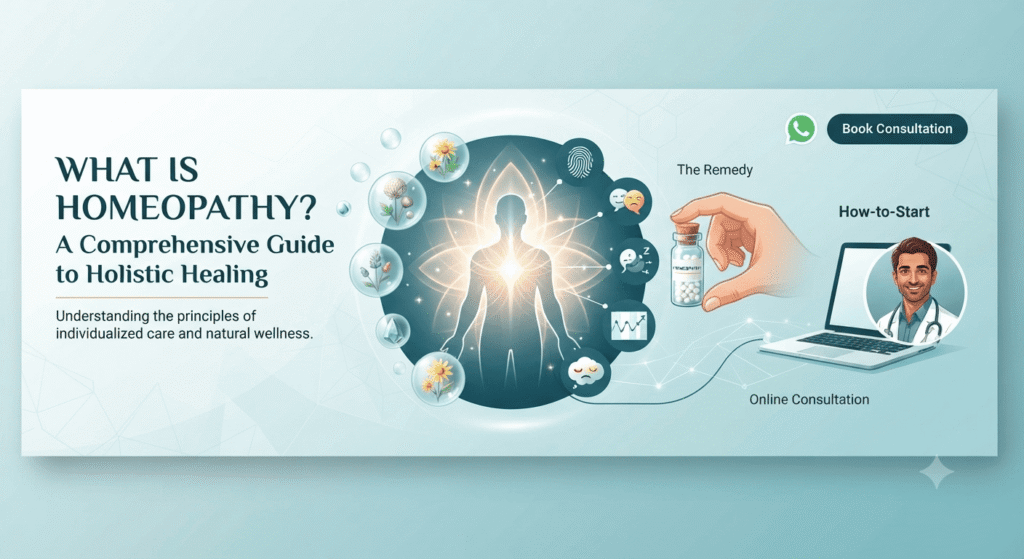
Homoeopathy is a therapeutic system of medicine that operates on the fundamental principle of “Similia Similibus Curentur”—meaning “let likes be cured by likes.” This foundational law states that a substance capable of producing specific symptoms in a healthy individual can stimulate the body’s self-healing mechanisms to resolve similar symptoms in a sick person. But, a debate is still surrounding towards its clinical efficacy in the world. Critics, frequently represent its therapeutic outcomes as a placebo effect. As a practitioner with years of hands-on clinical experience, Today I will examine current scientific literature, institutional reviews, and daily clinical observations that reveal a comprehensive picture of how and why homoeopathic treatments work entirely within their own therapeutic framework.
Insights from Modern Scientific Research
For decades, critics dismissed homoeopathy entirely due to extreme dilution of its remedies. However, scientific literature—including systematic reviews, in vitro studies, and clinical trials indexed in global health databases—presents a much more multifaceted perspective.
- Evidence from Clinical and Systematic Reviews: Comprehensive scientific evaluations, such as those published in the National Library of Medicine (PMC10413079, PMC1874503, and PMC11782339), demonstrate that individualized homoeopathic treatments yield statistically significant outcomes compared to placebos. These studies highlight positive therapeutic responses in complex, chronic conditions through dedicated homoeopathic care.
- Biophysical Mechanisms of Dilutions: Research into ultra-molecular dilutions indicates that physical and physicochemical properties are preserved through specialized preparation methods like potentization. Preclinical models investigated by scientific institutes show biological activity at cellular levels, challenging the assumption that highly diluted remedies lack active properties.
- Institutional Clinical Data: Public health organizations and official bodies—such as National Center for Complementary and Integrative Health (NCCIH) and Central Council for Research in Homoeopathy (CCRH) under the Ministry of AYUSH—provide extensive clinical data, research monographs, and peer-reviewed journals (such as Indian Journal of Research in Homoeopathy) that document the safety, cost-effectiveness, and clinical utility of homoeopathic therapeutics.
Dr. Dorwal’s Perspective
While clinical trials rely on standardized trial designs, everyday medical practice operates on a deeply individualized level. In day-to-day consultations, healing follows the unique constitutional laws of homoeopathy. If two patients present identical symptoms—such as chronic eczema, recurrent migraines, or persistent digestive disorders—they frequently require entirely different remedies based on their unique physical, emotional, and constitutional traits.
From a clinical standpoint, homoeopathy functions as a dynamic stimulus to the body’s innate self-regulatory mechanisms (called Vital Force in Homoeopathy). In homoeopathic practice, when a properly selected remedy matches the totality of a patient’s symptoms, it acts as a catalyst and the clinical response creates a systemic shift toward internal balance. Observing patients transition to sustained, autonomous wellness provides empirical validation that extends far beyond laboratory charts.
Holistic Principle: Treat the Patient, Not Just a Disease
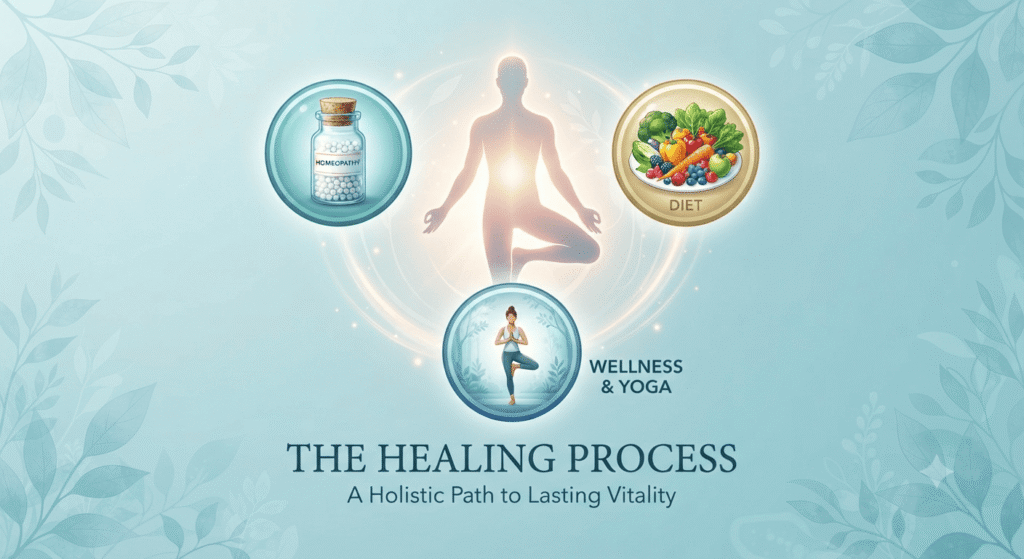
Institutional clinical guidelines and foundational homoeopathic literature emphasize treating the individual rather than the pathology alone. Homoeopathic practice focuses on the holistic restoration of health by evaluating the patient’s entire constitution:
- Mental and Emotional State: Practitioners treat stress levels, temperament, grief, and emotional reactions as vital diagnostic indicators.
- Environmental and Physical Modalities: Factors that make symptoms better or worse (such as heat, cold, motion, or time of day) guide remedy selection.
- Inherited Predispositions: Understanding a patient’s family medical history helps address deep-seated tendencies toward chronic illness.
When practitioners integrate these elements into a prescription, the treatment addresses the underlying vulnerability and restores internal harmony.
Addressing the Placebo Argument
A frequent objection to homoeopathy asserts that its success stems purely from psychology. While the placebo effect remains a component of any healing interaction, it fails to account for clinical realities observed in everyday practice:
- Pediatric Success: Infants and toddlers experience rapid, profound recoveries from acute conditions like teething troubles, colic, or upper respiratory infections using homoeopathic remedies. Placebo effects do not account for therapeutic responses in babies who are incapable of conceptualizing medical treatment.
- Veterinary Applications: Animals respond remarkably well to homoeopathic remedies for injuries, trauma, and chronic ailments, completely eliminating psychological suggestion or belief bias.
- Chronic Relapse Preservation: Patients experience long-term remission after constitutional homoeopathic care, indicating a deep, structural shift in health status.
Integrating Research with Clinical Wisdom
Future of homoeopathic science relies on documenting clinical outcomes through structured case studies and observational research. Institutional bodies are actively working on ongoing research initiatives to generate scientific data, i.e., mapping out the safety, cost-effectiveness, and clinical utility of homoeopathic therapeutics.
Conclusion
Do homoeopathy treatments work? The answer is rooted in both empirical research and clinical practice, while questions regarding exact biophysical mechanisms remain an active area of scientific exploration. When practitioners apply homoeopathy systematically and tailor remedies to the individual based on the law of similars, it offers a safe, deep-acting, and reliable path to true healing. For patients seeking a holistic resolution to health concerns, it remains an invaluable pillar of natural healthcare.
Medical Disclaimer: Information provided on this website and within our articles, written from a clinical perspective by Dr. Dorwal, is intended solely for educational, informational, and research purposes. It should not be interpreted as professional medical advice, diagnosis, or treatment.
- National Center for Complementary and Integrative Health – Homeopathy Overview
- National Center for Biotechnology Information – PMC1874503
- National Center for Biotechnology Information – PMC11782339
- Central Council for Research in Homoeopathy – Clinical Research
- CCRH Monograph – Homoeopathy Gentle Healing
- Indian Journal of Research in Homoeopathy (IJRH)