
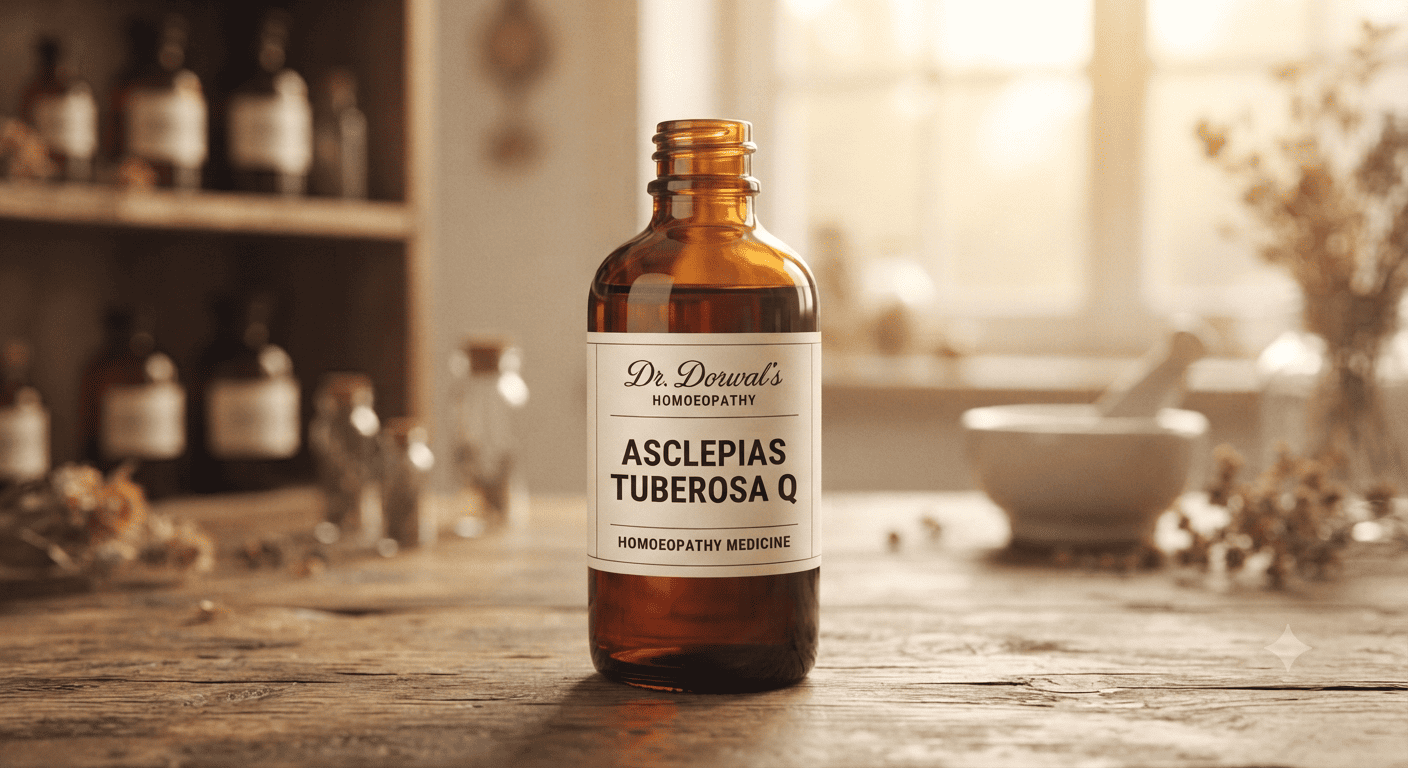
Asclepias Tuberosa is a foundational remedy in homoeopathic chest-specialist’s kit. Renowned for its targeted action on the pleura and intercostal muscles, it is an indispensable agent for respiratory distress and catarrhal states, particularly those triggered by cold, damp, and changeable weather.
Key Clinical Indications & Uses
Therapeutic profile of Asclepias Tuberosa is defined by its selective action on chest, digestive system, and joints:
- Pleuritic & Thoracic Affections: It is premier remedy for pleurisy and bronchitis. The hallmark symptom is sharp, lancinating pain in chest, particularly at the base of left lung or shooting downward from the left nipple. A characteristic modality is that these chest pains are significantly relieved by bending forward.
- Respiratory Irritation: It covers dry, spasmodic coughs accompanied by laryngeal huskiness. Patient may experience tenderness in intercostal spaces close to sternum, and lancinating pains between shoulder blades.
- Catarrhal & Febrile States: It acts as a robust eliminative remedy, stimulating sudoriparous (sweat) glands. It is highly effective for catarrhal conditions presenting with frontal headaches and sticky, yellow discharges.
- Gastrointestinal & Rheumatic Synergy: It addresses dyspepsia characterized by a feeling of fullness and pressure after meals, often with flatulence. In cases of catarrhal dysentery, stools may emit an odor reminiscent of “rotten eggs.” It is also indicated for rheumatic joint pain where the joints feel as if “adhesions are being broken up” upon movement.
Administration & Dosage
- Dose: In clinical practice, it is typically utilized in Mother tincture (Q) or 30C potency for optimal results in acute respiratory and pleuritic states.
Dr. Dorwal’s Perspective
In my clinical practice, Asclepias Tuberosa is my first consideration for “pleuritic patient.” When a patient walks into my clinic leaning forward, clutching their chest, and complaining of sharp, shooting pains that make breathing a chore, I immediately look toward Asclepias. It has a specific affinity for left side of chest that is quite unique in our materia medica.
What I find most clinically instructive is the sensation of joints feeling like “adhesions are being broken.” This gives us a clue to the remedy’s deeper action on connective tissues and serous membranes. It is not just a lung remedy; it is a remedy for movement of body. For the practitioner, Asclepias Tuberosa is a powerful tool to bridge the gap between respiratory catarrh and rheumatic inflammatory states. When you have a patient whose bronchitis or pleurisy is complicated by rheumatic pains or deep-seated indigestion, this remedy helps bring systemic coherence back to their health.
Disclaimer: This content is for informational purposes only. Homoeopathic medicines should be taken under the guidance of a qualified homoeopathic physician. Do not self-medicate for chronic or serious medical conditions, and always seek professional advice for any health concerns.
Frequently Asked Questions (FAQs)
It is primarily indicated for pleurisy, bronchitis, and sharp, shooting chest pains that are characteristically relieved by bending forward.
Pain is often situated at the base of the left lung or shoots directly downward from the left nipple.
It is indicated in rheumatic conditions where the joints feel “stuck,” as if adhesions are breaking when the patient bends or moves them.
Mother tincture (Q) and 30C potency are the most commonly employed preparations in acute clinical settings.
