
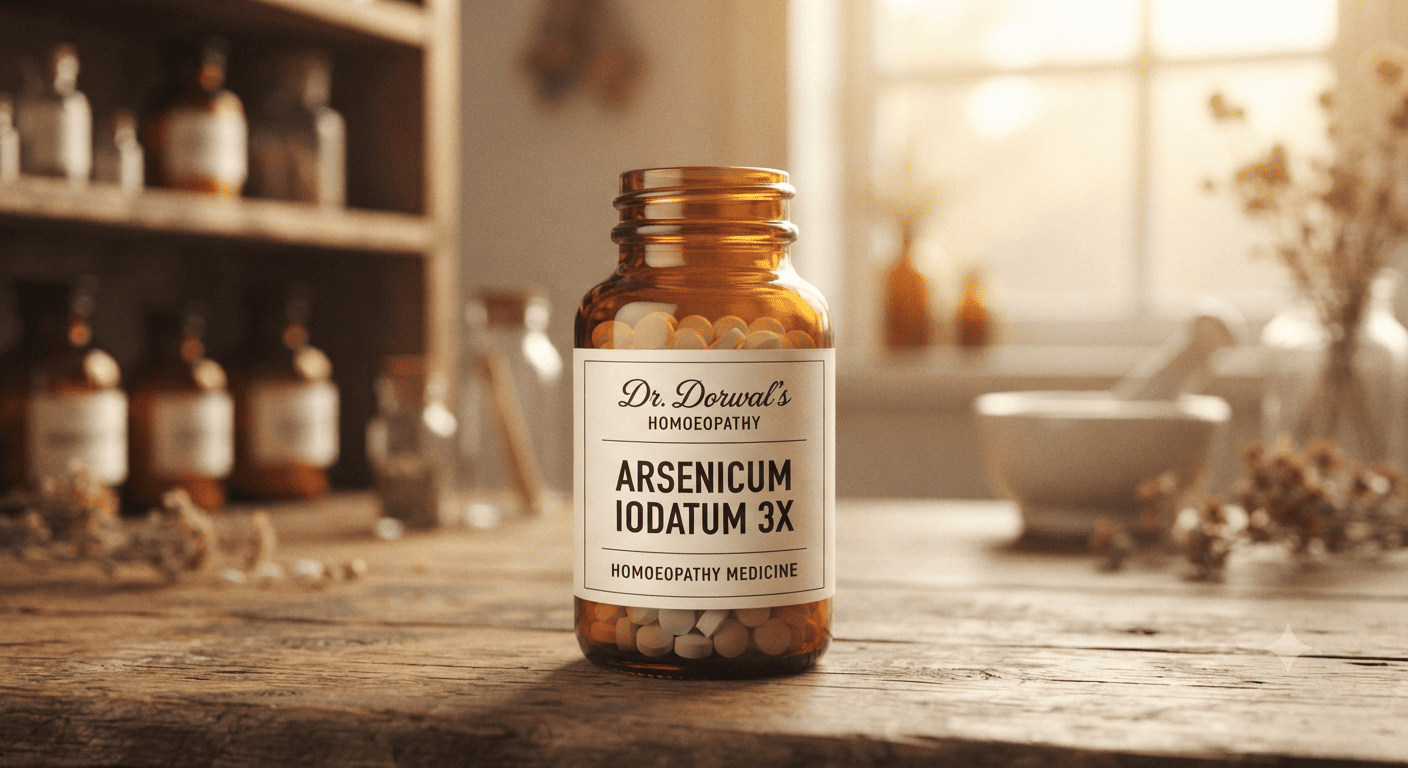
Arsenicum Iodatum is a formidable remedy in homoeopathic inventory, bridging the therapeutic strengths of both Arsenicum and Iodine. It is characterized by its profound influence on chronic inflammatory processes, particularly those involving mucous membranes and respiratory system, and its unique ability to address deep-seated constitutional depletion.
Key Clinical Indications & Uses
Therapeutic profile of Arsenicum Iodatum is defined by its affinity for “angry,” corrosive conditions and its role as a supportive agent in chronic, debilitating illnesses:
- Corrosive Discharges: Hallmark of this remedy is a discharge that is persistently irritating and corrosive, excoriating the very membrane from which it flows. Whether it be nasal, aural, or pharyngeal, the tissue is always red, swollen, and prone to burning.
- Respiratory & Tubercular Affinity: It is one of our most effective agents in early stages of tuberculosis, addressing the “hectic” state: afternoon fevers, drenching night sweats, rapid/irritable pulse, and progressive emaciation. It is indicated in chronic bronchitis, unresolved pneumonia, and pulmonary conditions where abscess formation is a threat.
- Cardiac Support: It is a vital remedy for “senile heart,” addressing myocardial degeneration, fatty changes, and chronic aortitis. Pulse is often described as “shotty”—rapid, feeble, and irregular.
- Dermatological Manifestations: It excels in treating dry, scaly skin conditions like psoriasis and ichthyosis, often with large-scale exfoliation that leaves a raw, exuding surface. It is also indicated for eczema, particularly of the beard, and shotty, indurated acne.
- Hay Fever & Catarrh: A reliable remedy for stubborn hay fever, old nasal catarrhs, and middle-ear catarrh with fetid, corrosive discharges.
Administration & Dosage
- Dose: In clinical practice, it typically utilized in 3X potency. It is essential that the remedy be prepared fresh and protected from light.
Dr. Dorwal’s Perspective
In clinical practice, Arsenicum Iodatum is the remedy I choose when the inflammation is not just “there,” but is actively destroying the surrounding tissue. You see this in the raw, excoriated skin beneath a nasal discharge, or in the inflammatory process of an unresolved pneumonia. It is a remedy for the “wasted” patient—those suffering from the metabolic drain of chronic disease, where emaciation is present despite a good appetite.
What I find most clinically instructive is its versatility in both the acute and the chronic. It is just as useful for the sudden, irritating hay fever of spring as it is for the long-term management of a senile heart or a chronic lung abscess. For the practitioner, Arsenicum Iodatum teaches us to look for the “corrosive” nature of the symptom—if patient complains that their discharge burns or makes surrounding area feel “raw,” this remedy should be at the top of your list. It is a remedy of great strength for those who have lost their own.
Disclaimer: This content is for informational purposes only. Homoeopathic medicines should be taken under the guidance of a qualified homoeopathic physician. Do not self-medicate for chronic or serious medical conditions, and always seek professional advice for any health concerns.
Frequently Asked Questions (FAQs)
It is intensely corrosive. The discharge itself causes the membrane it flows over to become red, angry, swollen, and prone to burning and itching.
Yes, it is highly regarded for the “senile heart,” including cases of myocardial degeneration and fatty heart changes, especially when the pulse is weak and irregular (“shotty”).
It is light-sensitive and tends to decompose; it must be kept protected from light and should be prepared fresh to ensure maximum efficacy.
It is indicated by profound prostration, afternoon fever spikes, drenching night sweats, rapid pulse, and general emaciation, even when the patient maintains a decent appetite.
