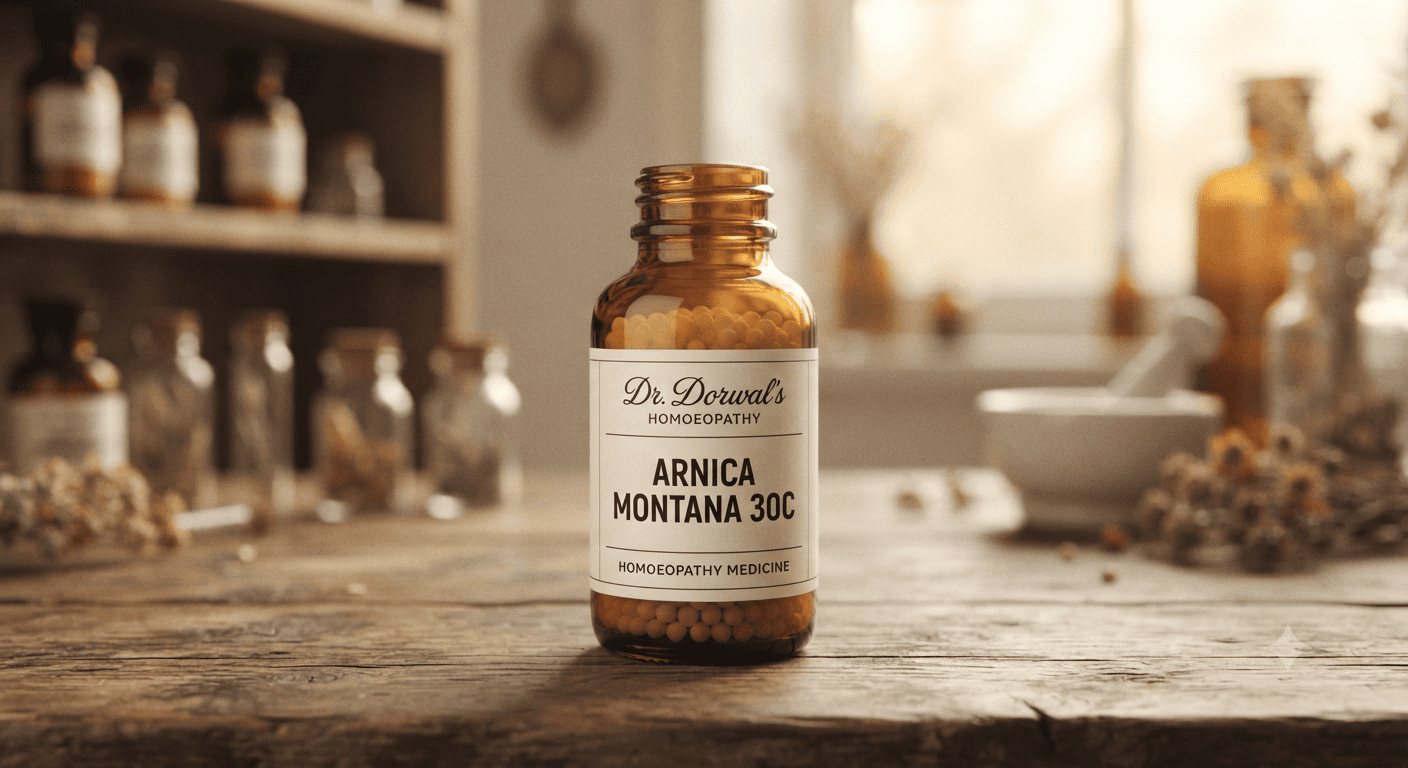
Quick Overview: Arnica Montana is a homoeopathy remedy used for bruises, muscle aches, joint pain and mental trauma. It is used in form of Homoeopathic Creams, Gels, Ointments, Mother tinctures (Q) and in highly diluted forms like Arnica Montana 30C, Arnica Montana 200C & Higher.
Arnica Montana is commonly known as Leopard’s Bane or Mountain Tobacco. It is prepared from the fresh root of a mountain plant native to Europe. It is the most recognised remedy in the entire homoeopathic materia medica. Arnica is the remedy for trauma — physical trauma from injury, overexertion, or surgery, and the shock or mental trauma that accompanies it.
What is Arnica Montana used for?
In homoeopathy, Arnica Montana is used to trace several conditions like:
1. Physical Trauma & Injury
- Bruises, contusions, sprains, and soft-tissue injuries, especially where the affected area feels sore, lame, and bruised even without a visible mark
- Fresh injuries as well as the effects of old injuries that “never fully healed”
- A characteristic feature: the patient says that the bed feels too hard, and constantly wants to shift position to find comfort
2. Post-Surgical & Post-Procedural Recovery
- Widely used before and after surgery, dental procedures, and childbirth to reduce bruising, swelling, and the general shock to the system
- Supports faster resolution of post-operative soreness and oedema
3. Overexertion & Muscular Soreness
- Muscle soreness after unaccustomed physical exertion — the classic “overdid it at the gym” picture
- A sensation as if beaten, with every part of the body feeling sore to touch or pressure
4. Cardiovascular & Circulatory
- Arnica has a marked affinity for the venous system and blood vessels, and is considered in cases of stasis, bruising under the skin, and tendency to haemorrhage
- Considered supportive in cardiac exhaustion and dropsy with dyspnoea in some clinical contexts
5. Head Injury & Concussion
- A first-line consideration after any blow to the head, including minor concussions, where the person may seem dazed, wants to be left alone, and answers questions correctly but with a delay
6. Emotional & Mental Trauma
- Arnica is also considered for the “trauma” of sudden bad news, grief, or a sudden financial shock
- A striking mental symptom: the patient says “I am fine,” minimising the injury or illness even when clearly unwell
Constitutional Picture — Who Responds Best ?
Arnica patient has a fear of being touched or approached, especially to the injured area, and a strong desire to be left alone. There is often a mismatch between the severity of the injury and the patient’s own description of it — they tend to say they’re “fine” even when they clearly are not. Physically, Arnica works best in robust, plethoric constitutions, though it acts more weakly in the very debilitated or anaemic.
How It Differs From Similar Remedies ?
| Remedy | Key Distinguishing Feature |
|---|---|
| Arnica Montana | Soreness, bruised feeling, fear of touch, says “I’m fine”; best for the impact phase of trauma |
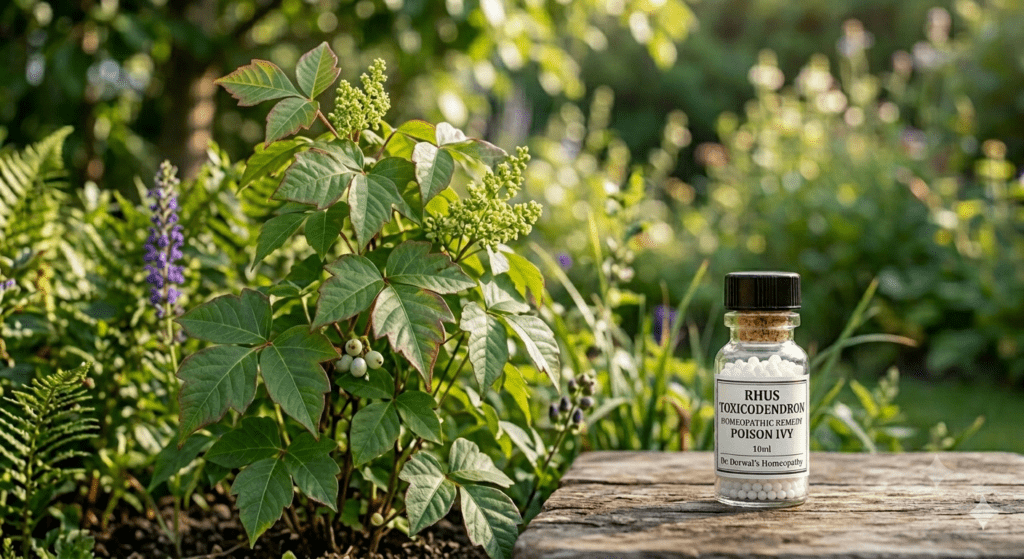
| Rhus Toxicodendron | Stiffness that is worse on first motion and better with continued movement — more relevant after the acute Arnica phase, in sprains that improve with gentle motion |
| Bellis Perennis | Considered for deeper tissue trauma (abdominal/pelvic organs), especially after surgery involving internal organs |
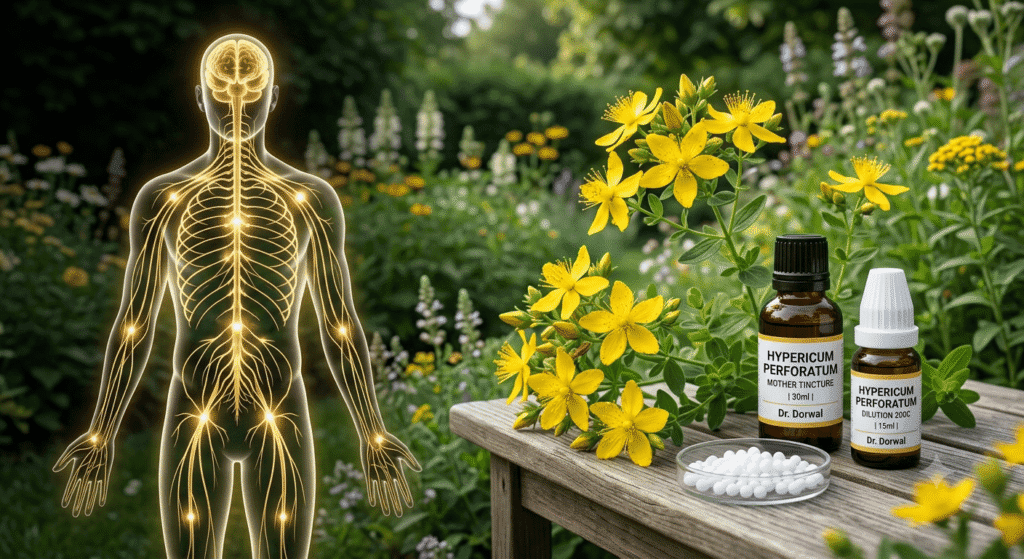
| Hypericum Perforatum | Injuries to nerve-rich areas (fingertips, spine, tailbone) with shooting, neuralgic pain, rather than the general bruised soreness of Arnica |
| Ledum Palustre | Puncture wounds and injuries that feel better with cold application, unlike Arnica |
Potency & Administration
- 30C is the most commonly used potency for bruises, sprains, and post-exertion soreness.
- For significant trauma or before/after surgery, some practitioners consider more frequent repetition initially, spacing out doses as improvement is seen.
- Topical Arnica (cream/gel) is popular for external use on unbroken skin, but should never be applied to open wounds or broken skin.
- Arnica in its crude/mother tincture form is toxic if taken internally in non-homoeopathic doses — only properly diluted homoeopathic potencies should be used, and internal use should be guided by a qualified physician.
Dr. Dorwal’s Clinical Perspective
Arnica is the for a patient who presents any physical trauma — a fall, a sports injury, or in the days after a surgery. What I find most useful clinically is not just the physical bruised soreness, but the mental picture, which often accompanies it. Patients who suffer from their pain, but they don’t need help, even while their is visible uncomfortable, I think about Arnica. Recognising this pattern early, helped my patients to recover from both minor and significant trauma with less bruising and a faster return to normal movement.
Disclaimer: This content is for informational and educational purposes only and reflects general homoeopathic materia medica knowledge. It is not a substitute for individualised medical consultation. Homoeopathic medicines should be taken only under the guidance of a qualified homoeopathic physician. Do not self-medicate for chronic, serious, or significant traumatic injuries — always seek professional advice, and seek emergency care for severe injuries.
- Clinical Trials, Potential Mechanisms, and Adverse Effects of Arnica as an Adjunct Medication for Pain Management
- Anti-inflammatory effects of Arnica montana (mother tincture and homeopathic dilutions) in various cell models
- Assessment report on Arnica montana L., flos
- The nanostructure character of Arnica Montana as ultra-high diluted succussed solution medicinal product. Recent advances and prospects
- Efficacy of homeopathic arnica: a systematic review of placebo-controlled clinical trials
- Arnica montana – Allen
- Arnica Montana from Materia Medica by John Henry Clarke
- Review of Arnica montana
Frequently Asked Questions (FAQs)
It is most commonly used for bruises, sprains, muscle soreness, and the general shock and soreness that follow any physical injury, overexertion, or surgery.
Yes, it is widely used around the time of surgery to reduce bruising, swelling, and post-operative soreness. Medicine should be used under professional guidance alongside your standard post-surgical care.
Yes. It is safe when you take proper diluted homoeopathic potencies (such as 30C), but must be guided by a qualified homoeopathic physician. The crude plant/mother tincture is toxic if taken internally and should not be self-administered.
Arnica suits the immediate, acute bruised-and-sore phase right after an injury. Rhus Toxicodendron is more often considered afterward, for stiffness that is worse on first movement and improves with continued gentle motion.
No. Topical Arnica should only be applied to unbroken skin around a bruise or sprain.
Someone who has experienced physical or emotional trauma, dislikes being touched or approached near the affected area, and tends to insist they are “fine” even when clearly unwell.