
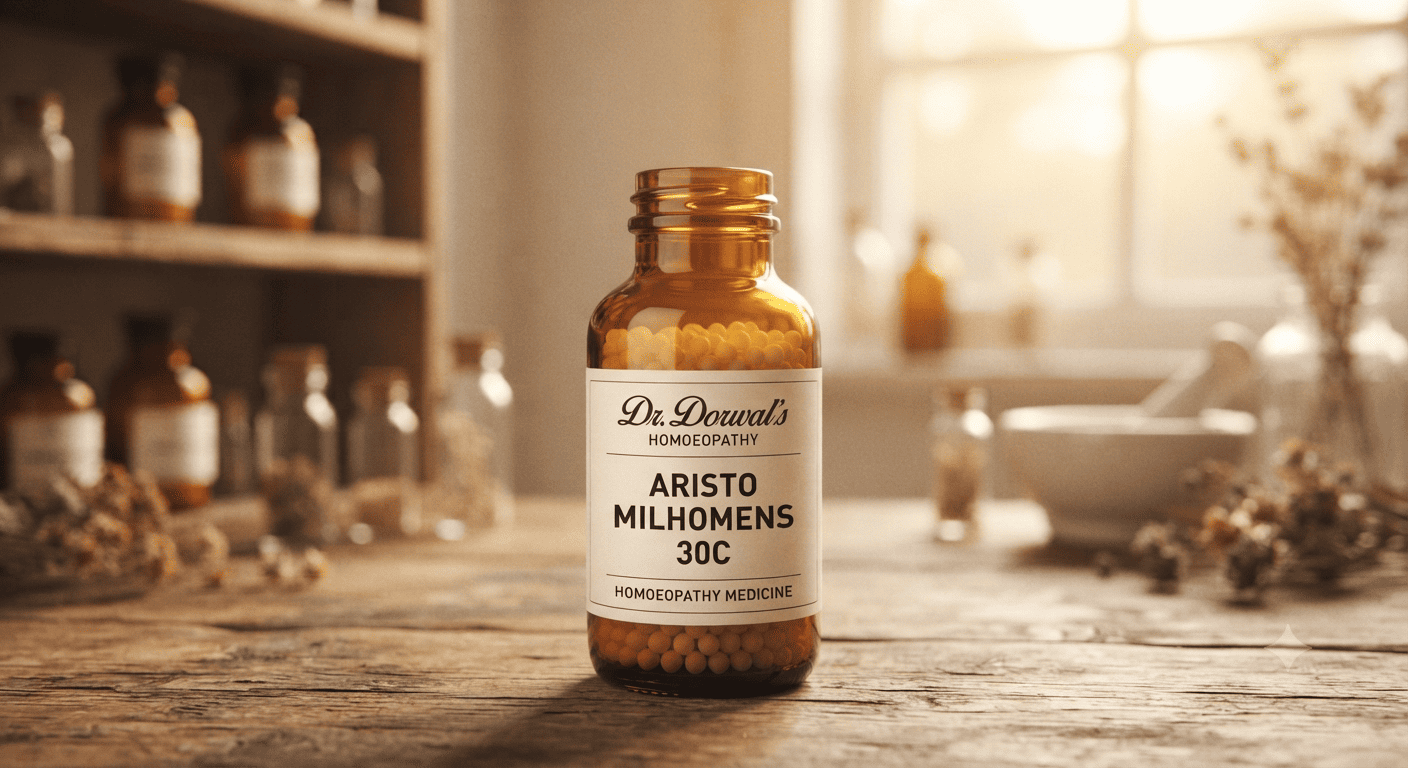
Aristolochia Milhomens, or Brazilian Snake Root, is a specialized remedy that warrants careful study for its distinct localized pains and inflammatory patterns. While it may not be a daily staple in every clinic, its targeted action on the joints, connective tissues, and digestive tract makes it an essential consideration when common remedies fail to address specific, localized distress.
Key Clinical Indications & Uses
Therapeutic profile of Aristolochia Milhomens is defined by its selective action on extremities and the gastrointestinal system:
- Localized Stabbing Pains: Hallmark of this remedy is the presence of sharp, stitching pains occurring in various parts of the body.
- Musculoskeletal and Tendo-Achillis Affections: It is a valuable agent for pain affecting the back and extremities, with a particular affinity for heels and the tendo-Achillis. Clinically, this manifests as stiffness in legs, and localized itching or swelling around malleoli (ankle bones).
- Gastrointestinal and Anal Irritation: It addresses significant flatulence in both stomach and abdomen. It is also indicated for burning sensations in the anus, often accompanied by frequent irritation in that region.
Administration & Dosage
- Dose: In clinical practice, it is typically utilized in 30C potency to harness the curative response of this remedy.
Dr. Dorwal’s Perspective
In my clinical practice, I view Aristolochia Milhomens as a “niche specialist.” While I have not yet integrated this specific remedy into my daily prescribing, its profile is highly suggestive for those stubborn cases of ankle and heel pain that often plague our more active patients.
What I find most clinically instructive is the combination of localized stitching pains with the specific anatomical involvement of tendo-Achillis and malleoli. In modern practice, where we frequently see patients with persistent Achilles tendinitis or chronic ankle inflammation that refuses to yield to standard anti-inflammatory approaches, this remedy offers a logical, albeit targeted, alternative. For the practitioner, it serves as a reminder to look for the “stitching” quality of pain and the anatomical “map” of the lower leg. It is a remedy that demonstrates how specific botanical signatures can guide us toward healing in the most focused of pathologies.
Disclaimer: This content is for informational purposes only. Homoeopathic medicines should be taken under the guidance of a qualified homoeopathic physician. Do not self-medicate for chronic or serious medical conditions, and always seek professional advice for any health concerns.
Frequently Asked Questions (FAQs)
It is a strong candidate for localized stitching pains, particularly when accompanied by stiffness in the legs, swelling around the ankles, or persistent pain in the tendo-Achillis.
It is indicated for significant flatulence in the stomach and abdomen, as well as burning and irritation in the anal region.
While both share the Aristolochia genus, Serpentaria (Virginia Snake Root) has a much stronger affinity for severe intestinal distress, such as colliquative diarrhea, cutting abdominal pains, and meteorism.
30C potency is typically utilized in clinical practice to address these localized inflammatory and spasmodic states.
