
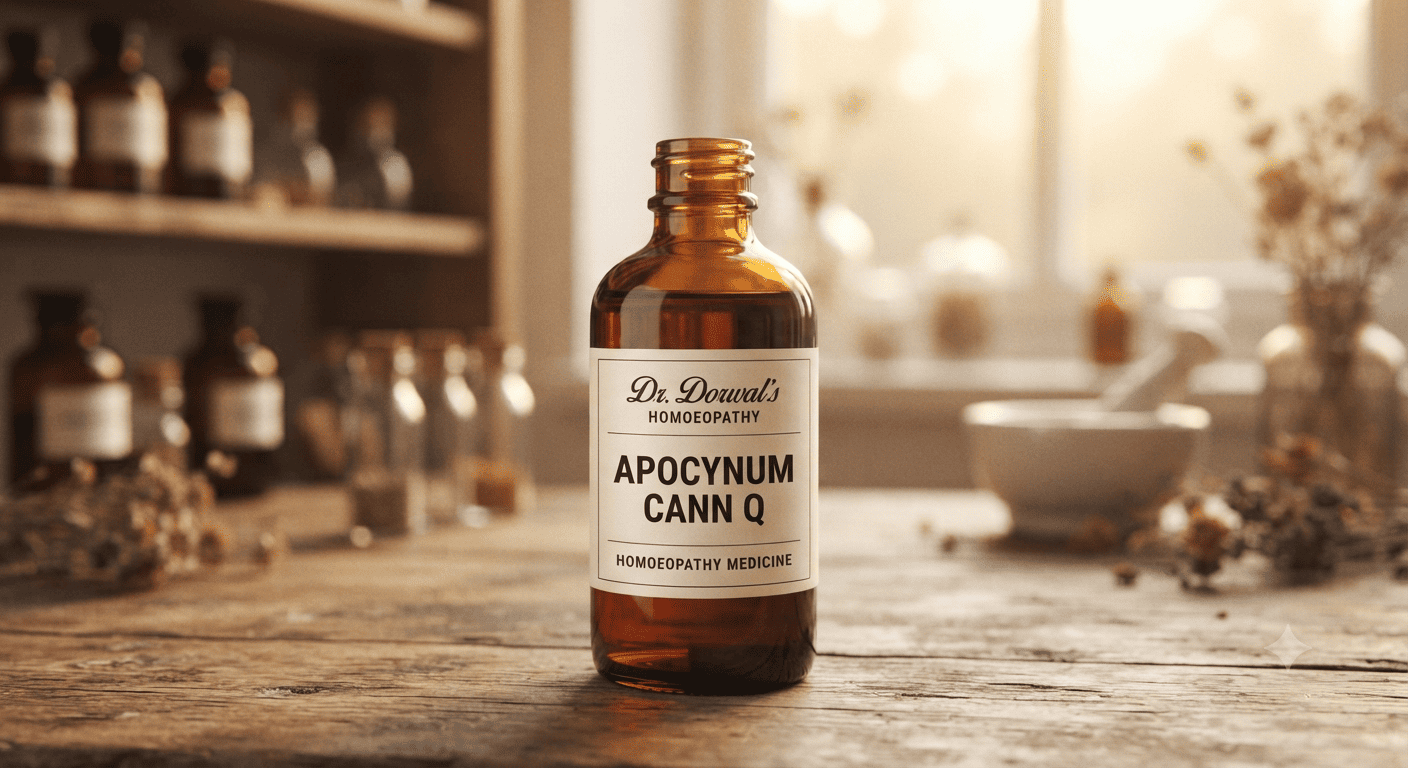
Apocynum Cannabinum is a powerful, deep-acting remedy with a profound affinity for the body’s fluid-regulating systems. Often referred to as our most efficient “dropsy remedy,” it acts directly upon the mucous and serous membranes, stimulating secretions and promoting the elimination of effusions. It is an indispensable agent in the management of advanced cardiac and renal pathologies.
Key Clinical Indications & Uses
Therapeutic profile of Apocynum Cannabinum is characterized by its ability to resolve systemic fluid retention and address the “sinking” states often found in chronic disease:
- Systemic Dropsy: This is the primary sphere of action. It is highly indicated for ascites (abdominal dropsy), anasarca (generalized swelling), and hydrothorax (fluid in the chest). Condition is characteristically marked by great thirst and persistent gastric irritability.
- Cardiac Support: Apocynum is essential in managing cardiac insufficiency, specifically mitral and tricuspid regurgitation. It addresses a rapid, feeble, and irregular pulse—where a diminished frequency of the pulse under treatment is a prime indicator of efficacy. It is also indicated in states of low arterial tension, pulsating jugulars, and cyanosis.
- Renal and Urinary Pathologies: It provides vital support in Bright’s disease, particularly when accompanied by nausea, vomiting, and respiratory oppression. It addresses suppression of urine, strangury, and a bladder that feels distended yet lacks expulsive power.
- Gastric and Abdominal Distress: The patient suffers from a sensation of “sinking” in the stomach, bloating, and excessive vomiting, where food or water is ejected immediately upon consumption.
Administration & Dosage
- Dose: In clinical practice, Mother tincture (Q) is commonly used (ten drops, three times daily). In cases of acute alcoholism, a more diluted decoction is often employed.
- Modalities: Symptoms are characteristically worse in cold weather, from cold drinks, and from uncovering.
Dr. Dorwal’s Perspective
In my clinical practice, Apocynum Cannabinum is a remedy of immense practical value. When I faced with a patient whose system is “waterlogged”—whether from heart failure or kidney stress—and who presents with that characteristic, intense thirst and persistent nausea, Apocynum is often the key to restore balance.
What I find most clinically instructive is the remedy’s impact on the pulse. In many cardiac cases, you will see a rapid, feeble, and irregular rhythm; if, after administering Apocynum, you see that pulse frequency begin to diminish and stabilize, you know you have found the right tool. It is a robust remedy that works in harmony with the body’s need to eliminate what it cannot process. For the practitioner managing the complex, often frightening symptoms of advanced dropsical states, Apocynum is an anchor that provides the systemic support required to facilitate recovery.
Disclaimer: This content is for informational purposes only. Homoeopathic medicines should be taken under the guidance of a qualified homoeopathic physician. Do not self-medicate for chronic or serious medical conditions, and always seek professional advice for any health concerns.
Frequently Asked Questions (FAQs)
It is considered as a premier remedy for dropsy because it powerfully increases the secretions of mucous and serous membranes, helping the body to eliminate excess fluid accumulation (ascites, anasarca, and hydrothorax) caused by cardiac or renal dysfunction.
A decrease in frequency of the pulse is a prime indicator that the remedy is acting effectively to stabilize the irregular and rapid cardiac action associated with conditions like tricuspid regurgitation.
Apocynum patient typically experiences great thirst, which is often contrasted with the nausea and vomiting that follows the ingestion of food or drink.
Yes, it has historical and clinical utility in acute alcoholism, where it helps address the systemic stress and fluid-related imbalances that often manifest in these patients.
