
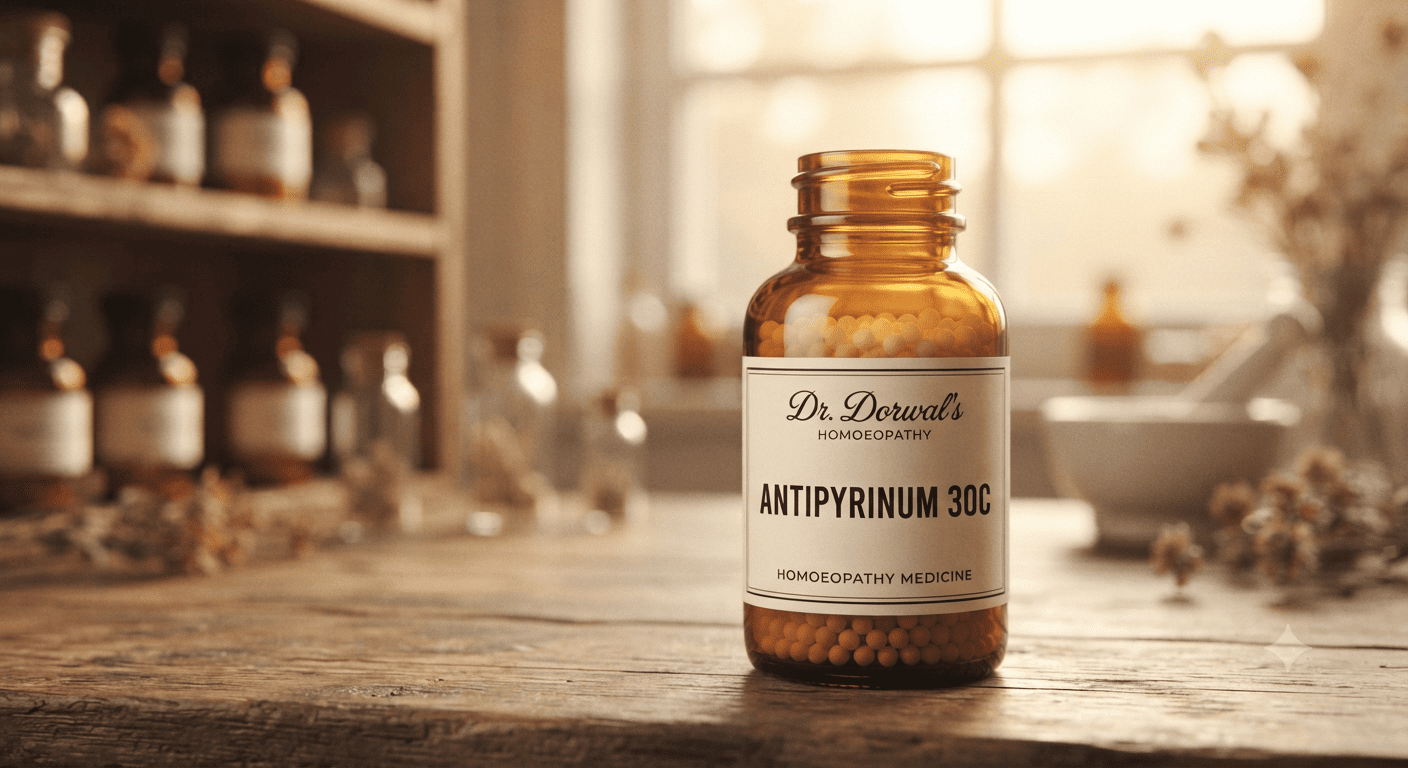
Antipyrinum (Phenazone) is a powerful coal-tar derivative that exerts a profound influence on the body’s vasomotor centers. By inducing significant changes in capillary dilation, it serves as a critical agent in managing acute inflammatory states, reactive dermatological conditions, and specific neuromuscular disturbances.
Key Clinical Indications & Uses
Therapeutic profile of Antipyrinum is defined by its ability to provoke and treat conditions characterized by sudden vascular congestion and systemic reactivity:
- Dermatological and Angioneurotic Responses: It is a vital remedy for conditions involving sudden-onset swelling and hyperemia. It is indicated for erythema multiforme, eczema, and pemphigus. A hallmark symptom is urticaria—hives that appear and disappear suddenly—often accompanied by an internal sensation of coldness. It is also a key consideration for angioneurotic edema.
- Mucous Membrane Inflammation: It acts deeply on the oral and respiratory passages. Patients may experience burning in the mouth and gums, ulceration of the lips and tongue (including vesicles and bullae), and swollen tissues. In the throat, it covers painful swallowing, formation of abscesses, and the presence of a white false membrane.
- Head and Sensory Disturbance: Antipyrinum is indicated for throbbing headaches with a sensation of constriction, often radiating to the ears. It is also associated with tinnitus, buzzing, and puffiness of the eyelids.
- Systemic and Cardiac Tonicity: It is indicated for patients experiencing cardiac weakness—characterized by a rapid, weak, irregular pulse and a sensation that the heart is stopping—alongside general prostration, trembling, cramps, and even epileptiform seizures.
Administration & Dosage
- Dose: In clinical practice, it is typically utilized in 30C potency to harness its vasomotor-regulating effects.
Dr. Dorwal’s Perspective
In clinical practice, Antipyrinum is a remedy I reserve for cases where the patient’s body is responding to a stimulus with “explosive” vascular reactivity. When I see a patient whose skin is erupting in blotches that appear and vanish in a matter of hours, or whose mouth is suddenly covered in painful ulcers and vesicles, Antipyrinum is my primary diagnostic consideration.
What I find most instructive is the mental and neurological anxiety that often accompanies these physical symptoms—the fear of becoming insane, the nervous agitation, and the hallucinations. It is a remedy that bridges the gap between acute inflammation and deeper systemic instability. If you are treating a patient with chronic, wandering skin eruptions that defy standard approaches, look for the vascular “trigger”—the throbbing, the swelling, and the suddenness of the response. That is where Antipyrinum excels.
Disclaimer: This content is for informational purposes only. Homoeopathic medicines should be taken under the guidance of a qualified homoeopathic physician. Do not self-medicate for chronic or serious medical conditions, and always seek professional advice for any health concerns.
Frequently Asked Questions (FAQs)
They often appear and disappear suddenly, with intense itching (pruritus) and associated internal coldness.
It causes burning sensations, swelling of the lips and tongue, and the formation of vesicles, bullae, or ulcers.
A rapid, weak, and irregular pulse, accompanied by a frightening sensation of the heart stopping and generalized throbbing throughout the body are the primary cardiac symptoms.
30C is the standard clinical starting point.
