
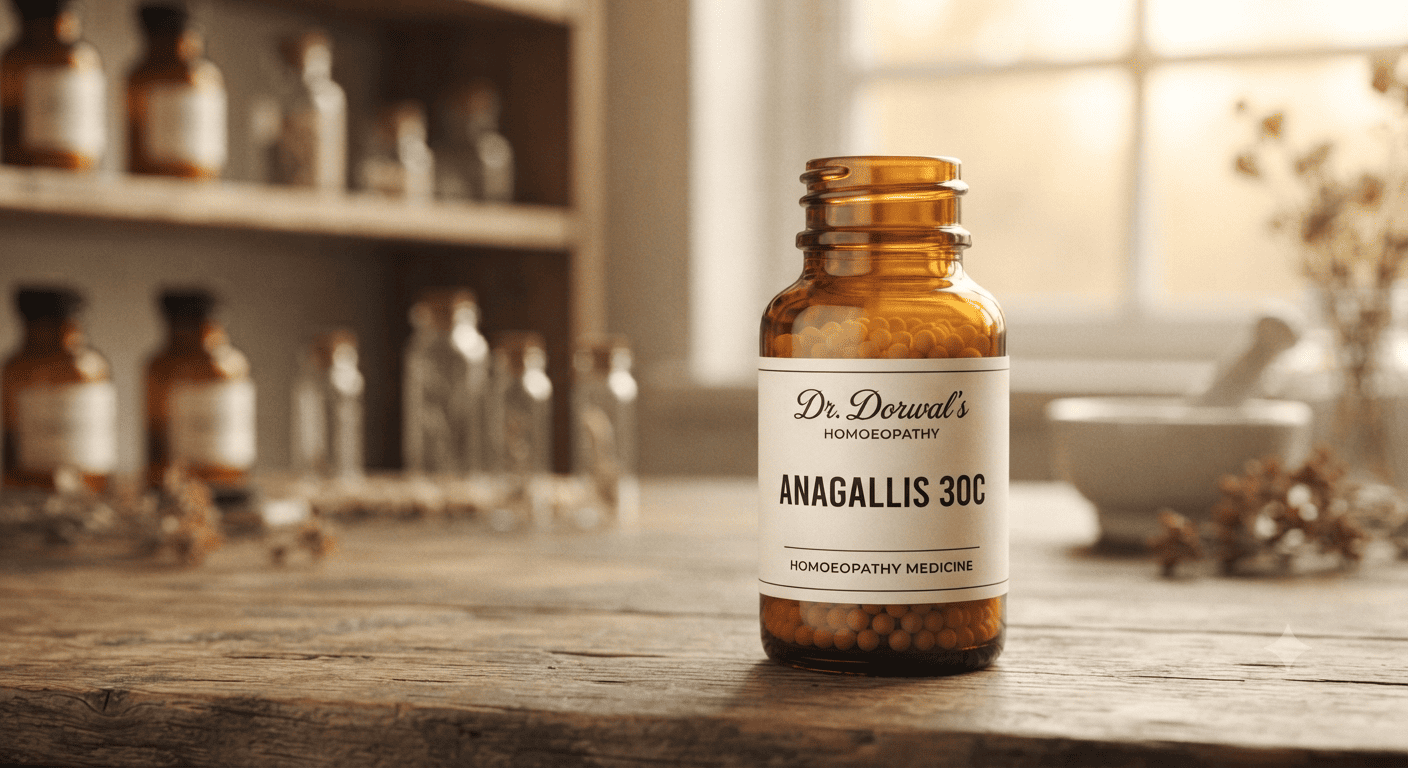
Anagallis Arvensis (Scarlet Pimpernel) is a remedy of significant dermatological and mechanical importance. While historically revered for its application in hydrophobia and dropsy, its modern clinical value is best realized in the management of stubborn skin conditions, articular pain, and the expulsion of foreign bodies.
Key Clinical Indications & Uses
Therapeutic profile of Anagallis Arvensis is defined by its ability to modulate skin integrity and alleviate localized irritation:
- Dermatological Precision: Anagallis is a premier remedy for intense itching and tingling sensations across the entire surface of body. It is specifically indicated for dry, bran-like eruptions that localize on the hands and fingers, as well as vesicular eruptions appearing in clusters. It is also noted for its ability to help soften tissue and assist in the destruction of warts.
- Mechanical Utility: One of the most unique and historically verified applications of this remedy is its power to facilitate the expulsion of splinters or foreign bodies from the skin.
- Rheumatic & Gouty States: It addresses deep-seated rheumatic and gouty pains, particularly those localized to the shoulder and arm. It is also an effective agent for cramping sensations in the ball of the thumbs and fingers.
- Urological Irritation: It addresses urethral irritation characterized by a burning pain during urination, where the urine may pass in several streams, often requiring physical pressure to initiate the flow.
Administration & Dosage
- Dose: In clinical practice, it is typically utilized in 30C potency for optimal therapeutic results.
Dr. Dorwal’s Perspective
In clinical practice, Anagallis Arvensis is an absolute necessity for the physician who manages chronic skin ailments. When a patient presents with those dry, bran-like scales on palms—a condition that can be incredibly resistant to standard treatment—Anagallis acts with a quiet, persistent efficacy. It is not a “noisy” remedy, but it is deeply effective in normalizing the skin’s surface and soothing that intolerable, systemic tingling.
What I find most interesting is its historical role as a remedy for the expulsion of splinters. While we have modern surgical tools for such tasks, the homoeopathic principle of using Anagallis to help the body “expel” an irritant from within is a testament to the wisdom of our predecessors. It is a remedy that respects the body’s natural urge to heal and shed what is foreign or diseased. For the patient suffering from recurrent joint swellings or those stubborn eruptions on the hands, Anagallis is a classic choice that remains as relevant today as it was in the past.
Disclaimer: This content is for informational purposes only. Homoeopathic medicines should be taken under the guidance of a qualified homoeopathic physician. Do not self-medicate for chronic or serious medical conditions, and always seek professional advice for any health concerns.
Frequently Asked Questions (FAQs)
It has a well-documented ability to favor the expulsion of splinters or foreign bodies from the skin.
It is indicated for dry, bran-like eruptions, particularly on the hands and fingers, and clustered vesicles.
It is useful for rheumatic and gouty pains in the shoulders, arms, and cramping in the ball of thumbs.
It addresses urethral irritation and burning, where the urine passes in multiple streams and requires physical effort to start.
