
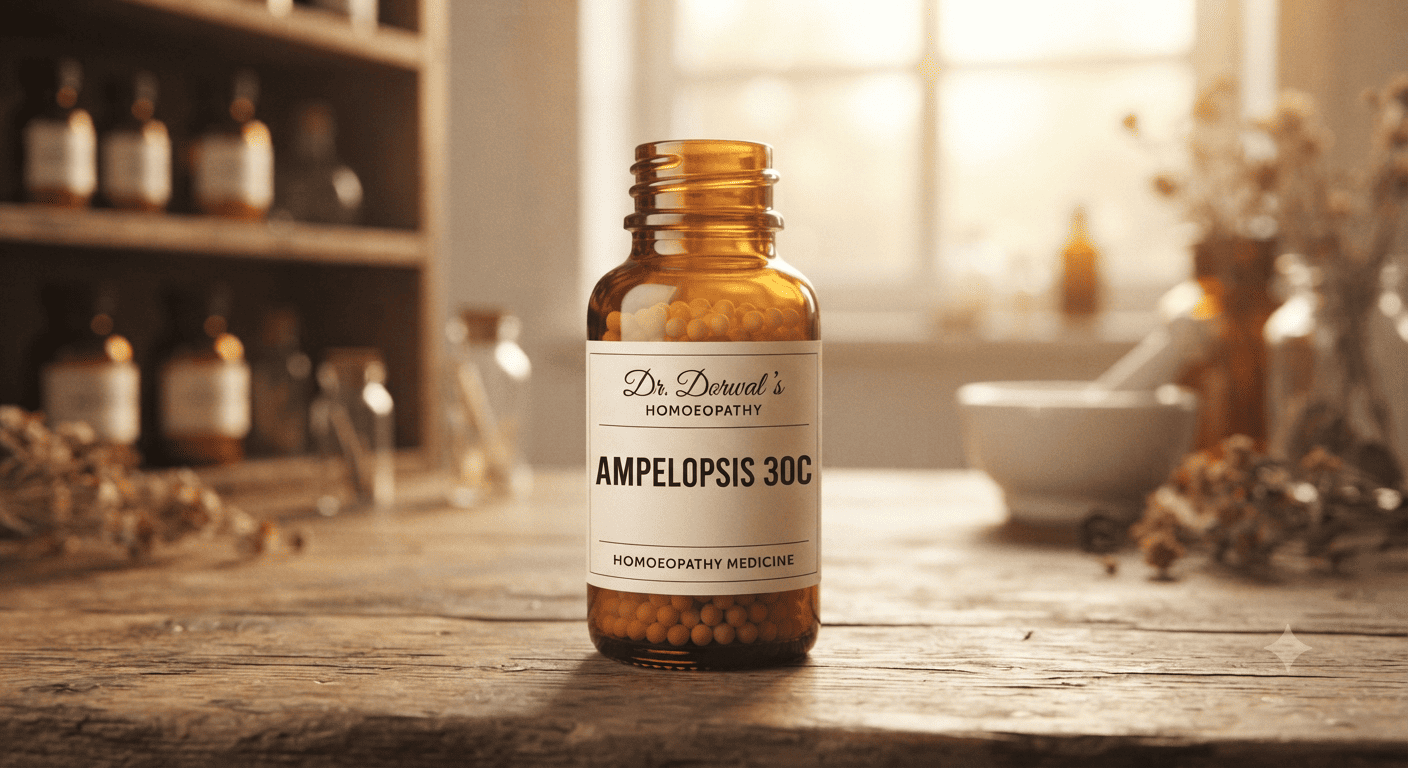
Ampelopsis Quinquefolia (Virginia Creeper) is a therapeutic agent with a unique affinity for lymphatic and renal systems. While it may not be a staple in every practitioner’s daily protocol, its utility in managing refractory dropsical conditions and scrofulous diatheses makes it a significant, albeit specialized, addition to the homoeopathic repertoire.
Key Clinical Indications & Uses
Therapeutic profile of Ampelopsis is characterized by its action on water retention and gastrointestinal irritation:
- Renal Dropsy and Hydrocele: It is indicated in cases of significant fluid retention, particularly renal-origin dropsy and hydrocele, where the system is struggling with water balance.
- Scrofulous Affections: It is a valuable consideration for scrofulous patients who suffer from chronic hoarseness, helping to resolve the underlying lymphatic/glandular congestion that characterizes this constitution.
- Gastrointestinal Distress: Ampelopsis addresses acute choleraic symptoms, including violent vomiting and purging accompanied by tenesmus. Patients may present with rumbling in the abdomen and a general sensation of soreness across all limbs.
- Localized Sensitivity: A clinical marker for this remedy is soreness and sensitivity specifically localized to the left costal (rib) region, often accompanied by pain in the elbow joints and back.
Administration & Dosage
- Dose: In clinical practice, it is typically utilized in 30C potency for optimal results.
Dr. Dorwal’s Perspective
As we continue to build our clinical library, Ampelopsis Quinquefolia stands as an intriguing reminder of the breadth of our Materia Medica. While I have yet to introduce this remedy into my active, everyday treatment protocols, its specific indication for “renal dropsy and hydrocele” positions it as a potential specialist remedy for the right case.
In a clinical sense, any time a remedy is linked to “scrofulous patients” and chronic hoarseness, it deserves our attention as a deeper-acting, constitutional support. I find the temporal modality—the “worse about 6:00 PM” window—to be a critical clinical hook. When we encounter a patient with fluid accumulation that refuses to resolve with standard renal support, observing the time of day their symptoms worsen could be the key to unlocking this remedy’s potential. It serves as a reminder to the practitioner that even the lesser-known remedies hold a specific, vital key for the chronic case that has reached a plateau.
Disclaimer: This content is for informational purposes only. Homoeopathic medicines should be taken under the guidance of a qualified homoeopathic physician. Do not self-medicate for chronic or serious medical conditions, and always seek professional advice for any health concerns.
Frequently Asked Questions (FAQs)
It is used for renal dropsy, hydrocele, and chronic hoarseness in scrofulous constitutions.
It covers choleraic states, featuring violent vomiting and diarrhoea with tenesmus.
Yes, the remedy is marked by sensitivity in the left costal region, back soreness, and pain in the elbow joints.
Symptoms are generally worse around 6:00 PM.
