
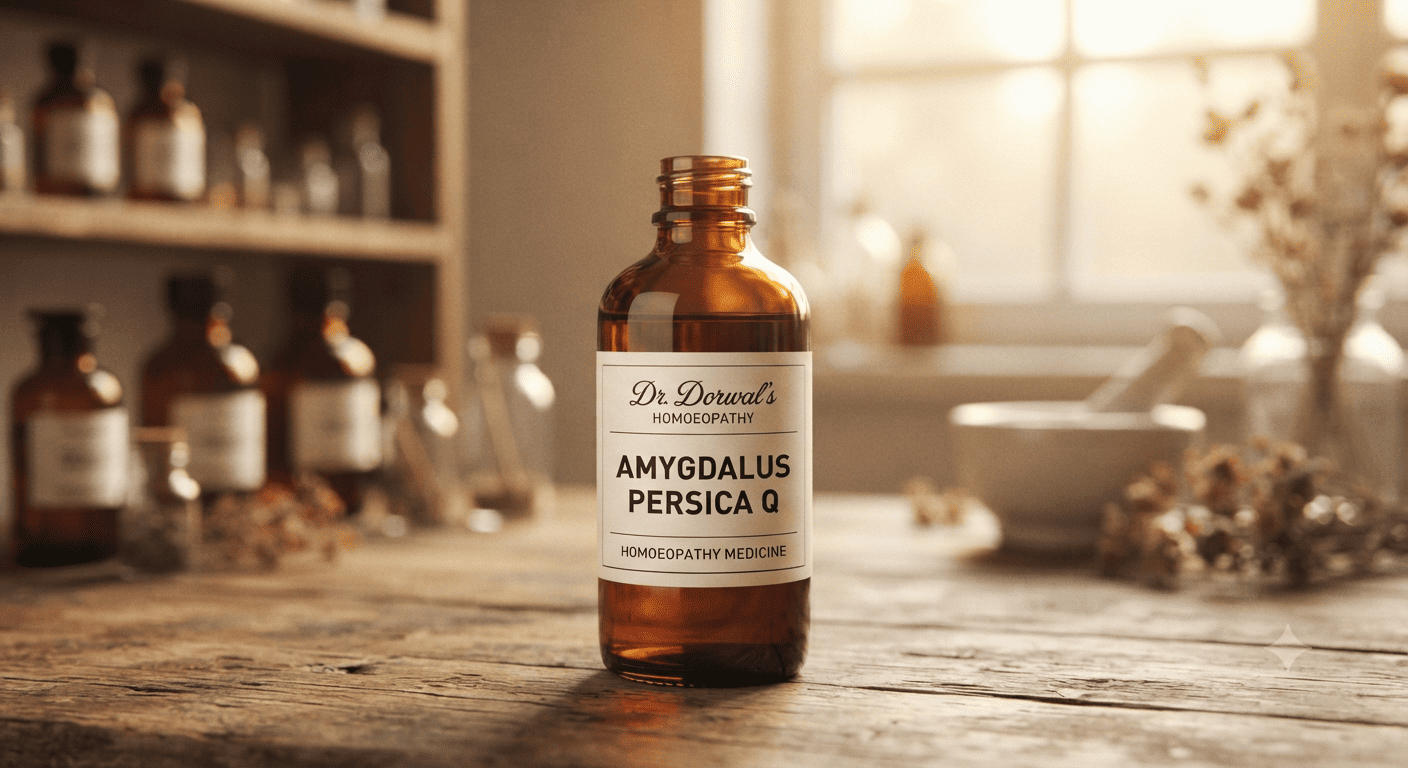
Amygdalus Persica (the Peach Tree) is a specialized remedy with a potent affinity for gastric and urinary systems. It is an invaluable agent for practitioner when faced with acute irritation of digestive tract or localized distress within bladder.
Key Clinical Indications & Uses
Therapeutic profile of Amygdalus Persica is defined by its ability to soothe intense gastric reactivity and address specific urological disturbances:
- Refractory Vomiting and Gastric Irritation: This remedy is highly effective for various forms of vomiting, including nausea of morning sickness. It is particularly indicated for children who exhibit severe gastric intolerance where no food can be retained. The constitutional marker for this remedy is an elongated, pointed tongue with red edges and a red tip, accompanied by constant nausea.
- Urological Distress: Amygdalus Persica is a key remedy for ischuria (suppression of urine) and haematuria (blood in the urine). It is also effective in managing haemorrhage originating from bladder.
- Sensory Impairment: It is noted for its ability to address a loss of the sense of smell and taste, often appearing in conjunction with gastrointestinal upset.
Administration & Dosage
- Dose: In clinical practice, it is typically utilized in fresh infusion or Mother tincture (Q) to capture the full therapeutic potential of the remedy.
Dr. Dorwal’s Perspective
In clinical practice, Amygdalus Persica is a “niche” remedy that provides relief when standard gastric protocols have been exhausted. When I see a child with that diagnostic tongue—the pointed, red-tipped tongue that signals deep irritation—and they cannot keep even a teaspoon of water down, I turn to peach tree. It is a remedy that works quickly to calm the autonomic “rebellion” of stomach.
It is equally fascinating to see its action on bladder. While it is rarely the first remedy considered for cystitis, in cases where haematuria is present or bladder is refusing to empty, Amygdalus Persica offers a unique botanical intervention. It serves as a reminder to the physician that our Materia Medica often contains gentle yet highly specific botanical solutions for some of our most distressing, acute pediatric and urological cases.
Disclaimer: This content is for informational purposes only. Homoeopathic medicines should be taken under the guidance of a qualified homoeopathic physician. Do not self-medicate for chronic or serious medical conditions, and always seek professional advice for any health concerns.
Frequently Asked Questions (FAQs)
An elongated, pointed tongue with a red tip and red edges, signaling intense gastric irritation are the characteristic of Amygdalus Persica.
It is effective for general vomiting, including morning sickness and pediatric gastric intolerance where no food is tolerated.
It is used for ischuria (suppression of urine), haematuria, and haemorrhage from the bladder.
It is most effective when prepared as a fresh infusion or as a Mother tincture (Q).
