
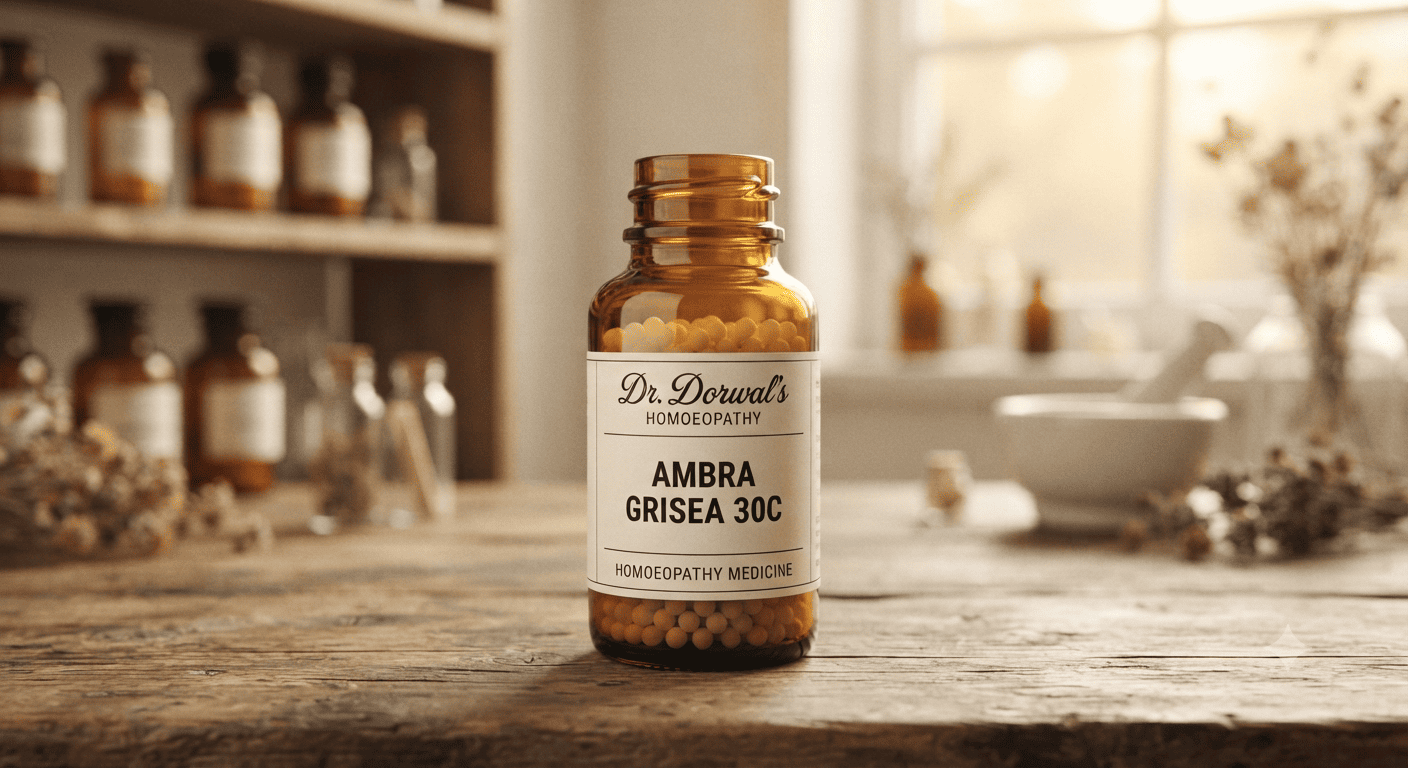
Ambra Grisea (Ambergris) is a deeply restorative remedy for nervous system, particularly suited to individuals characterized by extreme hypersensitivity, nervousness, and exhaustion. It acts as a bridge between the physical and the psychological, addressing symptoms that arise when nervous system becomes over-taxed, whether by chronic illness, the fatigue of age, or prolonged emotional strain.
Key Clinical Indications & Uses
Therapeutic profile of Ambra Grisea is defined by a unique combination of nervous erethism and physical debility:
- States of Hypersensitivity: This is a primary remedy for “nervous” patients—especially thin, scrawny individuals or delicate, excitable children. Patients often experience a paralyzing shyness, a dread of people, and an intense aversion to having others present while they work or speak. Music, strangely, acts as a primary aggravating factor, often triggering weeping or physical symptoms.
- The “Aged” Constitution: Ambra is a classic remedy for elderly, where it addresses a generalized impairment of function—weakness, coldness, and numbness—often localized to single parts like the fingers or arms. It helps restore vital tone when the body feels “worn out.”
- Respiratory & Spasmodic Symptoms: It is indicated for a characteristic “nervous, spasmodic cough,” which is often accompanied by eructation (belching) of gas. The cough may be hollow, barking, and feel as though it originates deep in the chest, often occurring upon waking in the morning.
- One-Sided Complaints: A recurring theme in Ambra is the prevalence of one-sided symptoms, coupled with a general sensation of numbness or “going to sleep” in the extremities.
Administration, Dosage and Modalities
- Modalities: Symptoms are characteristically worse from music, in the presence of strangers, in morning, and in a warm room. Patients typically feel better from slow motion in open air, lying on painful part, and drinking cold liquids.
- Dose: In clinical practice, it is typically utilized in 30C potency, which may be repeated to facilitate the desired therapeutic response.
Dr. Dorwal’s Perspective
In my clinical practice, Ambra Grisea is a profound remedy for patient who is “all nerves.” When I see a patient—often a highly sensitive person—who is literally “frazzled” by world around them, to the point of being unable to tolerate the company of others or even the melody of a song, I know Ambra is the key.
What I find most clinically instructive is the connection between mind and digestion in this remedy. Patient who belches gas when they cough, or who suffers from abdominal distention after midnight due to sheer nervous exhaustion, demonstrates the intricate link between our gut and our nerves. It is a remedy that doesn’t just calm the mind; it restores vital “electricity” of the body in those whose systems have been dimmed by age or overwork. When world feels too loud and too close, Ambra Grisea provides quiet, stabilizing influence needed for recovery.
Disclaimer: This content is for informational purposes only. Homoeopathic medicines should be taken under the guidance of a qualified homoeopathic physician. Do not self-medicate for chronic or serious medical conditions, and always seek professional advice for any health concerns.
Frequently Asked Questions (FAQs)
Extreme nervous hypersensitivity, a dread of people, and physical weakness/numbness, particularly in elderly or those exhausted by overwork.
Music is a key aggravating factor, often causing weeping or physical symptoms like palpitations or rushes of blood to the head.
A hollow, spasmodic, barking cough originating deep in the chest, almost always accompanied by the eructation of gas.
It specifically addresses the general decline of functions in elderly, such as senile dizziness, numbness of limbs, and impairment of memory.
