
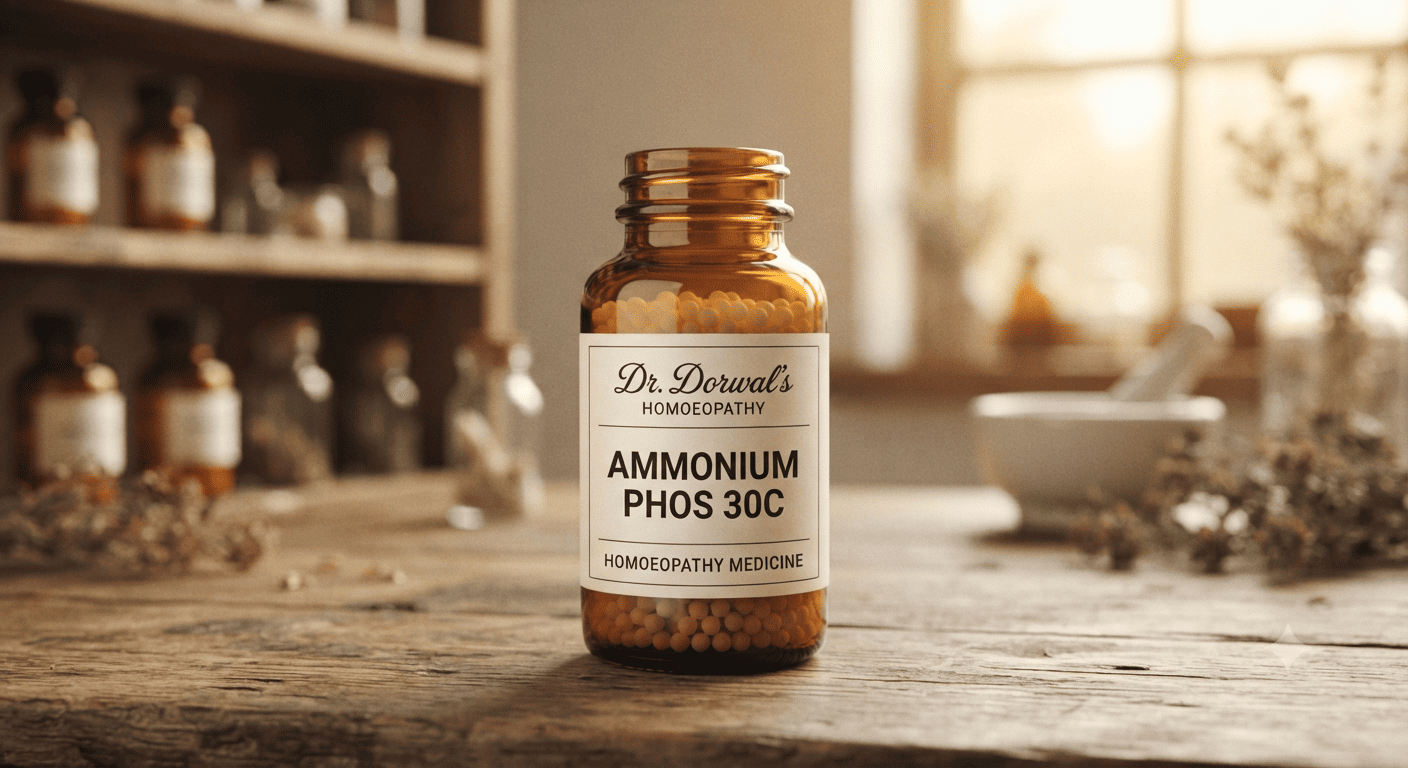
Ammonium Phosphoricum (Phosphate of Ammonia) is an essential remedy for metabolic management of chronic gouty states and the structural changes that accompany long-standing uric acid diathesis. It serves as a vital agent for the practitioner when addressing systemic imbalances that manifest in the joints, respiratory system, and neurological pathways.
Key Clinical Indications & Uses
Therapeutic profile of Ammonium Phosphoricum is centered on the management of chronic articular and metabolic distress:
- Gouty Diathesis and Nodosities: This is a primary consideration for patients suffering from chronic gout, particularly those who exhibit distinct “nodosities”—hard, nodular swellings—forming in the joints of the fingers and across the backs of hands. It addresses the underlying uric acid imbalance that leads to these structural changes.
- Respiratory Support: It is indicated for chronic bronchitis, often presenting with a deep, rough cough accompanied by a characteristic greenish expectoration.
- Neurological and Motor Presentation: Ammonium Phosphoricum is indicated for cases of facial paralysis and generalized motor weakness. Patients often report a heaviness of the limbs, leading to an unsteady, “tottering” gait.
- Sensory and Localized Pain: It is useful for sharp pains in shoulder joint and a feeling of tightness around the chest. Patient is uniquely hypersensitive, experiencing a distinct feeling of coldness from even the slightest draft of air.
- Renal Markers: A key clinical pointer is the presence of a rose-colored sediment in the urine, indicating an active metabolic clearance of urates.
Administration & Uses
- Dose: In clinical practice, it is typically utilized in 30C potency for optimal results.
Dr. Dorwal’s Perspective
In clinical practice, Ammonium Phosphoricum is my “go-to” remedy when I see the structural evidence of gout—the knots and nodosities on the hands that indicate years of metabolic struggle. While many remedies treat acute inflammatory pain of gout, Ammonium Phosphoricum works at a deeper level to address the uric acid diathesis itself.
What I find particularly telling is the patient’s hypersensitivity to cold air. When a patient tells me they feel a draft even in a closed room, and their hands are beginning to show those tell-tale joint deformities, Ammonium Phosphoricum is almost always the correct constitutional match. It is a slow-acting but profound remedy; it does not just address the joint, it recalibrates the body’s internal handling of nitrogenous wastes. It remains an indispensable tool in my protocols for the elderly and those burdened by chronic articular rheumatism.
Disclaimer: This content is for informational purposes only. Homoeopathic medicines should be taken under the guidance of a qualified homoeopathic physician. Do not self-medicate for chronic or serious medical conditions, and always seek professional advice for any health concerns.
Frequently Asked Questions (FAQs)
It is a deep-acting remedy for chronic gout, specifically targeting uric acid diathesis and the resulting joint nodosities.
It is indicated for bronchitis characterized by a deep, rough cough and greenish expectoration.
It is indicated for facial paralysis and general motor weakness, resulting in an unsteady, tottering gait.
Presence of a rose-colored sediment, suggesting the active excretion of uric acid salts.
