
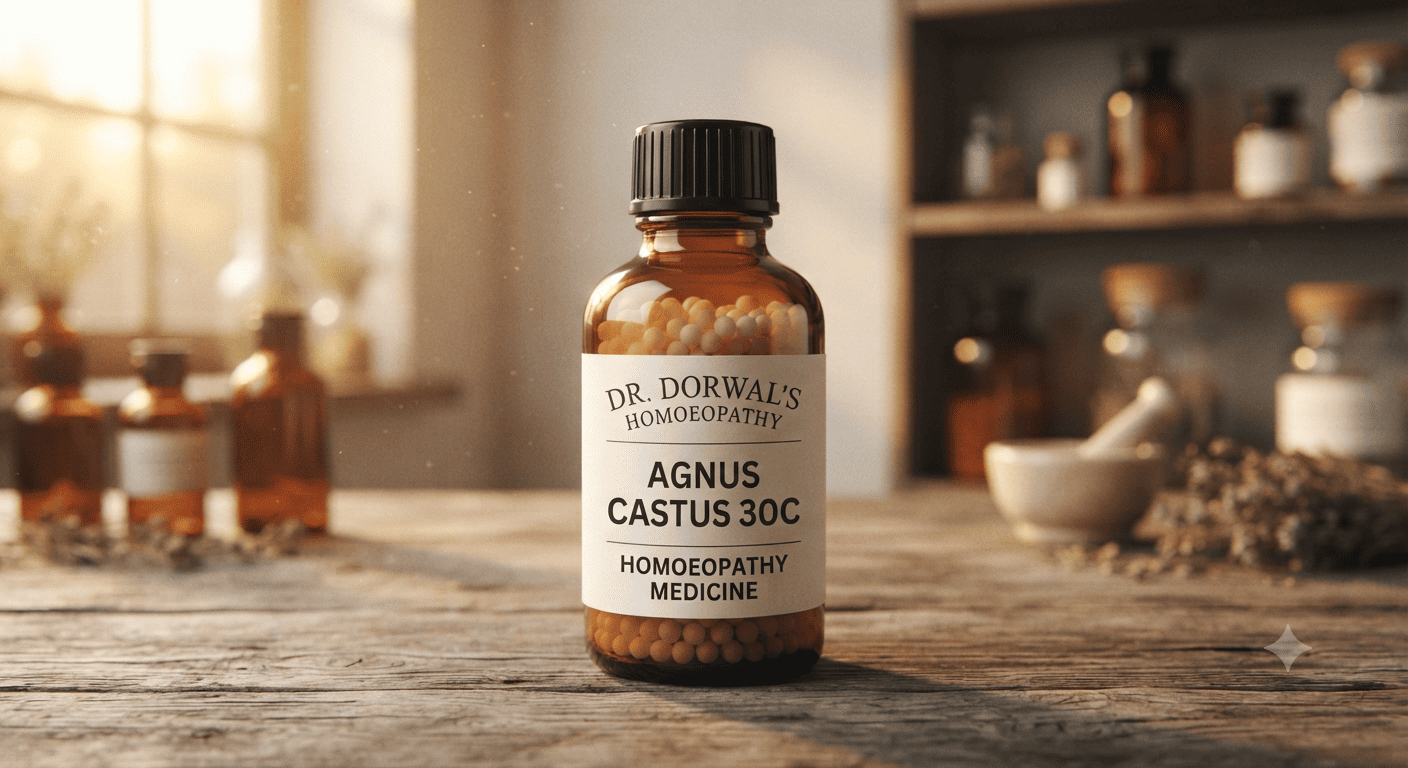
Agnus Castus, commonly known as the Chaste Tree, is a profoundly acting remedy with a primary affinity for the sexual and reproductive systems. It is most recognized for its role in addressing states of diminished vitality, particularly where there is a history of sexual exhaustion, recurring venereal infection, or premature aging of the reproductive organs.
Key Clinical Indications & Uses
Therapeutic profile of Agnus Castus is characterized by its ability to restore balance in both physical and emotional states linked to the reproductive sphere:
- Sexual Vitality and Reproductive Health: It is indicated in men who suffer from impotence, loss of sexual desire, and a cold, relaxed state of genital organs. It is also valuable in cases of gleety discharge and the loss of prostatic fluid upon straining. In women, it is indicated for sterility, agalactia (deficiency of milk) accompanied by sadness, and a general relaxation of the genitals.
- Mental and Emotional State: A key feature is “sexual melancholy”—a deep-seated sadness coupled with nervous depression and an impression of impending death. Patients often exhibit absentmindedness, lack of courage, and a persistent fear of death.
- Physical Exhaustion and Trauma: Beyond the sexual sphere, Agnus Castus is a prominent remedy for the aftermath of physical strain, specifically sprains and injuries. It also addresses localized symptoms such as gnawing, intense itching in various parts, particularly the eyes.
- Cardiovascular and Gastrointestinal: It is indicated for tachycardia (rapid heart rate) in young, neurotic individuals, often exacerbated by the use of tobacco. In the digestive tract, it is useful for deep anal fissures, sore spleen, and a sensation of downward pressure in the intestines.
Administration & Dosage
- Dose: In clinical practice, it is typically utilized in 30C potency.
Dr. Dorwal’s Perspective
In clinical practice, Agnus Castus is an indispensable remedy when dealing with the consequences of long-term sexual exhaustion or the “premature old age” that can follow the abuse of one’s vital energy. It is my first consideration for the patient who feels a profound lack of nervous power, often accompanied by a melancholic conviction that their life is coming to a premature end.
What I find most remarkable about Agnus is its precision. It does not just act on the sexual organs; it clears the mental fog and the “downward pressure” that often accompanies reproductive depletion. Furthermore, its efficacy in treating sprains and physical strains makes it a versatile tool, proving that when the similia is matched correctly, it can restore the patient’s vitality from the inside out—rebuilding confidence and physical energy where it was once thought lost.
Disclaimer: This content is for informational purposes only. Homoeopathic medicines should be taken under the guidance of a qualified homoeopathic physician. Do not self-medicate for chronic or serious medical conditions, and always seek professional advice for any health concerns.
Frequently Asked Questions (FAQs)
It is indicated for diminished sexual vitality, impotence, and a profound sense of “sexual melancholy.”
Yes, it is a prominent remedy for physical sprains and strains, as well as gnawing itching in the eyes and anal fissures.
It addresses depression, fear of death, and a lack of courage or presence of mind.
30C potency is most commonly utilized in practice.
