
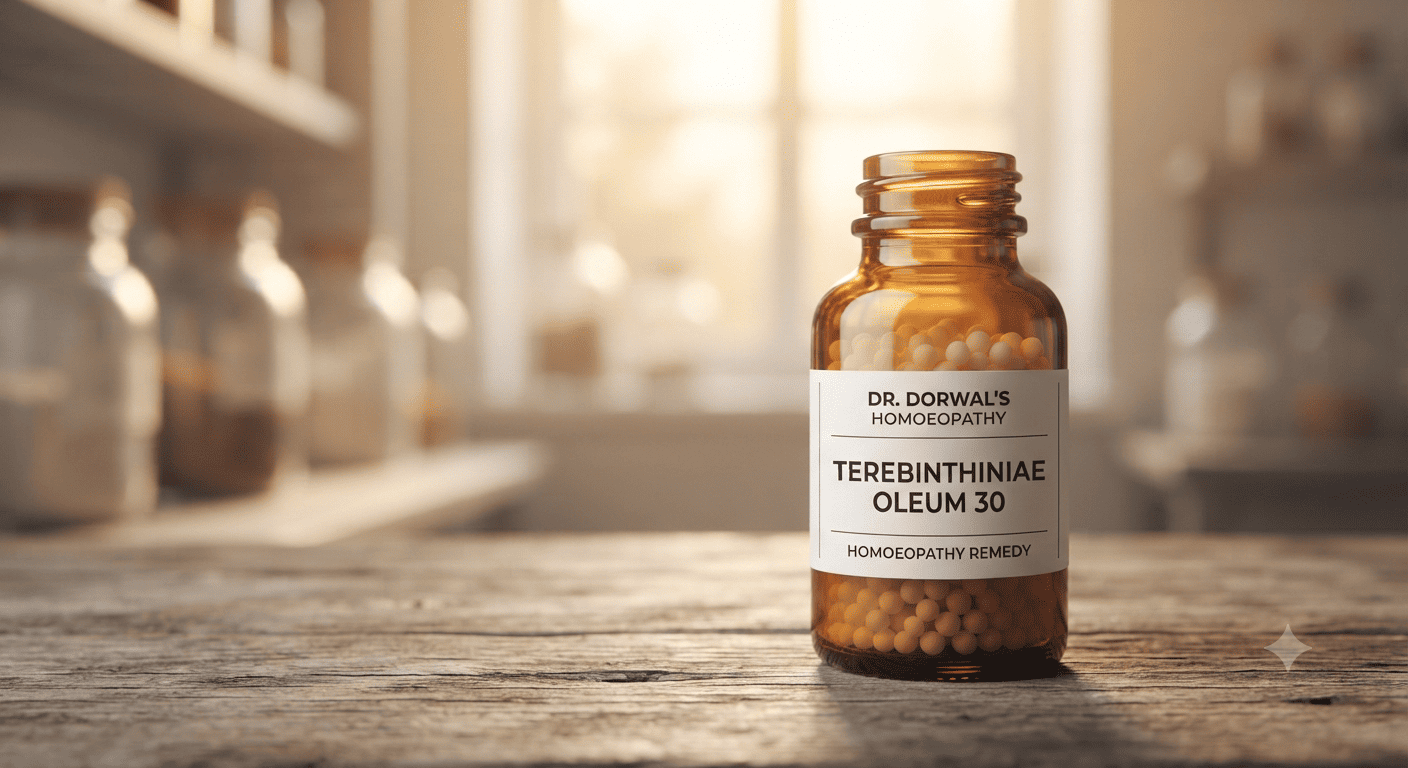
Terebinthiniae Oleum (Turpentine) is a potent homoeopathic remedy with a selective affinity for bleeding mucous surfaces. It is clinically distinguished by its marked influence on the urinary system and its efficacy in managing states of severe abdominal distention (tympanites).
Key Clinical Indications & Uses
The therapeutic profile of Terebinthiniae Oleum covers a wide range of acute and inflammatory conditions:
- Urinary System: This remedy is highly indicated for inflammation of the kidneys, particularly following acute diseases. Symptoms include strangury, constant tenesmus, and the passage of bloody urine that may be scanty or suppressed and carry an odor of violets.
- Abdominal and Digestive Health: It addresses enormous abdominal distention and severe entero-colitis characterized by watery, greenish, fetid, and bloody stools. It is also indicated for intestinal haemorrhages, the presence of worms (lumbrici), and abdominal dropsy.
- Inflammatory and Hemorrhagic States: Terebinthiniae Oleum is adapted to passive, fetid haemorrhages from various mucous membranes. It is used in conditions like Bright’s disease (often preceded by dropsy) and severe febrile states like typhoid, where tympanites, haemorrhages, and stupor are present.
- Skin and Extremities: It is effective for conditions such as purpura, ecchymosis, and urticaria. It is also a key remedy for unbroken, excessively itching, and pulsating chilblains.
- Systemic Symptoms: The patient may exhibit a dry, red, shining, “sore” tongue with prominent papillae, and a cold, foul breath. Patients often feel profound drowsiness or even coma, with a sense of difficult concentration.
Administration & Dosage
- Dose: Remedy is typically administered in 30C potency.
Dr. Dorwal’s Perspective
In my clinical practice, Terebinthiniae Oleum is an essential intervention when I observe the specific combination of localized inflammation with passive, dark haemorrhages. I find it particularly reliable in cases of acute renal distress where the urine is suppressed or bloody. The remedy’s ability to soothe the “burning” and “tenesmus” associated with cystitis and uterine inflammation is profound. Furthermore, its role in addressing the “typhoid state”—where the abdomen is distended like a drum and the tongue is red and glazed—serves as a critical reminder of the deep-acting nature of this remedy. It is a powerful tool for restoring balance when the body is overwhelmed by septic or haemorrhagic tendencies.
Disclaimer: This content is for informational purposes only. Homoeopathic medicines should be taken under the guidance of a qualified homoeopathic physician. Do not self-medicate for chronic or serious medical conditions, and always seek professional advice for any health concerns.
Frequently Asked Questions (FAQs)
The urine often carries a characteristic odor of violets.
The tongue is typically dry, red, sore, and shining, with prominent papillae.
Yes, it is indicated for erythema, itching pustular eruptions, and specifically for unbroken chilblains that pulse and itch.
It is indicated for enormous abdominal distention (tympanites), often with watery, fetid, or bloody stools and abdominal dropsy.
